Maddy summaryThis bill prohibits the U.S. government from spending money on military actions against Iran between its enactment and December 31, 2026, unless Congress explicitly approves the use of force. It allows for military action only if Congress declares war, passes a specific authorization, or if the action is necessary to defend the United States or its allies from an imminent attack while following reporting requirements. The law directly restricts the President's ability to deploy troops without legislative approval during the specified timeframe.
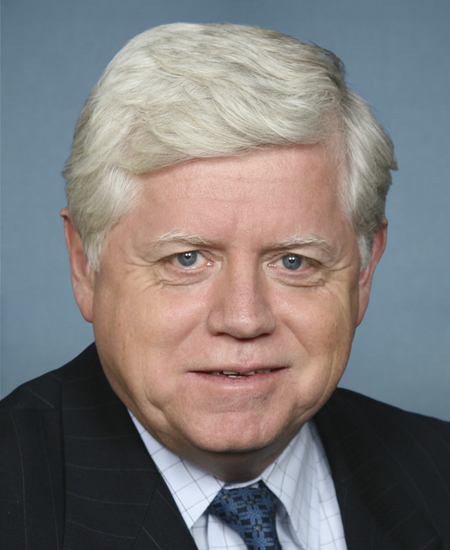
Rep. John B. Larson
Sponsored bills
Maddy summaryThe Assault Weapon Financing Accountability Act prohibits the use of "Buy Now, Pay Later" loans to purchase semiautomatic assault weapons. This ban applies to both lenders offering these short-term credit products and dealers who accept such loans for firearm sales. The bill defines "semiautomatic assault weapons" based on specific physical features like pistol grips, forward grips, and high-capacity magazines, and sets a civil penalty of $100,000 for violations by lenders or sellers.
Maddy summaryThis resolution formally recognizes the week of May 4 through May 8, 2026, as "Teacher Appreciation Week" to honor the work of public school educators. It highlights the importance of teachers in the education system and notes that a majority of them support various policies, including protections for students and funding for public schools. The document also expresses the view that teachers should have a direct role in education policymaking at federal, state, and local levels. By issuing this designation, the House of Representatives aims to acknowledge the value of teachers and encourage government leaders to engage with them on issues affecting the classroom.
Maddy summaryThe Afterschool for All Act significantly increases funding for the Community Learning Centers program, raising the annual appropriation from $1 billion to $10 billion for the fiscal years 2026 through 2035. This expansion aims to support after-school programs in elementary and secondary schools, directly benefiting students and educational institutions that rely on these grants. Additionally, the bill amends the name of the relevant section in the Elementary and Secondary Education Act to remove the term "21st Century," and it raises the corporate income tax rate from 21% to 22% for taxable years beginning after the law is enacted.
Maddy summaryThis resolution asks the President to provide the House of Representatives with specific documents regarding how personally identifiable information from the Social Security Administration was accessed and used. The request focuses on records concerning the Numerical Identification System, death data, and other private details allegedly copied by an individual working for the Department of Government Efficiency onto personal devices. Additionally, the bill seeks information about any attempts to share this data with a private employer and any statements made about expecting a presidential pardon for such actions. If the President does not comply within 14 days, the matter may be referred to the House Ways and Means Committee for further review.
Maddy summaryThis bill temporarily suspends a portion of the federal fuel excise tax when the national average price of gasoline rises above $3.99 per gallon. Instead of reducing government revenue, the money saved from this tax cut is transferred back into the Highway Trust Fund and the Leaking Underground Storage Tank Trust Fund. Additionally, the legislation disallows certain tax credits and deductions for oil and gas companies for costs incurred or production occurring during these high-price months. These changes would only take effect for taxable years beginning after December 31, 2025.
Maddy summaryThe No WAR Act prohibits Congress from using budget reconciliation procedures to fund military hostilities against Iran unless such actions are explicitly authorized by a formal declaration of war or a specific authorization for the use of military force. This legislation directly affects the legislative process by establishing a point of order that blocks any reconciliation bill attempting to provide budget authority for offensive military operations, strikes, or covert actions targeting Iranian military forces, territory, or government institutions. The bill also defines proxy forces as any foreign military or irregular groups operating with U.S. direction or material support, ensuring these entities are included in the restrictions on unauthorized funding. By amending the Congressional Budget and Impoundment Control Act, the measure aims to prevent the use of budgetary shortcuts to bypass the constitutional requirement for congressional approval before engaging in armed conflict with Iran.
Maddy summaryThis bill, titled the Protecting Human Rights and Public Health in Foreign Assistance Act, aims to cancel specific regulations issued by the Department of State. It directly affects the federal government by prohibiting any department or agency from enforcing, implementing, or proposing rules related to protecting life, combating discriminatory equity ideology, and combating gender ideology in foreign aid programs. The legislation treats these cancelled rules as if they never existed, effectively nullifying their impact on future foreign assistance policies.
Maddy summaryThe Long-Term Care Workforce Support Act aims to address the severe shortage and low wages of direct care professionals who support older adults and people with disabilities by increasing Medicaid funding, expanding training grants, and establishing new federal labor protections. To improve compensation and retention, the bill allows states to receive additional Medicaid funds if they implement specific workforce improvements, such as raising wages, providing paid leave, and ensuring stable scheduling, while also creating a national strategy to calculate fair labor costs. The legislation introduces comprehensive worker rights, including a requirement for written employment agreements, fair scheduling with advance notice, paid sick time, and a federal standard to prevent workplace violence. Furthermore, the bill establishes multiple grant programs to fund training, career advancement, and diversity initiatives, alongside a new commission to develop national training standards and a technical assistance center to address inequities within the workforce.
Maddy summaryThe HCBS Access Act requires Medicaid to cover a broad range of home and community-based services for people with disabilities and older adults, aiming to eliminate waiting lists and ensure these individuals can live in their communities rather than institutions. To achieve this, the bill mandates that states create detailed implementation plans, establishes a new advisory panel to recommend additional services, and sets a 100 percent federal funding match for these services to encourage state participation. The legislation also strengthens protections for family caregivers, requires states to remove financial liens on the estates of deceased beneficiaries, and creates a national technical assistance center to support the recruitment and training of direct care workers. Additionally, the bill directs the government to establish a separate occupational category for direct support professionals to better track workforce shortages and improve data collection on this critical labor force.