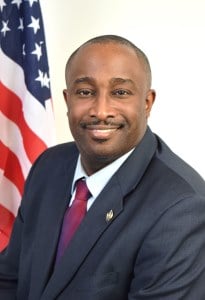
Photo of K.C. Ohaebosim
D Kansas House · District 89

Rep. K.C. Ohaebosim

Compare
Total votes
2,766
all sessions
Attendance
98%
65 missed
Lower than 81% of chamber peers
With party
95%
of cast votes
Lower than 83% of chamber peers
Bipartisan score
3%
crosses aisle rarely
Higher than 80% of chamber peers
Sponsored
67
bills & resolutions
Near the chamber average
Committees
3
assignments
67 bills and resolutions

Sponsored bills

Total
67
Primary
67
Co-sponsor
0
This page
67
matching current filters
Primary HCR 5023
died · Kansas House · Lead sponsor
Proposing to amend the constitution of the state of Kansas to provide that property tax exemptions be approved by the electors of the state.

Maddy summaryThis bill proposes to amend the Kansas Constitution to require voter approval for any property tax exemptions. If passed, the change would shift the authority currently held by the state legislature to the electorate, meaning voters would directly decide whether specific groups or properties receive tax breaks. The measure does not create new exemptions itself but establishes a new rule for how future exemptions must be approved. It directly affects Kansas voters, property owners, and local governments by altering the process for determining tax relief.

died Apr 10, 2026 0 co-sponsors
Primary HB 2630
died · Kansas House · Lead sponsor
Providing the authority for counties and cities to levy an additional liquor enforcement tax for property tax reduction.

Maddy summaryHB 2630 allows Kansas counties and cities to levy a 2% additional tax on liquor sales revenue (from retailers, microbreweries, distributors, and other sellers), but only after voter approval via local election. The tax revenue must be used exclusively to reduce the following year's property tax levy by an equal amount. Local governments must hold an election and secure majority voter approval before implementing the tax, with collections starting 60 days after the election. This bill directly affects property taxpayers in participating counties and cities by providing a new funding mechanism for property tax relief.

died Apr 10, 2026 0 co-sponsors
Primary HB 2678
died · Kansas House · Lead sponsor
Enacting the Kansas medical cannabis act to authorize the cultivation, processing, distribution, sale and use of medical cannabis and medical cannabis products.

Maddy summaryHB 2678 would establish Kansas' first legal medical cannabis program, allowing licensed businesses to cultivate, process, and sell cannabis products for medical use to qualifying patients. It requires the state to expunge past cannabis-related criminal records and imposes an excise tax on sales, with funds directed to child care, economic development, mental health, low-cost housing, and property tax rebates. The bill creates new licensing systems for cultivators, processors, and dispensaries, while exempting medical cannabis use from certain drug possession laws. It directly affects patients with qualifying medical conditions, licensed cannabis businesses, and the state's criminal justice and social service funding mechanisms.

died Apr 10, 2026 0 co-sponsors
Primary HB 2656
died · Kansas House · Lead sponsor
Establishing the no kid hungry in schools program to reimburse school districts for the cost of providing certain meals to students attending public school.

Maddy summaryHB 2656 establishes Kansas' "No Kid Hungry in Schools" program, requiring public school districts with high student poverty rates to provide free breakfasts and lunches to all students. The state reimburses districts for the cost difference between federal meal reimbursements and the federal free-meal rate, covering up to one breakfast and one lunch per student daily. School districts must participate if they qualify under federal poverty thresholds for free meal eligibility, and must offer two federally reimbursable meals per student per day. The bill amends existing school meal funding laws to implement this state-level reimbursement system.

died Apr 10, 2026 0 co-sponsors
Primary HB 2707
died · Kansas House · Lead sponsor
Modifying the definition of abuse in the protection from abuse act to include certain acts or threats related to pets and specifying that courts may include orders relating to pets in protection from abuse act orders.

Maddy summaryThis Kansas bill (HB 2707) expands the definition of "abuse" under the Protection from Abuse Act to include intentionally harming, threatening, or causing injury to a pet to control, punish, intimidate, or distress a partner or household member. It also allows courts to include specific orders about pet custody and protection in existing protection orders. The bill directly affects individuals in abusive relationships where pets are used as tools of control, such as when an abuser threatens or harms a pet to coerce a victim. Key mechanisms include adding new provisions to the law defining abuse (Section 1) and creating specific court orders for pet-related safety (Sections 10-11 of K.S.A. 60-3107).

died Apr 10, 2026 0 co-sponsors
Primary HB 2628
died · Kansas House · Lead sponsor
Establishing a refundable income tax credit for tuition payments and fees made to postsecondary educational institutions.

Maddy summaryHB 2628 creates a refundable Kansas income tax credit for residents paying tuition and fees at eligible colleges or universities. It allows qualifying taxpayers to claim up to $300 per year toward these costs for themselves or their child, with any unused portion refunded if the credit exceeds their tax bill. The credit applies to Kansas residents who paid for attendance at institutions meeting state-defined standards under K.S.A. 72-3222. This policy directly supports families and individuals covering higher education expenses, making the credit accessible even if they owe no state income tax.

died Apr 10, 2026 0 co-sponsors
Primary HB 2629
died · Kansas House · Lead sponsor
Increasing the amount of the standard deduction for Kansas income tax purposes.

Maddy summaryHB 2629 increases Kansas income tax standard deduction amounts for 2024 and beyond. It raises the standard deduction to $3,605 for single filers, $8,240 for married couples filing jointly, and $6,180 for heads of household in 2024, with further increases scheduled for 2026. This bill directly affects Kansas residents who claim the standard deduction instead of itemizing deductions on their state income tax returns. The change reduces taxable income for qualifying filers, lowering their overall tax liability under Kansas law.

died Apr 10, 2026 0 co-sponsors
Primary HB 2598
died · Kansas House · Lead sponsor
Enacting the Kansas paid family leave act.

Maddy summaryHB 2598, the Kansas Paid Family Leave Act, creates a state-run program providing up to 12 weeks of paid leave for eligible workers in Kansas to bond with a new child (birth, adoption, or foster placement), care for a family member with a serious health condition, recover from their own serious health condition, or address military family needs. It covers most full- and part-time employees who worked 26 weeks (20+ hours/week) or 175 days (less than 20 hours/week) in the prior year, plus self-employed individuals who opt into the program. Benefits will equal 67% of an employee's average weekly wage (capped at $1,000/week starting in 2028), funded through payroll deductions of employee premiums beginning January 2027. The program launches for eligible workers on July 1, 2027, with benefits paid from the Family and Medical Leave Insurance Fund.

died Apr 10, 2026 0 co-sponsors
Primary HB 2597
died · Kansas House · Lead sponsor
Establishing a right to paid sick leave for Kansas employees and setting forth minimum requirements and rules for the provision of such sick leave.

Maddy summaryHB 2597 requires all Kansas employers to provide employees with paid sick leave starting January 1, 2027. Employees earn at least two hours of paid sick leave for every 30 hours worked, up to a maximum of 40 hours per year, which can carry forward annually. The bill allows use for personal illness, caring for sick family members, addressing domestic violence, or handling emergencies like school closures due to weather. It applies to most employees but explicitly excludes independent contractors, with rules to be implemented by the Kansas Secretary of Labor.

died Apr 10, 2026 0 co-sponsors
Primary HB 2600
died · Kansas House · Lead sponsor
Establishing the Affordable Healthcare for Kansans program to expand medicaid eligibility.

Maddy summaryHB 2600 establishes the "Affordable Healthcare for Kansans" program to expand Medicaid eligibility in Kansas. It would extend coverage to non-pregnant adults under 65 with incomes at or below 138% of the federal poverty level, directly affecting low-income Kansans currently ineligible for Medicaid. The key provision raises the income threshold for Medicaid eligibility to match the federal standard, effective January 1, 2027. This change requires the Kansas Department of Health and Environment to administer the program and inform potential applicants. The bill aims to align Kansas Medicaid eligibility with the federal expansion program under federal law.

died Apr 10, 2026 0 co-sponsors
Showing 1 to 10 of 67 bills
1 2 3 … 7 Next