

Maddy summaryHB 2257 would enact Kansas' participation in the National Popular Vote Interstate Compact, an agreement among states to award all electoral votes to the candidate winning the national popular vote. If passed and if enough states join to control 270+ electoral votes, Kansas would hold a statewide popular election for president, then pool votes with other participating states to determine the national winner; Kansas would then certify electors for that winner. This would replace Kansas' current winner-takes-all system for allocating electoral votes. The bill directly affects Kansas voters and election officials, as it would change how the state appoints presidential electors. The compact only takes effect when states with a majority of electoral votes (270+) enact it.
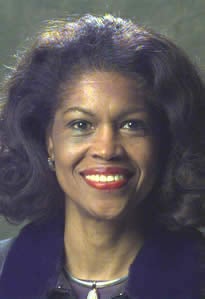
Rep. Barbara Ballard
Sponsored bills
Maddy summaryHB 2272 prohibits death sentences for crimes committed in Kansas after July 1, 2025, replacing the death penalty with life imprisonment without parole for future cases. It creates a new crime called "aggravated murder," defined as intentional killings during specific severe circumstances like kidnapping for ransom, contract killings, prison violence, sex offenses, or killing multiple victims. Anyone convicted of aggravated murder under this bill will receive a mandatory life sentence without parole. The law affects all future murder defendants in Kansas who would have been eligible for the death penalty under prior law.
Maddy summaryHB 2258 transfers responsibility for administering elections from the Kansas Secretary of State to county clerks in counties currently using election commissioners. Starting July 1, 2025, the Secretary of State will no longer appoint election commissioners, and all election duties - including voter registration, supervision, and ballot management - will move to county clerks. This affects counties with populations over 125,000 that currently have election commissioners. The bill amends Kansas law to require county clerks to follow existing election procedures (K.S.A. 25-126) and transfer all election records to their office upon the change.
Maddy summaryHB 2196 permanently exempts postsecondary educational institutions (like colleges and universities) from requirements under Kansas' Personal and Family Protection Act regarding concealed firearms in public buildings. The bill amends state law to remove the need for these institutions to post signage or implement security measures to prohibit concealed carry on their campuses. This means Kansas colleges and universities will no longer be subject to the general rules that apply to other public buildings, such as state or municipal facilities. The change directly affects all public and private postsecondary institutions in Kansas by simplifying their compliance with firearm access regulations.
Maddy summaryHB 2296 requires most health insurance plans in Kansas to cover diagnostic and supplemental breast cancer exams without out-of-pocket costs for insured individuals. This means patients won’t pay deductibles, co-pays, or coinsurance for these exams when medically necessary to evaluate abnormalities (diagnostic) or screen high-risk individuals (supplemental), as defined by national cancer guidelines. The bill applies to plans issued or renewed before January 1, 2026, and exempts health savings account plans until after meeting the deductible for non-preventive care. It specifically covers exams like mammograms, MRIs, and ultrasounds used in these scenarios.
Maddy summaryHB 2198 creates a new court order called a "gun violence restraining order" that allows judges to prohibit certain individuals from possessing firearms if they pose a significant risk of harming themselves or others. This order can be requested by specific people, including current or former spouses, family members, individuals in a dating relationship, or those living in the same household, who must provide evidence of the risk. Courts must find "reasonable cause" to believe the person is a threat - considering past violence, threats, or other relevant facts - before issuing the order. The order prevents the restrained individual from acquiring or possessing firearms and may be issued without notifying them if immediate action is needed to prevent harm.
Maddy summaryThis bill is a House resolution that honors the life and public service of Representative Melody McCray-Miller, who passed away in February 2026. It recognizes her decades of work in education, business, and government, including her roles as a teacher, restaurant owner, county commissioner, state representative, and community leader. The resolution formally acknowledges her contributions to Kansas families and communities but does not create new laws or change any policies. Its only effect is to officially celebrate her legacy within the Kansas House of Representatives.
Maddy summaryThis House resolution honors the life and public service of Representative Harold Lane, a former Kansas state representative from Topeka. The bill formally recognizes his contributions to local governance, his business career, and his legislative work on committees such as Appropriations and Energy and Environment. It serves as a commemorative tribute rather than enacting new laws or policies.
Maddy summaryThis bill is a House Resolution that formally recognizes and honors the life and public service of Representative John Resman, who represented Kansas's 121st District. The resolution highlights his extensive background in law enforcement, including service in the U.S. Army, the Federal Bureau of Prisons, and the Johnson County Sheriff's Office, before his election to the state legislature. It commemorates his legislative work on committees related to corrections, federal affairs, and public safety, as well as his advocacy for fiscal responsibility and education. The resolution concludes by expressing condolences to his family following his passing in March 2026.
Maddy summaryThis House resolution honors the life and public service of Representative Robert Tomlinson, who recently passed away. It recognizes his decades of work as an educator, city council member, state legislator, and executive official in Kansas. The document formally acknowledges his career achievements and personal legacy without proposing new laws or policy changes.