

In committee Sep 24, 2026
1 co-sponsor
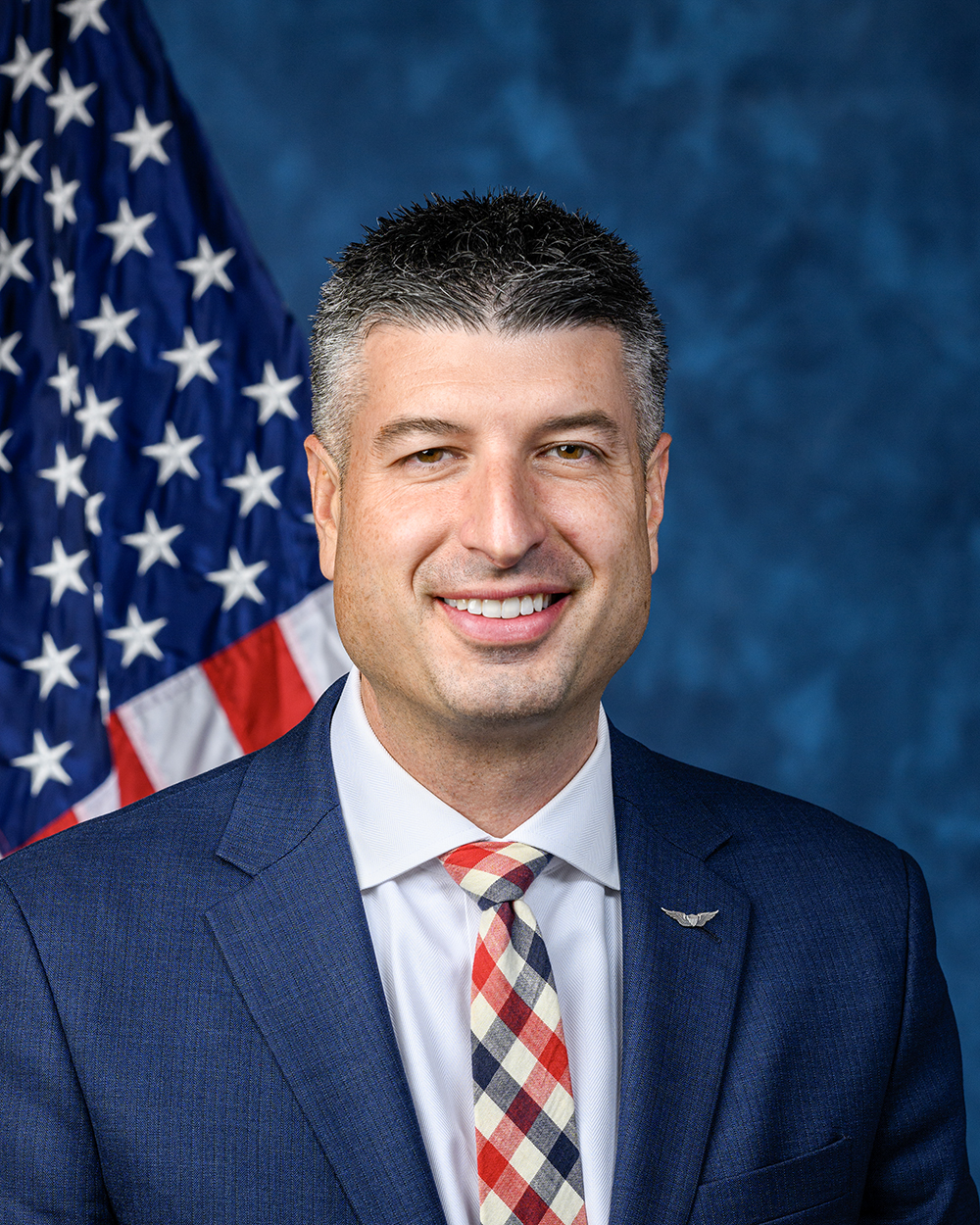
Rep. Tom Barrett
Total votes
669
all sessions
Attendance
99%
5 missed
Higher than 78% of chamber peers
With party
96%
of cast votes
Near the chamber average
Bipartisan score
2%
crosses aisle rarely
Near the chamber average
Sponsored
267
bills & resolutions
Near the chamber average
Committees
7
assignments
267 bills and resolutions
Sponsored bills
Total
267
Primary
53
Co-sponsor
214
This page
267
matching current filters
In committee Sep 24, 2026
1 co-sponsor
Ratepayer Protection Act
Maddy summaryThis bill, known as the Ratepayer Protection Act, modifies federal energy laws to ensure that large industrial customers pay for the specific infrastructure upgrades needed to serve their high electricity demands. It directly affects non-residential facilities with a peak power usage of 100 megawatts or more, requiring utilities to charge these customers the full incremental cost of any necessary generation, transmission, or distribution improvements. Under the new rules, large customers must also provide financial guarantees or contributions before such upgrades are made, ensuring utilities can recover costs even if the customer leaves the contract early. State regulators have two years to implement these standards, though the bill exempts utilities in states that have already enacted similar measures or are actively considering them.
Passed Sep 24, 2026
1 co-sponsor
To designate the facility of the United States Postal Service located at 117 West Lovett Street in Charlotte, Michigan, as the "Francis C. Flaherty Post Office Building".
Maddy summaryThis bill designates the United States Postal Service facility at 117 West Lovett Street in Charlotte, Michigan, as the "Francis C. Flaherty Post Office Building." It directly affects the specific postal location by officially changing its name in federal records and documents. The key provision ensures that all future legal and official references to this building will use the new name. This is a commemorative measure that honors an individual without altering operational policies or funding.
Passed Sep 17, 2026
0 co-sponsors
Supporting the designation of the week of September 20 through September 26, 2026, as "Gold Star Families Remembrance Week".
Maddy summaryThis House resolution supports designating the week of September 20 through September 26, 2026, as "Gold Star Families Remembrance Week." It aims to honor the families of service members and veterans who have died in the line of duty. The bill encourages Americans to observe this annual week by performing acts of community service and celebrating the lives of those who made the ultimate sacrifice.
In committee Sep 16, 2026
1 co-sponsor
REACH Act
Maddy summaryThe REACH Act creates a new $10,000 annual tax credit for eligible rural health care providers who work at least 900 hours in a rural area. This benefit applies to primary care practitioners, mental health professionals, nurses, and medical residents participating in approved training programs. The credit is subject to an income limit, reducing the amount by $1 for every dollar of adjusted gross income over $170,000 until it reaches zero. These provisions are set to take effect for taxable years beginning after December 31, 2026, and will expire for years beginning after December 31, 2033.
Budget & TaxesSupports Budget & TaxesThe bill creates a new $10,000 annual tax credit for rural health care providers, which directly impacts taxation and government spending by reducing tax revenue and incentivizing a specific workforce.
HealthcareSupports HealthcareThe REACH Act provides a significant tax credit to rural healthcare providers, including primary care practitioners and mental health professionals. This directly supports and strengthens healthcare access and services in rural areas.
In committee Sep 16, 2026
1 co-sponsor
VA Claims AI Accountability Act
Maddy summaryThe VA Claims AI Accountability Act requires the Department of Veterans Affairs to build a new technology platform to modernize disability claims processing while ensuring that human employees retain final decision-making authority over all benefit approvals. The bill mandates the creation of a specific governance framework for artificial intelligence use, which must protect veterans' due process rights and clearly distinguish between standard automation and AI tools. To maintain transparency, the Secretary of Veterans Affairs must submit an annual report to Congress detailing costs and AI confidence scores, along with quarterly briefings on progress. Additionally, the Government Accountability Office is tasked with conducting an independent evaluation of the program's effectiveness, which will terminate on October 1, 2028.
TechnologySupports TechnologyThe bill mandates a new technology platform and AI governance framework to modernize VA claims, ensuring due process and transparency in AI use, which advances technology responsibly.
VeteransSupports VeteransThe bill aims to modernize VA claims processing, protect veterans' due process rights, and ensure human oversight, all of which advance veterans' services and benefits.
In committee Sep 16, 2026
0 co-sponsors
VA AI Transparency Act of 2026
Maddy summaryThe VA AI Transparency Act of 2026 requires the Department of Veterans Affairs to inform veterans and other eligible individuals whenever they are interacting with an artificial intelligence system rather than a human employee. This disclosure must clearly state that the interaction is automated and explain the general purpose for which the AI is being used. The law defines covered individuals broadly to include veterans, their survivors, dependents, caregivers, and anyone seeking benefits or services from the department. An exception exists for internal administrative uses of AI that do not involve direct contact with these individuals, but the bill explicitly prohibits using AI to interact directly with them in those cases.
HealthcareSupports HealthcareThe bill enhances transparency for veterans interacting with VA AI systems, indirectly supporting patient rights and access to clear information within a healthcare-related context (VA services).
TechnologySupports TechnologyThe bill promotes transparency in AI use within the VA, which can enhance trust and protect veterans' digital rights by ensuring they are aware of automated interactions.
VeteransSupports VeteransBill improves transparency for veterans interacting with VA AI systems, ensuring they are informed, which indirectly supports their ability to navigate services and benefits.
In committee Sep 16, 2026
0 co-sponsors
ASAP Act
Maddy summaryThis bill would require Medicare to cover early detection screening tests for Alzheimer's disease and related dementias starting January 1, 2028. It defines eligible tests as FDA-cleared genomic blood tests, blood product analyses, or equivalent medical imaging methods (like protein expression or whole genome sequencing) that detect pre-symptomatic or early-stage conditions. Medicare beneficiaries would receive this coverage without cost-sharing for these specific screenings. The bill amends Medicare coverage rules to explicitly include these tests under Section 1861(nnn) of the Social Security Act.
In committee Sep 16, 2026
1 co-sponsor
AM Radio for Every Vehicle Act of 2025
Maddy summaryThis bill requires all new passenger vehicles manufactured for sale in the U.S. to include AM radio as standard equipment (not an optional add-on) by 2027-2028, depending on manufacturer size. It mandates that AM radio receivers must be easily accessible to drivers and allows compliance through digital AM broadcast technology. During a transition period, manufacturers must clearly label vehicles without AM radio but cannot charge extra for this feature. The bill also mandates a GAO study on AM radio's role in emergency alerts and includes a 10-year sunset provision for the rule. It preempts state laws regarding AM radio access in vehicles.
Passed Sep 16, 2026
1 co-sponsor
Ask Maddy
·
AI policy assistant
Ask Maddy about Tom Barrett
Scope: iowa
Hi! I can help you understand Tom Barrett's legislative record. What would you like to know?
Try one of these
i
Maddy answers using official bill text and legislative records. Always verify before sharing.
Sources cited inline