Maddy summaryHR 9812, the Health Care Workforce Investment Act, aims to address national shortages of healthcare professionals by providing federal grants to states. States must create "Workforce Improvement Plans" through State Health Care Workforce Councils, which will establish investment funds to support healthcare training programs (including high school vocational programs) and offer scholarships to students. These scholarships require recipients to work in healthcare for one year per scholarship year in the state where they trained, with a focus on underserved areas. The bill mandates reporting on program outcomes, scholarship use, and workforce metrics to ensure funds target areas with the greatest healthcare workforce needs.
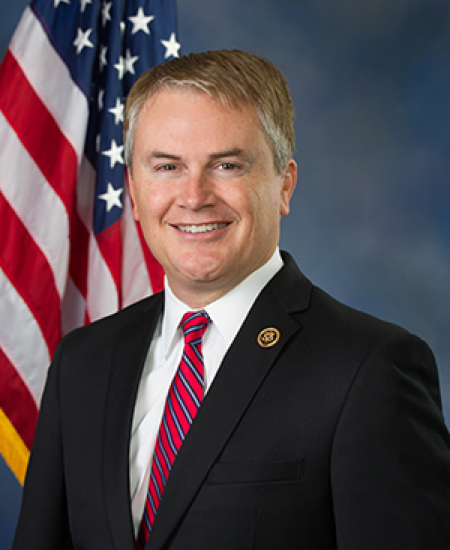
Rep. James Comer
Sponsored bills
Maddy summaryThe Pharmacists Fight Back Act (HR 9096) sets new rules for Pharmacy Benefits Managers (PBMs) working with federal health care programs like Medicare Part D and Medicaid. It requires PBMs to reimburse in-network pharmacies at a rate covering the drug's actual cost plus a small fee (capped at $25), and to reduce patient cost-sharing by at least 80% of rebates received from drug manufacturers. The bill bans PBMs from steering patients to specific pharmacies, charging patients more than pharmacies are paid, or using rebates to lower pharmacy payments after claims are processed. It also mandates public reporting of drug pricing data to improve transparency, ensuring patients and pharmacies receive fairer treatment under federal health programs.
Maddy summaryHR 5713, the Homeland Security Fentanyl Enforcement Act, authorizes Homeland Security Investigations (HSI) agents and designated state/local officers to enforce drug laws related to fentanyl trafficking under the Controlled Substances Act for five years. It requires the Government Accountability Office (GAO) to review and report on coordination between the Drug Enforcement Administration (DEA) and HSI in drug investigations within 18 months, including whether investigations followed established coordination policies. The bill mandates the Homeland Security Secretary and Attorney General to address any coordination failures found in the GAO report, prioritizing existing interagency task forces. This bill focuses on improving interagency coordination to combat fentanyl smuggling by transnational criminal organizations, without altering DEA's core authorities or creating new drug penalties.
Maddy summaryThe Preserving Access to Home Health Act of 2023 repeals a 2018 payment adjustment for Medicare home health agencies, restoring prior payment rates for 2024 and subsequent years. It requires the Medicare Payment Advisory Commission (MedPAC) to analyze how home health agencies' financial performance affects access to care, including reviewing spending and utilization data across Medicare, Medicaid, and other payers. Starting in 2025, the bill mandates home health agencies to report detailed data on visit volumes and payments by payer source (Medicare, Medicaid, private insurers) through updated cost reports. This data will help MedPAC assess payment policy impacts on access to home health services for Medicare beneficiaries.
Maddy summaryHR 4073, the Duty Drawback Clarification Act, clarifies U.S. tariff classifications for imported whiskies by creating specific subheadings in the Harmonized Tariff Schedule. It replaces a single tariff line with eight new subheadings that categorize whiskies by type (Irish/Scotch, Bourbon, Rye, or "Other") and container size (under or over 4 liters), each with a uniform duty rate of $2.04 per liter. This change directly affects whiskey importers and manufacturers who must now classify products using these new codes when entering goods into U.S. commerce. The bill streamlines duty calculation and drawback claims (refunds of duties on imported goods later exported) by standardizing the tariff structure for whiskey categories.
Maddy summaryHR 1610 would modernize Medicare coverage for chiropractic care by removing the current restriction that limited beneficiaries to one chiropractic service per visit. It expands coverage to include all services provided by licensed chiropractors within their state-authorized scope, aligning Medicare with VA, military, and private insurance practices. The bill requires chiropractors to complete a Secretary-approved educational webinar to cover non-spinal services, while still allowing payment for spinal manipulation treatments without this requirement. This directly affects Medicare beneficiaries seeking chiropractic care and chiropractors seeking Medicare reimbursement for their services.
Maddy summaryHR 1399, the "Protect Children's Innocence Act," prohibits medical gender-affirming care for minors under 18 by making it a class C felony for providers to perform such care. The bill defines gender-affirming care broadly to include surgical procedures, hormone treatments, and certain cosmetic procedures, with exceptions for medical conditions like reproductive cancers or intersex conditions. It prohibits federal funding for gender-affirming care through programs like Medicaid, Medicare, and the Affordable Care Act, and bans such care in federal health facilities. The bill also prevents institutions of higher education from teaching gender-affirming care and adds immigration consequences for individuals who provide such care to minors.
Maddy summaryHR 152, titled the "Hearing Protection Act," actually addresses firearm silencers (suppressors), not hearing protection. The bill removes federal registration requirements for silencers by directing the Attorney General to destroy all existing silencer records within 365 days. It also preempts state laws that tax, register, or impose recordkeeping requirements on silencers, making such state rules unenforceable. Additionally, the bill updates tax codes to include silencers as taxable items and clarifies their definition in firearm laws.
Maddy summaryHR 7438 directs the U.S. Treasury to mint commemorative coins for the 2026 FIFA World Cup, including 100,000 $5 gold coins, 500,000 $1 silver coins, and 750,000 half-dollar coins. The coins will be sold to the public at face value plus surcharges ($35, $10, and $5 per coin, respectively), with all surcharge revenue paid to FWC2026 US, Inc. for U.S. soccer programs. These funds must support soccer initiatives, particularly in underserved communities and youth development, as specified in the bill. The coins are legal tender but will only be issued during 2026, with no net cost to the U.S. government.
Maddy summaryThis bill allows livestock producers and their employees to take black vultures (Coragyps atratus) that are harming or threatening livestock, bypassing the usual protections under the Migratory Bird Treaty Act. It directly affects ranchers and farm workers in areas where black vultures cause livestock deaths or injuries. The key provision requires annual reporting to the U.S. Fish and Wildlife Service about any vultures taken, using a simplified form similar to existing reporting for permitted bird take. This creates a specific, limited exception to federal bird protections for livestock protection, with no new restrictions on vulture populations.