Maddy summaryThe Affordable Homeownership Access Act exempts small property owners who provide direct financing (owner financing) from certain mortgage licensing requirements if they make no more than 24 loans per year for properties they own. It also amends federal definitions to exclude these owner financers from "mortgage originator" rules, requiring loans to be fully amortizing, have reasonable interest rate caps, and include buyer ability-to-pay assessments. The bill mandates a study by HUD and Treasury on owner financing usage - particularly for homes under $150,000 or 60% of local median value - to evaluate its potential to boost homeownership and wealth creation in underserved communities.
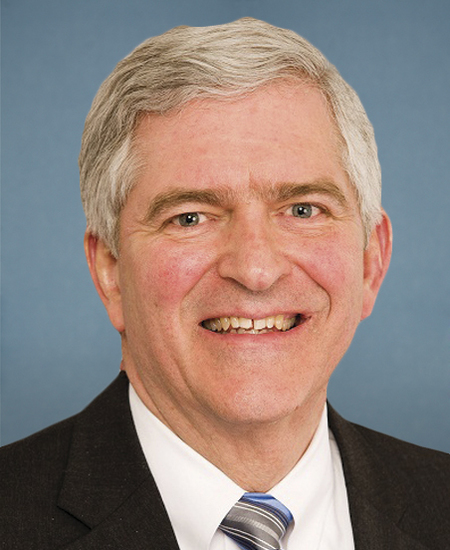
Rep. Daniel Webster
Sponsored bills
Maddy summaryHR 6540, the "Anti-Communism Week Act," designates an annual observance to commemorate historical impacts of communist regimes. The bill requests the President to annually designate a week as "Anti-Communism Week" and issue a proclamation encouraging public ceremonies. It does not create new policies or affect specific groups; it only adds a procedural requirement to the U.S. Code for an annual presidential designation. The bill focuses on commemoration, not policy change, and references historical findings about communism in its preamble.
Maddy summaryThis bill designates the location for the National Medal of Honor Monument, which was previously authorized by Public Law 117-80. It specifies that the monument must be placed within the National Mall's "Reserve" area near the Lincoln Memorial, overriding a prior location requirement. The bill does not create new policies or funding but clarifies the physical site for the existing authorized monument honoring Medal of Honor recipients. It directly affects the National Medal of Honor Museum Foundation, which will manage the monument's construction and placement.
Maddy summaryThis bill (HR 6360) makes Executive Order 14363 ("Launching the Genesis Mission") legally binding, overriding any conflicting laws or executive orders. It does not create new programs or change existing policies - it simply ensures the executive order has the force of law. The bill directly affects how federal agencies implement the "Genesis Mission" initiative outlined in the executive order. This is a procedural bill with no substantive policy changes beyond affirming the executive order's legal status.
Give Kids a Chance Act of 2025 This bill expands the Food and Drug Administration’s (FDA’s) authority with respect to research on rare pediatric diseases, including by permitting the FDA to take enforcement action against drug sponsors that fail to satisfy pediatric study requirements and by reauthorizing programs that support pediatric research. Specifically, the bill modifies requirements relating to molecularly targeted pediatric cancer investigations to permit research on new drugs in combination with active ingredients that have already been approved, provided certain conditions are met; permits the FDA to take enforcement action against drug sponsors that fail to comply with pediatric study requirements, if such sponsors demonstrated a lack of due diligence in satisfying the requirement; renews the FDA’s authority to award priority review vouchers to sponsors of new products intended to treat rare pediatric diseases through September 30, 2029; and reauthorizes through FY2027 certain funding for the National Institutes of Health to support priority pediatric research. The bill also provides statutory authority for the FDA’s interpretation of the orphan drug exclusivity period. The bill specifies, consistent with FDA regulations, that the seven-year market exclusivity period for drugs for rare diseases or conditions (i.e., orphan drugs) prohibits the approval of the same drug for the same approved use or indication with respect to the disease or condition. (In Catalyst Pharmaceuticals, Inc. v. Becerra , a court rejected the FDA’s interpretation and held that orphan drug exclusivity extends to all uses or indications for the disease or condition.)
Maddy summaryHCONRES 58 is a symbolic congressional resolution denouncing socialism in all its forms. It does not create new laws or affect any policies, as it is a non-binding statement of opinion. The resolution cites historical events and quotes from Founding Fathers to argue that socialism leads to authoritarianism and economic harm, referencing examples like the Soviet Union and Venezuela. It formally "denounces" socialism and opposes implementing socialist policies in the U.S., but has no legal effect on citizens or government actions. This is a procedural resolution, not a policy measure.
Maddy summaryHR 5800, the SAFE Drivers Act, requires commercial driver's license (CDL) applicants and renewers to pass a standardized English proficiency test approved by the Federal Motor Carrier Safety Administration (FMCSA). The test assesses reading road signs, understanding emergency communications, and writing required documentation - critical for safety in commercial driving. States must administer the test through their DMVs, report pass rates annually to the FMCSA, and face potential federal funding cuts if they fail to comply. The law applies to all new CDL issuances or renewals starting 12 months after enactment, directly affecting commercial drivers seeking or maintaining their licenses.
Maddy summaryHR 6167, the HEALTH Act of 2025, creates a new tax deduction for physicians providing unreimbursed charity care to patients enrolled in Medicaid (Title XIX) or CHIP (Title XXI) programs. The deduction equals the Medicare fee schedule amount for such care, but excludes services like sex reassignment surgeries and hormone treatments for gender transition. Additionally, the bill adds liability protection for physicians providing this charity care, shielding them from civil lawsuits for non-intentional harm during such services, and preempts conflicting state laws. This directly affects physicians who serve low-income patients through public health programs.
Maddy summaryThis bill prohibits federal funds from being used to cover any abortion-related expenses for individuals classified as "illegal aliens" under immigration law. It specifically blocks taxpayer money from paying for travel, lodging, meals, childcare, translation, doula care, or patient education services connected to abortion access. The law directly affects non-citizens who are inadmissible or deportable under specific immigration statutes (as defined in the Immigration and Nationality Act). It applies to all federal programs and funds, restricting assistance for abortion services beyond the procedure itself.
Maddy summaryHR 6231 extends and enhances the Work Opportunity Tax Credit (WOTC), a federal tax credit for employers hiring from specific target groups like veterans, SNAP recipients, and summer youth workers. The bill extends the program through 2030 (from 2025), increases the credit rate to 50% for certain wages (up from 40%), adds automatic inflation adjustments to the $6,000 wage cap, and expands eligibility to include military spouses and removes age limits for SNAP recipients. Key provisions also modify credit calculations for veterans, agricultural workers, and long-term assistance recipients, while requiring federal agencies to promote hiring from target groups in critical sectors like healthcare and construction. This bill directly affects employers who hire from these designated groups, making the tax credit more valuable and accessible.