Issue · Criminal Justice

Criminal Justice (Courts)

Every criminal justice bill, vote, and legislator stance in Iowa, automatically classified by Maddy, our AI policy reader.

Total bills
40
2025-2026 Regular Session
Top supporter
Doug Campbell
75% support rate
Top opponent
Dave Sires
25% support rate
Ranked legislators
10
5 support · 5 oppose
Key legislators

Who's moving courts in Iowa

Legislators moving courts in Iowa
Legislator Party Stance Support rate Decisive votes
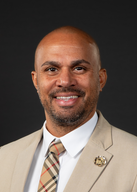
Doug Campbell
Doug Campbell Senate · District 30
R
Support
75% 4
Izaah Knox
Izaah Knox Senate · District 17
D
Support
67% 3
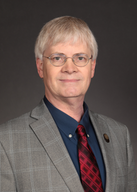
Jeff Taylor
Jeff Taylor Senate · District 2
R
Support
67% 3
Adrian Dickey
Adrian Dickey Senate · District 44
R
Mixed
50% 4
Amy Sinclair
Amy Sinclair Senate · District 12
R
Mixed
50% 4
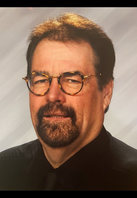
Dave Sires
Dave Sires Senate · District 38
R
Oppose
25% 4
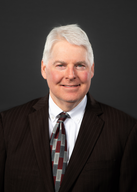
Mark Lofgren
Mark Lofgren Senate · District 48
R
Oppose
25% 4
Matt Blake
Matt Blake Senate · District 22
D
Oppose
33% 3
Mike Zimmer
Mike Zimmer Senate · District 35
D
Oppose
33% 3
Sarah Garriott
Sarah Garriott Senate · District 14
D
Oppose
33% 3
Showing 31–40 of 40 bills

All criminal justice bills

in committee · Iowa · Senate Mar 4, 2025

SF 362: A bill for an act relating to administrative investigations under the peace officer, public safety, and emergency personnel bill of rights, civil service disciplinary hearings and appeals, and communications in professional confidence, and including effective date provisions.

SF 362 amends Iowa law to clarify procedures for administrative investigations and disciplinary actions involving public safety personnel, including law enforcement officers, firefighters, and emergency medical staff. It requires agencies to provide officers with complaint details, witness statements, and complete investigation reports upon request, and establishes new court review processes for officers placed on Brady-Giglio lists (disclosure lists for misconduct records). The bill also adds confidentiality protections for communications during peer support counseling and defines key terms like "formal investigation" and "interview" to limit their scope. These changes directly affect Iowa public safety employees facing disciplinary actions under civil service rules.
Sub-Topics Courts Law Enforcement
in committee · Iowa · House Apr 3, 2025

HF 921: A bill for an act relating to administrative investigations under the peace officer, public safety, and emergency personnel bill of rights, civil service disciplinary hearings and appeals, and communications in professional confidence, and including effective date provisions.

HF 921 updates Iowa law governing investigations and disciplinary actions for certified public safety personnel, including law enforcement officers, firefighters, EMTs, and corrections staff. It requires agencies to provide officers with complaint details, witness statements, and complete investigation reports upon request, and establishes a court review process for officers challenging placement on Brady-Giglio lists (which affect officer credibility in court). The bill also clarifies that interviews during investigations are not hearings and adds confidentiality protections for peer support communications during crisis interventions. These changes aim to increase transparency in disciplinary processes while protecting officer rights.
Sub-Topics Courts Law Enforcement
in committee · Iowa · Senate Mar 3, 2025

SF 364: A bill for an act modifying the periods of time to bring certain civil actions by victims of sexual abuse and other sexual offenses that occurred when the victim was a minor, entitling certain cases to a preference in trial order, and including effective date provisions.

SF 364 extends the statute of limitations for civil lawsuits by victims of sexual abuse or other sexual offenses that occurred when they were minors. It allows these cases to be filed within 10 years of discovering both the injury and its connection to the abuse, or until the victim turns 18, whichever is later - replacing the previous 5-year window for minor victims. The bill also revives previously time-barred cases, permitting new filings within three years of the bill’s effective date. Additionally, it entitles these cases to priority in court scheduling and includes a sunset provision for certain provisions, repealing them July 1, 2031.
Sub-Topics Courts
in committee · Iowa · Senate Jan 23, 2025

SF 66: A bill for an act relating to testimony by certain witnesses by two-way closed-circuit equipment.

This bill (SF 66) allows courts to permit minors (under 18) and witnesses with mental illness, intellectual disabilities, or developmental disabilities to testify remotely via two-way video equipment instead of in the same courtroom as the defendant. It requires a court to make a specific finding that this is necessary to prevent trauma that would impair the witness's ability to communicate. The testimony is recorded in a separate room and displayed in the courtroom through a video connection, with only essential personnel and those aiding the witness's well-being allowed in the testimony room. The defendant can view the witness during testimony, and the witness can see the defendant, but the defendant is not physically present in the testimony room. This change aims to reduce emotional distress for vulnerable witnesses while maintaining courtroom procedures.
Sub-Topics Courts
in committee · Iowa · House Feb 25, 2025

HF 591: A bill for an act relating to expedited contempt of court appeal proceedings and including effective date provisions.

HF 591 creates a faster appeals process for individuals sentenced to jail or fines in contempt of court cases. It requires courts to hold a review hearing within 24 hours of an appeal being filed (with appeals due within 4 hours of the ruling) and gives appellate courts the authority to pause enforcement or change the contempt ruling. The law directs the Supreme Court to establish rules for handling these expedited appeals, including electronic filing options. It takes effect immediately upon enactment.
Sub-Topics Courts
signed · Iowa · Senate Jun 27, 2025

SF 648: A bill for an act relating to and making appropriations to the judicial branch including judicial officer salaries and interpreter or translator fees, and including effective date provisions.

SF 648 allocates state funds to cover judicial officer salaries and interpreter/translator fees within the court system. It directly affects court employees, judges, and individuals requiring language assistance during legal proceedings. The bill provides the necessary budgetary resources to pay these staff members and cover translation costs, ensuring courts can operate effectively. It includes specific timing details for when the funding becomes effective. This is a funding measure, not a policy change, and it became law after the Governor signed it on June 11, 2025.
Sub-Topics Courts
introduced · Iowa · Legislature

5354XD: Appointment of Counsel for Indigent Persons (5354XD) - Public Defender, State

This Iowa bill (5354XD) changes court procedures for appointing lawyers to indigent defendants in criminal cases. It requires courts to appoint noncontract attorneys when no contract attorney is available, changing current law from a permissive "may" to a mandatory "shall." The key provision mandates that court orders include a specific finding of unavailability of contract attorneys. The bill takes immediate effect upon enactment and directly affects indigent defendants who rely on court-appointed counsel.
Sub-Topics Courts
in committee · Iowa · House Feb 6, 2025

HF 243: A bill for an act relating to fees for attorneys appointed to provide indigent defense.

This bill increases hourly payment rates for court-appointed attorneys representing people who cannot afford legal help (indigent defendants) in Iowa. Starting July 1, 2025, attorneys will earn $126 per hour for class "A" felony cases (up from $86), $121 per hour for class "B" felonies (up from $81), and $116 per hour for all other cases (up from $76). The change directly affects public defenders and appointed lawyers handling these cases. The legislation aims to adjust compensation without altering the legal process or eligibility for indigent defense.
Sub-Topics Courts
in committee · Iowa · House Feb 25, 2025

HF 592: A bill for an act relating to a forensic interview of a minor by law enforcement.

HF 592 is a bill that requires law enforcement to obtain court approval before conducting a forensic interview of a minor (under 18) at a licensed child advocacy center when the suspect is the minor's parent, guardian, or custodian. The bill mandates that applications to the court must detail the crime, explain why the interview is necessary, describe attempts to get consent from the parent/guardian, and justify why consent couldn't be obtained otherwise. It requires applications to include specific facts and demonstrate the interview is warranted for the investigation. This bill directly affects minors in abuse cases where their caregiver is the suspect, ensuring a judicial check before interviews proceed.
Sub-Topics Courts Law Enforcement
in committee · Iowa · House Mar 7, 2025

HF 829: A bill for an act relating to court debt resulting from a violation of a law regulating the operation of a motor vehicle.

HF 829 amends Iowa law to provide new options for people with unpaid traffic fines and court costs related to motor vehicle violations. It allows individuals to create income-based installment plans with county attorneys or the state revenue department, or to pay through community service at minimum wage rates. The bill also lets people adjust existing payment plans if their financial situation changes, without counting it as a new agreement. These changes primarily affect drivers whose licenses were suspended for unpaid traffic debts, offering more flexible ways to resolve the debt and avoid extended license suspensions.
Sub-Topics Courts
Showing 31 to 40 of 40 bills
Previous 1 … 2 3 4