Maddy summaryS 2210, the Iran Sanctions Relief Review Act, requires the President to submit a detailed report to Congress before terminating, waiving, or significantly altering U.S. sanctions on Iran. Congress then has 30 days (or 60 days during summer months) to review the proposal through committee hearings and decide whether to approve or disapprove it via joint resolution. During this review period, the President cannot implement the sanction change without Congressional approval. The bill directly affects the executive branch's ability to modify Iran sanctions policy and gives Congress formal oversight authority over major foreign policy shifts related to Iran.
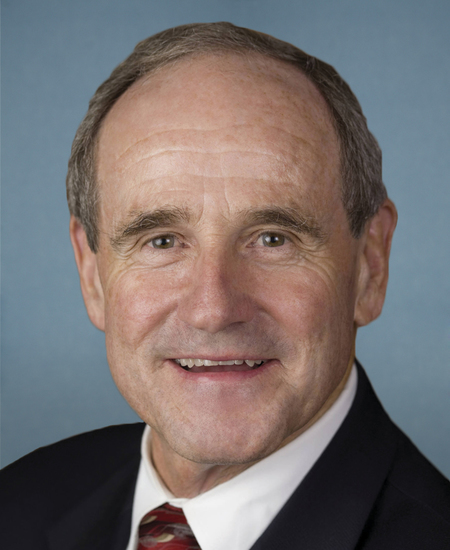
Sen. James E. Risch
Sponsored bills
Maddy summaryThis bill (S 2066) expands the State Department's whistleblower reward program to specifically incentivize reporting of sanctions evasion. It directly affects individuals or entities knowingly violating U.S. or UN sanctions by moving controlled goods, services, or technology across borders, or by providing training, financial services, or other assistance related to sanctioned activities. The key provision adds a new reward category for whistleblowers who identify such violations, including those involved in importing, exporting, reexporting, or facilitating sanctioned transactions. The change amends the State Department Basic Authorities Act to include these specific evasion activities under the existing rewards framework.
Maddy summaryS 2090, the *Preserving Choice in Vehicle Purchases Act of 2023*, modifies federal clean air rules to restrict state vehicle emission standards. It adds a new requirement that state rules cannot "directly or indirectly limit the sale or use of new gas-powered cars," effectively blocking states from enforcing policies that would phase out internal combustion engine vehicles. The bill also mandates the EPA to cancel existing state emission waivers (like California’s) if those waivers don’t meet this new standard. This directly affects states with their own vehicle emission rules and the EPA’s authority to approve them under the Clean Air Act.
Maddy summaryThis bill adds multi-cancer early detection screening tests to Medicare Part B coverage, directly affecting Medicare beneficiaries. It creates a new coverage category for FDA-approved blood tests (like those analyzing cell-free DNA) that screen for multiple cancer types simultaneously, as defined in the bill. Medicare would cover these tests once every 12 months, and the bill clarifies that this change does not impact existing coverage for standard cancer screenings like mammograms or colonoscopies. The policy change ensures beneficiaries can access these new screening options without unnecessary delays after FDA approval.
Maddy summaryThis bill freezes existing energy conservation standards for distribution transformers for five years after enactment. It prevents the Department of Energy from changing or implementing new requirements for these transformers, specifically blocking any rule different from the 2013 standard (78 Fed. Reg. 23336). The bill directly affects the Department of Energy (which administers the standards) and manufacturers of distribution transformers. It does not create new requirements but maintains the current regulatory framework for the next five years.
Maddy summaryThe End Government Shutdowns Act (S 2041) would automatically continue federal funding for government programs at the previous fiscal year's level if Congress fails to pass a new budget on time. For the first 120 days, funding would remain at 100% of the prior year's level, then decrease by 1% every 90 days until a new budget is enacted. This prevents shutdowns for programs like national parks, food safety inspections, and federal agency operations by ensuring continuous funding without new legislation. The bill applies to all federal programs requiring annual appropriations, unless another law already specifies their funding.
This resolution celebrates the 246th anniversary of the creation of the U.S. flag, recognizes that the Pledge of Allegiance has been a valuable part of life for the people of the United States for generations, and defends the constitutionality of the pledge.
Maddy summaryS 305 authorizes the U.S. Mint to produce and sell commemorative coins (gold, silver, and half-dollar denominations) to mark the U.S. Marine Corps' 250th anniversary in 2025. Each coin sale includes a surcharge ($5 to $35 per coin) that will fund the Marine Corps Heritage Center's educational programs, with proceeds paid directly to the Marine Corps Heritage Foundation. The coins will be sold from January 1 to December 31, 2025, and the surcharge structure ensures no net cost to taxpayers by covering production expenses through sales. This bill directly affects the U.S. Mint (in coin production), the Marine Corps Heritage Foundation (as recipient of funds), and the public (as potential buyers).
Maddy summaryThis bill ends a specific tax rate used to fund hazardous waste cleanup under the Superfund program, effective January 1, 2023. It directly affects businesses and entities that paid this tax, as the rate will no longer apply after December 31, 2022. The bill also changes repayment rules for government advances from the Superfund, requiring quarterly repayments from unused funds until fully repaid. The title "Pay Less at the Pump" is misleading, as the bill does not address fuel costs or gas prices.
Maddy summaryThis bill changes school lunch rules to allow schools to serve whole milk as part of the National School Lunch Program. It amends the law to explicitly include "whole, reduced-fat, low-fat, and fat-free" milks as acceptable options. Crucially, it clarifies that milk fat in fluid milk provided under this rule will not count toward the meal's saturated fat limit for compliance purposes. This directly affects school nutrition programs nationwide by expanding milk choices and simplifying meal planning around fat content.