Maddy summaryLulu’s Law (S 1003) requires the Federal Communications Commission (FCC) to issue a rule within 180 days of enactment allowing wireless emergency alerts for shark attacks. This change would add shark attacks to the list of events covered by the existing wireless alert system, which currently includes threats like severe weather and Amber Alerts. The bill directly affects coastal communities, beachgoers, and local emergency management agencies in areas with shark activity. The policy is a technical update to the alert system's scope, not a new program or mandate for sending alerts.
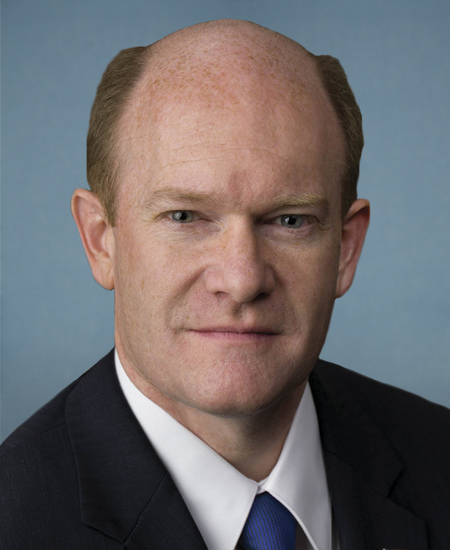
Sen. Christopher A. Coons
Sponsored bills
Maddy summaryThis Senate resolution honors the 27th anniversary of the Supreme Court's Olmstead v. L.C. decision, which established that states must offer community-based services to individuals with disabilities rather than forcing them into institutions. The bill affirms the legal requirement that people with disabilities should live in the most integrated settings possible and salutes those who have expanded home and community support services. It also condemns a recent Department of Justice opinion that challenges this integration mandate and calls on the department to rescind that opinion. Additionally, the resolution criticizes cuts to the Medicaid program and urges Congress to restore funding to protect the health and independence of people with disabilities.
Maddy summaryThis Senate resolution formally recognizes June 2026 as LGBTQ Pride Month to honor the history, contributions, and ongoing struggles of lesbian, gay, bisexual, transgender, and queer individuals in the United States. The document outlines the community's achievements in civil rights and public service while highlighting persistent challenges such as discrimination in employment and housing, as well as hate crimes. It also acknowledges the global context of LGBTQ rights, noting both international progress and the persecution faced by individuals in various countries. Ultimately, the resolution expresses support for equal treatment and encourages the public to use the month to learn about and celebrate the LGBTQ community.
Maddy summaryThis bill creates a new federal regulatory framework for Outcomes-Based Financing (OBF) products, which are loans for education where repayment amounts depend on the borrower's future income. It directly affects private lenders, educational institutions, and students by establishing specific rules for how these loans are underwritten, disclosed, and repaid. Key provisions require lenders to clearly advertise and disclose critical terms like income thresholds and payment calculations, while also mandating that monthly payments never exceed 20% of a borrower's income. The legislation further defines how these loans are treated for tax purposes, bankruptcy discharge, and credit reporting, and it preempts certain state laws that might otherwise restrict such financial products.
Maddy summaryThe EBOLA Act directs the President to rejoin the World Health Organization within 30 days and immediately collaborate with the agency to address the ongoing Ebola outbreak in Central and Eastern Africa. This legislation authorizes funding to cover the financial obligations required to restore U.S. membership and to support global response efforts aimed at preventing the virus from spreading internationally. The bill is based on the finding that infectious disease outbreaks pose significant threats to national security and public health, and that participation in the WHO is essential for effective disease monitoring and coordination.
Maddy summaryThe Investing in State Energy Act of 2026 requires the federal government to provide application guidance and publish funding allocations for state energy programs within 60 days of funds becoming available. Additionally, the bill mandates that financial assistance payments be sent to states and tribes within 30 days after they submit complete conservation plans. This legislation also increases funding for state energy initiatives by adding $100 million for each of the fiscal years from 2027 through 2031. These changes aim to streamline the process for states and tribes to receive and utilize federal energy conservation funds more quickly.
Maddy summaryThe NO FAKES Act of 2026 establishes a new property right for individuals to control the creation and use of their digital voice and visual likeness replicas, extending protection to both living people and their heirs for up to 70 years after death. The bill requires companies and platforms that distribute these digital replicas or sell tools to create them to obtain explicit authorization from the right holder, while also setting up a notification system for online services to remove unauthorized content. Additionally, the law preempts existing state laws regarding digital likeness rights and includes specific penalties and safe harbor protections for platforms that comply with the new requirements.
Maddy summaryThis resolution designates July 15, 2026, as Glioblastoma Awareness Day to raise public attention about this aggressive and deadly form of brain cancer. The bill honors patients and families affected by the disease while encouraging greater awareness of the urgent medical needs and research opportunities surrounding it. It also expresses support for collaborative efforts among government, private, and nonprofit organizations to develop better treatments and invests in ongoing research initiatives.
Maddy summaryThe Latonya Reeves Freedom Act of 2026 strengthens the Americans with Disabilities Act to ensure individuals with long-term care needs have a federally protected right to live in their own homes or integrated community settings rather than institutions. It mandates that states and insurance providers offer community-based services, provide maximum control over care choices to individuals, and establish enforceable plans to transition people out of institutional facilities. The bill also creates new enforcement mechanisms, including a task force to study barriers to community living, requirements for public participation in planning, and the ability for individuals to sue for damages if they are denied these community-based options.
Maddy summaryS 1782, the Charlotte Woodward Organ Transplant Discrimination Prevention Act, prohibits hospitals and transplant centers from denying organ transplants or related services solely because of a person’s disability. It requires these covered entities to make reasonable modifications to policies - such as considering a patient’s support network or providing communication aids - to ensure access for qualified individuals with disabilities who meet medical eligibility. The bill allows exceptions only if a physician determines a disability is medically significant to the transplant, but does not permit denial based on inability to independently manage care with available support. This applies to all stages, including evaluation, listing, and post-transplant care, while ensuring it doesn’t override stronger protections under existing disability laws like the ADA.