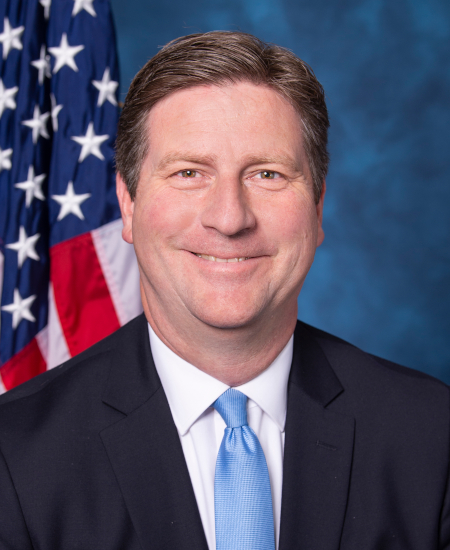
Photo of Greg Stanton
D United States House · District 4 · Arizona On the 2026 ballot

Rep. Greg Stanton

Compare
Total votes
2,837
all sessions
Attendance
99%
30 missed
Near the chamber average
With party
95%
of cast votes
Lower than 77% of chamber peers
Bipartisan score
2%
crosses aisle rarely
Higher than 76% of chamber peers
Sponsored
945
bills & resolutions
Near the chamber average
Committees
6
assignments
945 bills and resolutions

Sponsored bills

Total
945
Primary
68
Co-sponsor
877
This page
945
matching current filters
Co-sponsor HRES 1107
In committee · Indiana House · Co-sponsor
Memorializing Rev. Jesse Jackson by flying the flag of the United States at halfstaff.

Maddy summaryHRES 1107 is a House resolution urging the President to issue a proclamation flying the U.S. flag at half-staff to honor Rev. Jesse Jackson. The resolution recognizes his civil rights leadership, including founding the Rainbow PUSH Coalition and his presidential campaigns in 1984 and 1988, which advanced racial equality and economic justice. This symbolic gesture directly affects the President (as the one who would issue the proclamation) and the public, who would observe the flag at half-staff.

In committee Mar 5, 2026 1 co-sponsor
Co-sponsor HR 7853
In committee · Indiana House · Co-sponsor
PrEP Access and Coverage Act of 2026

Maddy summaryThis bill, the PrEP Access and Coverage Act of 2026, requires most health insurance plans to cover HIV prevention medication without charging patients any out-of-pocket costs. It directly affects people with private insurance, government health programs like Medicare and Medicaid, military health care, and the Indian Health Service. The law mandates that insurance companies cannot require pre-approval for these medications, cannot charge deductibles or copayments for them, and cannot deny or charge higher premiums for life, disability, or long-term care insurance based on someone taking HIV prevention medication. The bill also creates a new public education campaign to increase awareness about HIV prevention options and provides federal funding to states and community organizations to expand access to these services.

In committee Mar 5, 2026 1 co-sponsor
Co-sponsor HR 7802
In committee · Indiana House · Co-sponsor
DISCLOSE Act of 2026

Maddy summaryThe DISCLOSE Act of 2026 aims to increase transparency in election spending and prevent foreign influence. It expands the ban on foreign money to cover federal, state, and local elections, including ballot initiatives and judicial nominations, and criminalizes using corporations to conceal these funds. The bill mandates that organizations spending over $10,000 on campaign-related activities, such as independent expenditures or judicial nomination advocacy, disclose their beneficial owners and top donors. Additionally, it establishes new "Stand By Every Ad" disclaimers for political communications, requiring the highest-ranking official to approve the message and, for certain ads, list their top funders. These provisions directly affect non-candidate organizations, individuals involved in political and judicial nomination spending, and foreign nationals.

In committee Mar 4, 2026 1 co-sponsor
Co-sponsor HR 755
Passed · Indiana House · Co-sponsor
Critical Mineral Consistency Act of 2025

Critical Mineral Consistency Act of 2025 This bill modifies the Energy Act of 2020 to expand the definition of  critical minerals to include critical materials designated by the Department of Energy (DOE). Under current law, DOE's critical materials list contains certain materials that are essential for energy, including those on the critical minerals list of the U.S. Geological Survey (USGS). The USGS's list, which contains certain minerals that are essential to the nation's economic or national security, is not required to include the materials on DOE's list. Currently, both lists include minerals with a high risk of supply chain disruptions, and both DOE and USGS must conduct a variety of efforts to ensure a secure and reliable supply chain of the minerals.  By expanding the definition of critical minerals , this bill requires the USGS to include on its list the materials on DOE's list. Within 45 days of DOE adding a  mineral, element, substance, or material to its critical materials list, the USGS must update its list to include such mineral, element, substance, or material.

Passed Mar 4, 2026 1 co-sponsor
Co-sponsor HR 7736
In committee · Indiana House · Co-sponsor
RELIEF Act

Maddy summaryHR 7736, the RELIEF Act, requires U.S. Customs and Border Protection to refund tariffs collected under the International Emergency Economic Powers Act (IEEPA) on imports entered on or after January 1, 2025. It directly affects importers of record by mandating automatic refunds within 90 days of the bill's enactment, without requiring them to submit applications or protests. The bill directs Customs to use existing data to calculate and disburse refunds for all affected tariff collections, including entries involving goods withdrawn from warehouse for consumption. This policy change eliminates the need for importers to seek refunds through separate processes, streamlining the recovery of overpaid duties.

In committee Feb 26, 2026 1 co-sponsor
Co-sponsor HR 7740
In committee · Indiana House · Co-sponsor
African American History Act of 2026

Maddy summaryHR 7740, the African American History Act of 2026, authorizes $4 million annually for the National Museum of African American History and Culture to develop educational resources and support teaching about African American history. The bill directs the museum to create digital and print materials, provide teacher training, and expand access to curriculum resources for K-12 and college classrooms. It requires annual reports to Congress on fund usage and expires in 2030. This program directly affects educators and students by enhancing classroom materials and professional development on African American history.

In committee Feb 26, 2026 1 co-sponsor
Co-sponsor HR 1957
In committee · Indiana House · Co-sponsor
End Veteran Homelessness Act of 2025

End Veteran Homelessness Act of 2025 This bill requires the Department of Veterans Affairs (VA) to furnish case management to certain veterans who are eligible for the HUD-Veterans Affairs Supportive Housing (HUD-VASH) program administered by the Department of Housing and Urban Development (HUD) and the VA. Specifically, the VA must furnish case management to veterans who are eligible for HUD-VASH that the VA determines require case management. The VA must prioritize vulnerable homeless veterans in assigning case managers and providing services. The VA must take certain actions if a veteran refuses case management. HUD or a public housing authority may not revoke assistance solely on the basis that a veteran has refused case management. Additionally, a veteran may not be evicted or penalized by the owner of a property solely on the basis that they have refused case management or cannot be provided case management for health and safety reasons. The Government Accountability Office must report to Congress on veterans who are served by the HUD-VASH program, case managers and case management services provided under the program, and metrics about housing stability for veterans participating in federal housing assistance programs. The bill also provides statutory authority to expand eligibility for the HUD-VASH program to any veteran who is homeless, at risk of homelessness, or receiving assistance under another housing assistance program if the VA determines a voucher under HUD-VASH is more appropriate. (Currently, assistance is statutorily limited to certain veterans who have chronic mental illness or substance use disorders.)

In committee Feb 24, 2026 1 co-sponsor
Co-sponsor HR 7615
In committee · Indiana House · Co-sponsor
RELIEF Act

Maddy summaryHR 7615, the RELIEF Act, requires the U.S. Customs and Border Protection Commissioner to refund all tariffs collected under emergency economic powers laws (specifically the International Emergency Economic Powers Act) for imports entered on or after January 1, 2025. It mandates these refunds be processed automatically within 90 days of the bill's enactment, without importers needing to file applications or protests. The refund applies to all importers of record for goods subject to these tariffs, covering entries including withdrawals from warehouses for consumption. This directly affects businesses importing goods subject to those specific tariffs by returning funds collected under the emergency authority.

In committee Feb 20, 2026 1 co-sponsor
Co-sponsor HR 7599
In committee · Indiana House · Co-sponsor
Federal Extreme Risk Protection Order Act of 2026

Maddy summaryHR 7599 creates a federal framework for extreme risk protection orders (ERPOs), allowing family members or law enforcement to petition courts to temporarily prohibit individuals from possessing firearms when they pose a risk of harm to themselves or others. The bill establishes a process for issuing ex parte orders (up to 14 days) followed by a hearing within 72 hours to determine if a longer-term order (up to 180 days) should be issued, requiring respondents to surrender firearms to U.S. Marshals or designated law enforcement. Courts must consider specific factors like recent threats, violence, substance abuse, or cruelty to animals before issuing orders, with no fees for petitioners. The law requires law enforcement training to address bias, includes annual reporting requirements, and ensures firearms are returned once the order expires and the individual is eligible to own firearms under federal law.

In committee Feb 17, 2026 1 co-sponsor
Showing 81 to 90 of 945 bills
Previous 1 … 8 9 10 … 95 Next