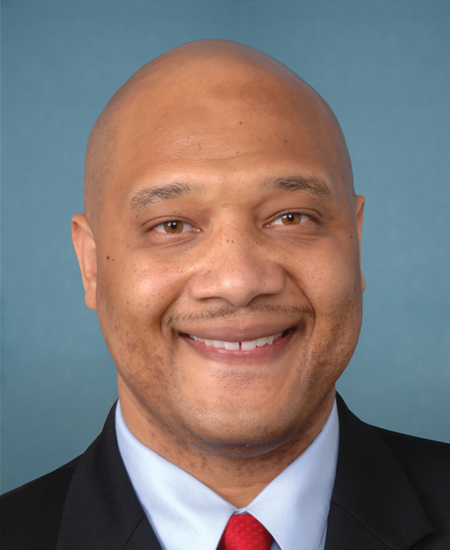
The Green New Deal for Public Housing Act directs the Department of Housing and Urban Development to provide grants to public housing agencies and tribal entities for the comprehensive rehabilitation, energy upgrades, and modernization of public housing stock. These funds are intended to transform properties into zero-carbon homes by installing renewable energy systems, electrifying appliances, and repairing infrastructure, while also establishing workforce development programs that offer training, apprenticeships, and stipends to residents and local low-income workers. The bill mandates strict labor standards, including prevailing wages and the use of U.S.-made materials, and requires agencies to maintain or increase the total number of public housing units while prioritizing resident participation through elected councils and community engagement processes.
This bill, titled the No AI Data Centers on Federal Lands Act, prohibits the construction and operation of large-scale artificial intelligence data centers on any land owned or managed by the United States government. It requires federal agencies to immediately stop building or running such facilities and mandates the removal of existing structures within 30 days of the law's enactment. The legislation defines these centers as buildings with high power usage or advanced cooling systems used for developing AI models, while also specifying that any cleanup must follow environmental safety standards.
This bill, titled the National Security Interstate Pipeline Act, allows the President to designate specific oil and natural gas pipelines as critical to national security, thereby placing them under exclusive federal control for siting and permitting. Once designated, the Federal Energy Regulatory Commission becomes the sole lead agency responsible for approving these projects, bypassing state and local regulations that could delay construction. The legislation also grants pipeline companies the right to use eminent domain to acquire necessary land after a good-faith negotiation attempt and permits the President to waive certain environmental laws if delays threaten national defense. Additionally, the bill sets strict timelines for federal and state agencies to complete reviews, deeming requirements satisfied if actions are not taken within specified periods, while requiring the President to report these designations and waivers to Congress.
The Nuclear Regulatory Modernization Act of 2026 updates how the Nuclear Regulatory Commission handles public hearings and licensing for nuclear facilities. It allows the Commission to issue permits without holding a formal hearing if no one requests one, provided they give at least 30 days of notice and publish their intent in the Federal Register. The bill also permits the construction of uranium enrichment facilities to begin before a final operating license is granted, though the NRC retains the authority to stop construction if regulatory requirements are not met. Additionally, the legislation states that these changes must be implemented in a way that respects existing bans on importing uranium from Russia.
The American Enrichment Deployment Act modifies federal rules to allow the construction of uranium enrichment facilities to begin before a full operating license is granted. This change applies to companies building these facilities, permitting them to start construction under the same conditions used for other nuclear fuel cycle projects. The Nuclear Regulatory Commission must update its regulations within 180 days to implement these new procedures while retaining its authority to oversee safety and enforce compliance.
The Web of Biological Data Act of 2026 directs the Department of Energy to create a centralized online platform called the Web of Biological Data to help researchers access and analyze biological information using advanced tools like artificial intelligence. This system will serve as a single entry point for various biological datasets, particularly those funded by the federal government, while implementing tiered security measures to protect sensitive data and restrict access to certain foreign nations. The bill establishes a phased rollout plan that includes an initial testing phase within two years and a full expansion within five years, supported by an advisory board comprising representatives from industry, academia, and other federal agencies. Funding is authorized to support the development, maintenance, and expansion of the platform, with requirements for regular reports on progress and cybersecurity assessments.
The Stop Climate Shakedowns Act of 2026 prohibits state and local governments from suing energy companies for damages related to climate change or greenhouse gas emissions. This bill declares that regulating emissions is exclusively a federal responsibility and voids any state laws that hold energy businesses liable for alleged climate harms. Consequently, all pending lawsuits of this nature against energy producers must be dismissed immediately, preventing states from imposing retroactive penalties for past lawful operations. The legislation directly affects companies involved in the production, refinement, and sale of oil, gas, and coal by shielding them from civil liability in both state and federal courts.
This bill, titled the Artificial Intelligence Data Center Moratorium Act, halts the construction and upgrading of large-scale artificial intelligence data centers until specific federal laws are passed. It defines these facilities as sites with high power capacity or advanced cooling systems used for developing AI models. The moratorium remains in effect until new legislation ensures federal safety reviews for AI products, mandates that economic benefits reach workers rather than just wealthy owners, prevents increases in utility bills, avoids environmental harm, requires community approval, bans government subsidies, and guarantees union jobs with strong labor standards. Additionally, the bill restricts the export of computing hardware, such as semiconductors and networking equipment, to countries that do not adopt these same protective laws for AI development.
The Next Generation Shipping Act establishes a $10 billion funding program over ten years to support the development and deployment of zero-emission vessels and clean alternative fuel technologies. Administered by the Department of Transportation, the program provides grants, low-interest loans, and loan guarantees to eligible entities such as shipowners, manufacturers, and port authorities, while explicitly prohibiting the use of funds for automated vessel systems. To guide these efforts, the bill creates an advisory committee representing diverse stakeholders including labor groups, environmental organizations, and industry leaders to evaluate technologies and identify gaps. Additionally, the legislation mandates that funded projects prioritize workforce training, community benefits, and environmental justice, ensuring that laborers receive prevailing wages and that local communities are engaged throughout the project lifecycle.
This bill, titled the Ending Fossil Fuel Bailouts Act of 2026, modifies federal bankruptcy laws to specifically target oil, gas, and coal companies. It requires these companies to prioritize paying worker wages and environmental cleanup costs over other debts, including those owed to shareholders. The legislation also prevents fossil fuel firms from abandoning their assets during bankruptcy and extends the time period for investigating fraudulent financial transfers to ten years. Additionally, it prohibits the transfer of certain federal energy leases if the company holding them files for bankruptcy. These changes aim to ensure that environmental liabilities and employee compensation are addressed before other financial claims are settled.