

Maddy summaryThis bill, the PRECISE Act of 2025, increases financial incentives for farmers and ranchers to adopt precision agriculture technologies through existing USDA conservation programs. It defines "precision agriculture" as managing crop or livestock inputs (like fertilizer or water) with high spatial and temporal detail to improve efficiency, and "precision agriculture technology" as tools including GPS systems, soil sensors, and data software. Key provisions allow up to 90% cost coverage for adopting these technologies under the Environmental Quality Incentives Program (EQIP) and add precision agriculture to eligibility for supplemental payments in the Conservation Stewardship Program. The bill directly affects agricultural producers participating in USDA conservation programs by expanding their access to funding for technology that aims to reduce input waste and support environmental quality.
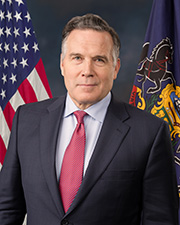
Sen. David McCormick
Sponsored bills
Maddy summaryThe MOMS Act establishes a federal website called pregnancy.gov that will connect pregnant and postpartum women with local resources for healthcare, housing, childcare, and other support services. It creates grant programs for nonprofits that assist women in carrying pregnancies to term, with restrictions prohibiting these organizations from providing or referring for abortion services. The bill also amends child support laws to allow for child support obligations to begin at conception for unborn children, with payment amounts determined by courts based on the best interests of the mother and child. Additionally, it provides grants for telehealth equipment to improve prenatal and postnatal care access in rural and medically underserved areas.
Maddy summaryThis bill would deny federal tax deductions for medical expenses related to gender transition procedures and prohibit federal funding through Medicaid, Medicare, and essential health benefits for such procedures. It defines gender transition procedures broadly to include various hormonal treatments and surgeries, while excluding certain medical conditions like disorders of sex development and specific medical emergencies. The bill would affect individuals seeking gender transition care who rely on federal health programs for coverage. The provisions would apply to services furnished after the bill's enactment, with specific exclusions for certain medically necessary treatments.
This bill increases the annual limit on the tax credit for qualified railroad track maintenance expenses (also referred to as the short line railroad tax credit) and expands eligibility for claiming the credit. Under current law, the tax credit is limited each tax year to $3,500 multiplied by the sum of the number of miles of railroad track owned or leased by the taxpayer (miles owned or leased) and the number of railroad track miles assigned to the taxpayer by a Class II or III railroad (miles assigned). This bill increases the annual limit to $6,100 multiplied by the sum of miles owned or leased and miles assigned. The $6,100 amount used in the calculation of the tax credit limit is adjusted for inflation for tax years beginning after 2025. The bill also expands eligibility for the tax credit to include gross expenses for maintaining railroad tracks owned or leased as of January 1, 2024. Under current law, the tax credit is limited to gross expenses for maintaining railroad tracks owned or leased as of January 1, 2015.
Maddy summary# Summary of the SHIPS for America Act of 2025 This comprehensive maritime legislation establishes a wide-ranging framework to strengthen the U.S. maritime industry, workforce, and infrastructure. Key components include: ## Shipbuilding and Maritime Infrastructure - Establishes a **Shipbuilding Financial Incentives Program** (Section 501) to support commercial vessel construction - Creates a **National Shipbuilding Research Program** (Section 522) to advance shipbuilding technology - Mandates an **Anticipated Commercial Vessel Construction Survey** (Section 506) to inform industry planning - Establishes a **United States Center for Maritime Innovation** (Section 521) to accelerate technology adoption - Requires a **Maritime Infrastructure Readiness Assessment** (Section 523) ## Workforce Development - Creates a **Merchant Marine Career Retention Program** (Section 606) with an 8-3-1 schedule to maintain mariner qualifications - Provides **Public Service Loan Forgiveness** for Merchant Marines (Section 601) - Establishes **Eligibility for Educational Assistance** (Section 602) for Merchant Mariners - Creates **Reimbursement for Spouse Relicensing Costs** (Section 604) - Implements **Noncompetitive Federal Employment** for Merchant Mariners (Section 605) ## Education and Training - Establishes **Centers of Excellence for Domestic Maritime Workforce Training** (Section 612) - Creates a **Maritime Career and Technical Education Advisory Committee** (Section 613) - Develops a **Military to Maritime Transition Program** (Section 616) - Establishes **International Exchange Programs** for mariners and naval architects (Section 618) - Mandates **Maritime Worker Data Collection** (Section 615) to track industry needs ## Additional Provisions - Requires **Reports on National Defense Reserve Fleet** (Section 509) - Mandates an **Assessment of Commercial Best Practices for Navy Shipbuilding** (Section 511) - Establishes **Military Sealift Command** improvements (Section 513) - Creates a **Maritime Workforce Data Collection System** (Section 615) The legislation is funded through the **Maritime Security Trust Fund** (established under Section 50301(b)) and represents a comprehensive strategy to strengthen U.S. maritime capabilities for national security, economic competitiveness, and workforce development.
Maddy summaryThe Stand with Israel Act would prohibit U.S. federal funds from being used to pay the U.S. share of United Nations dues or contributions to UN programs, specialized agencies, or related entities if the UN or a UN entity expels, downgrades, or suspends Israel's membership or restricts Israel's full and equal participation as a member state. This means the U.S. government would withhold payments to the UN in cases where the UN takes such actions against Israel. The bill directly affects the Department of State and other federal agencies responsible for UN funding, requiring them to block these payments under specified conditions. It does not compel the UN to act but would prevent U.S. financial support in response to UN decisions impacting Israel's membership status.
Maddy summaryThe Housing Affordability Act (S 1527) updates inflation-adjusted monetary limits for multifamily housing programs under the National Housing Act. It increases specific dollar amounts - such as loan limits and income thresholds - by replacing outdated figures (e.g., raising a $38,025 limit to $167,310) with new values calculated using the Bureau of the Census' Price Deflator Index for Multifamily Residential Units. These adjustments, effective July 1, 2025, require the Secretary to publish the updated amounts in the Federal Register and round them to the next lower dollar. The bill directly affects federal housing programs that use these monetary thresholds, such as multifamily mortgage loans and rental assistance.
Maddy summaryThis bill directs the Department of Education to use the International Holocaust Remembrance Alliance (IHRA) definition of antisemitism when reviewing discrimination complaints under Title VI of the Civil Rights Act. It specifically applies to cases involving discrimination based on Jewish ancestry or ethnic characteristics in schools and programs receiving federal funding. The bill clarifies that this guidance does not expand the Department’s authority, alter existing discrimination standards, or affect First Amendment rights. It aims to ensure consistent enforcement against antisemitism in federally funded education settings, building on existing Department practices since 2019.
Maddy summaryThis bill requires colleges and universities receiving federal funds to prominently display a link to file discrimination complaints (based on race, color, or national origin) on their main website homepage. It mandates annual posting of a public awareness campaign about Title VI rights in high-traffic campus locations and on institutional websites. Schools must also submit annual reports to the Education Department’s Inspector General detailing discrimination complaints received, their analysis, and actions taken. The bill aims to improve student awareness of civil rights protections and increase accountability by tracking complaints, requiring transparency through congressional briefings, and auditing high-complaint institutions.
Maddy summarySRES 186 designates April 29, 2025, as National Fentanyl Awareness Day to raise public awareness about the dangers of counterfeit fentanyl pills. The resolution specifically aims to inform families and young people about how fake pills - often disguised as legitimate medications - contribute to overdose deaths, citing that illicit fentanyl was involved in 81% of drug deaths among youth aged 14-23 in 2023. It does not create new laws or funding but formally supports existing efforts to combat counterfeit pills and encourages awareness campaigns. The resolution highlights alarming statistics, including 51,010 fentanyl-related overdose deaths in 2024 and low youth awareness (only 55% of teens knew about counterfeit pills).