

Maddy summaryThis bill, the Conscience Protection Act of 2025, strengthens protections for healthcare providers and organizations that refuse to participate in certain medical procedures (including abortion, assisted suicide, and sterilization) based on religious, moral, or ethical beliefs. It creates a private right of action allowing affected entities to seek legal remedies when their conscience rights are violated, addressing a gap in current law where victims could not defend their rights in court. The bill amends the Public Health Service Act to prohibit discrimination against such healthcare entities and establishes clearer enforcement mechanisms through the Department of Health and Human Services, including administrative investigations and civil actions. It directly affects healthcare providers, hospitals, insurers, and other health-related organizations operating under federal funding. The bill aims to address inconsistent enforcement of existing conscience protections like the Weldon Amendment, which has been challenged in cases such as California's abortion coverage mandate.
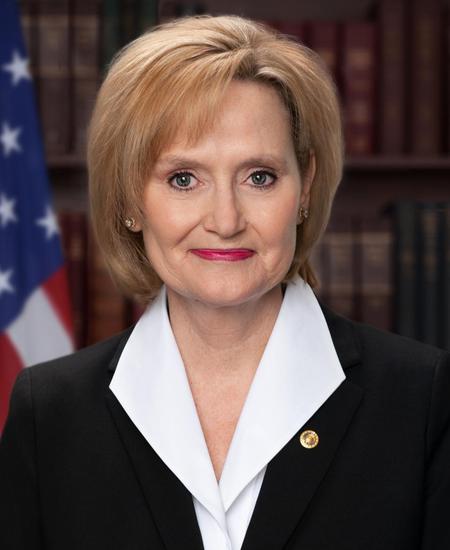
Sen. Cindy Hyde-Smith
Sponsored bills
Maddy summaryThis bill (S 1677, Ensuring Lasting Smiles Act) requires health insurance plans to cover medically necessary treatments for congenital anomalies or birth defects affecting the eyes, ears, teeth, mouth, or jaw. It mandates coverage for reconstructive services, dental/orthodontic care, and related treatments during the course of medical treatment, while excluding purely cosmetic procedures not medically necessary. Plans may apply cost-sharing requirements similar to those for other medical services but must provide notice about these coverage requirements to participants by January 1, 2026. The bill also directs a study on provider network adequacy and cost impacts related to these coverage requirements, to be completed by December 2027.
Maddy summaryThe Love Lives On Act of 2025 modifies veterans' and military survivors' benefit rules to prevent remarriage from automatically ending eligibility. It directly affects surviving spouses of veterans or military members who remarried, ensuring they retain access to key benefits. Key provisions include: (1) preventing termination of veterans' dependency compensation (under 38 U.S.C. §1311/1562) due to remarriage; (2) stopping termination of military Survivor Benefit Plan annuities solely for remarriage, with specific rules for those who remarried before age 55; and (3) expanding TRICARE coverage to include remarried widows/widowers whose subsequent marriage ended (via death, divorce, or annulment). These changes restore or maintain benefits that were previously lost upon remarriage.
Maddy summaryThis resolution formally recognizes 2026 as the International Year of Rangelands and Pastoralists, acknowledging the ecological and economic importance of these lands to the United States. The bill highlights that rangelands cover a significant portion of U.S. territory and support domestic production of food, fiber, and energy while providing critical ecosystem services like carbon storage and wildfire risk reduction. It encourages federal agencies, universities, and organizations to engage in education, research, and outreach activities related to sustainable rangeland management during the designated year. The measure does not create new laws or funding but serves to raise awareness and promote collaboration among stakeholders involved in rangeland stewardship.
Maddy summaryThis bill extends the authorization period for the Young Fishermen's Development Program from 2026 to 2031 by amending Section 5(a) of the existing law. It directly affects young commercial fishermen who rely on the program for training, financial assistance, and support to enter or expand their fishing businesses. The key mechanism is a simple date change in the law’s expiration timeline, ensuring current program funding and operations continue without altering existing eligibility or benefits. The bill does not introduce new requirements or funding streams - it only prolongs the existing program’s validity. This is a procedural extension, not a substantive policy change.
Living Donor Protection Act of 2025 This bill prohibits life insurance, disability insurance, and long-term insurance carriers from denying or otherwise restricting coverage for living organ donors. Specifically, carriers may not deny, cancel, vary premiums, or otherwise impose conditions on policies based on an individual's status as a living organ donor. The bill also expressly specifies that recovery from organ-donation surgery constitutes a serious health condition that entitles eligible employees to job-protected medical leave. In addition, the Department of Health and Human Services must update educational materials on living organ donation to include information about the benefits and risks of living organ donation and the impact of donation on insurance access, particularly with respect to the bill's changes.
Maddy summaryThis resolution designates March 6, 2026, as "National Speech and Debate Education Day" to recognize the value of speech and debate programs in schools. It does not create new laws or funding but encourages educational institutions, businesses, and communities to celebrate and promote these programs. The resolution highlights how speech and debate education develops communication, critical thinking, and civic skills for students. It directly affects schools, teachers, and students participating in these programs by raising awareness of their importance. The Senate formally designates the date and urges nationwide participation in honoring this educational focus.
Maddy summaryThis resolution designates February 21-28, 2026, as "National FFA Week" to honor the National FFA Organization’s work in agricultural education. It recognizes FFA’s role in developing leadership and career skills for students (with over 1 million members nationally) and celebrates the 50th anniversary of Alaska’s State FFA Association, which has 19 chapters and 493 members. As a symbolic resolution, it has no legal effect but formally expresses Senate support for FFA’s mission.
Maddy summaryThis resolution (SRES 617) designates February 2026 as "Career and Technical Education (CTE) Month" to symbolically recognize CTE programs nationwide. It supports CTE's role in preparing students for high-demand careers by promoting workforce readiness through academic and technical skills training. The resolution encourages educators, counselors, parents, and school administrators to advocate for CTE as a valid educational pathway. As a non-binding Senate resolution, it does not create new laws or allocate funds but affirms bipartisan support for CTE's importance in workforce development.
Maddy summaryThis bill amends the Community Development Banking and Financial Institutions Act of 1994 to require the Treasury Secretary to testify annually before Congress about the Fund's operations. It also strengthens the CDFI Bond Guarantee Program by adjusting guarantee limits and extending the program's authorization period. Additionally, the bill expands capital assistance options for community development financial institutions and creates a new lending program specifically for Native community development financial institutions to support homeownership in Tribal and Native communities.