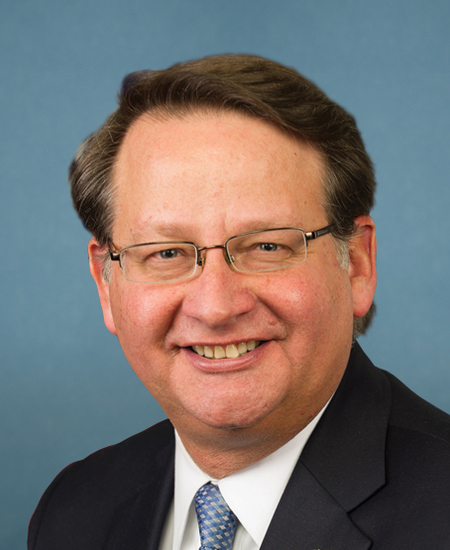
This bill requires the Department of Veterans Affairs to ensure that, if it creates a presumption of service-connection between the occurrence of a disease and exposure to an herbicide agent while serving in the Armed Forces between January 9, 1962, and June 30, 1976, at a military base in Thailand, such presumption must also apply to exposure at any military base in Thailand, regardless of where on the base the veteran was located or what military job specialty the veteran performed.
Sponsored bills
Veterans Claim Transparency Act of 2021 This bill requires the Department of Veterans Affairs (VA) to provide the representative of a veteran with an opportunity to review a proposed determination regarding a claim for compensation or benefits before such determination becomes final. The VA must notify the representative in writing that a proposed determination is ready for review and may not make a final determination until the review period has ended. Under the bill, a representative has up to 48 hours to review the proposed determination.
K2 Veterans Care Act of 2021 This bill establishes a presumption of service-connection for certain diseases becoming manifest in a veteran who served on active duty at Karshi-Khanabad (K2) Air Base in Uzbekistan between January 1, 2001, and December 31, 2005. Specifically, there must be a presumption of service-connection for veterans who manifest illnesses that have a positive association with exposure to jet fuel, volatile organic compounds, high levels of particulate matter, depleted uranium, asbestos, or lead-based paint, as determined by the National Academies of Sciences, Engineering, and Medicine (NASEM). Under a presumption of service-connection, specific conditions diagnosed in certain veterans are presumed to have been caused by the circumstances of their military service. Health care benefits and disability compensation may then be awarded. Veterans who served at K2 Air Base during the specified period are eligible for Department of Veterans Affairs hospital care, medical services, and nursing home care for an illness that has been determined by NASEM to have a positive association with exposure to jet fuel, volatile organic compounds, high levels of particulate matter, depleted uranium, asbestos, or lead-based paint.
Advancing Uniform Transportation Opportunities for Veterans Act or the AUTO for Veterans Act This bill authorizes the Department of Veterans Affairs (VA) to provide (or assist in providing) an eligible veteran or service member with an additional automobile or other conveyance under the VA automobile allowance and adaptive equipment program. Currently, a veteran or service member with a specified service-connected disability or impairment may not receive more than one automobile or other conveyance under the program. The bill authorizes the additional benefit for such veterans and service members if 10 years have passed since the person last received such benefit.
Veterans Burn Pits Exposure Recognition Act of 2021 This bill requires the Department of Veterans Affairs (VA) to concede, for the purposes of health care benefits and wartime disability compensation, that a veteran was exposed to certain toxic substances, chemicals, and hazards from burn pits if such veteran served on active duty in a covered location during a specified time frame (unless there is affirmative evidence to establish that the veteran was not exposed during such service). A burn pit is an area used for burning solid waste in open air without equipment. Specifically, the bill covers the following locations and corresponding time periods: Iraq between August 2, 1990, and February 28, 1991, as well as from March 19, 2003, until burn pits are no longer used in this location; Southwest Asia (including Kuwait, Saudi Arabia, Oman, and Qatar) from August 2, 1990, until burn pits are no longer used in these locations; and Afghanistan, Syria, Jordan, Egypt, Lebanon, Yemen, and Djibouti from September 11, 2001, until burn pits are no longer used in these locations. Under the bill, if an exposed veteran submits insufficient evidence to establish a service-connection for purposes of disability compensation, the VA shall provide a medical examination and request a medical opinion regarding a causal link between the disability and a toxin, chemical, or hazard.
Puppy Protection Act of 2021 This bill requires the Department of Agriculture to expand standards that govern the humane handling, care, treatment, and transportation of animals to include new requirements for commercial dog dealers. Specifically, the standards must require dog dealers to provide to dogs adequate housing, exercise, and veterinary care; appropriate and nutritious food; continuous access to potable water; and meaningful socialization with humans and compatible dogs for at least 30 minutes each day. The standards must also include requirements for breeders to use safe breeding practices and make all reasonable efforts to find humane placement for retired breeding dogs.
Rural STEM Education Act This bill directs the National Science Foundation (NSF) to support research regarding STEM (science, technology, engineering, and mathematics, including computer science) education in rural schools. The NSF must award grants to institutions of higher education or nonprofit organizations for (1) research and development to advance innovative approaches to support and sustain high-quality STEM teaching in rural schools, (2) research and development of programming to identify the barriers rural students face in accessing high-quality STEM education, (3) development of innovative solutions to improve the participation and advancement of rural students in grades Pre-K through 12 in STEM studies, and (4) research on online STEM education courses for rural communities. The NSF may establish a pilot program of regional cohorts in rural areas to provide peer support, mentoring, and hands-on research experiences for rural STEM educators of students in grades Pre-K through 12 in order to build an ecosystem of cooperation among educators, researchers, academia, and local industry. The NSF shall enter into an agreement with the National Academy of Sciences under which the National Academy agrees to evaluate aspects of STEM education and workforce development in rural areas. The National Institute of Standards and Technology must award prizes to stimulate research and development of creative technologies in order to deploy affordable and reliable broadband connectivity to unserved rural communities. The Office of Science and Technology Policy must establish a broadband research and development working group to address national research challenges and opportunities for improving broadband access and adoption across the United States.
Behavioral Intervention Guidelines Act of 2021 This bill requires the Department of Health and Human Services (HHS) to develop best practices for establishing behavioral intervention teams in educational settings. These teams, comprised of experts, are responsible for identifying individuals who exhibit concerning behaviors and addressing associated behavioral health issues to prevent harm to the individual or others. HHS must also provide technical assistance on implementing these teams to elementary and secondary schools and institutions of higher education.
Animal Freedom from Testing, Experiments, and Research Act of 2021 or the AFTER Act of 2021 This bill requires departments, agencies, or instrumentalities that operate federal research facilities or exhibit animals to promulgate regulations that facilitate and encourage the adoption of certain animals that are suitable for retirement.
Extending Tribal Broadband Priority Act of 2021 This bill requires the Federal Communications Commission (FCC) to, within 30 days, establish a new tribal priority window for the 2.5 gigahertz band, through which tribes in rural areas may apply for unassigned spectrum. The new window is subject to the same terms and conditions as the tribal priority window that was adopted by the FCC on July 10, 2019, and that closed on September 2, 2020.