Maddy summaryThe Federal Death Penalty Prohibition Act bans the imposition of the death penalty for any federal crime committed on or after the date the law takes effect. It directly affects individuals currently facing or serving federal death sentences by requiring that all such cases be resentenced to a penalty other than death. This legislation removes the death penalty as a sentencing option for federal offenses and mandates a review for those already sentenced to die before the bill becomes law.
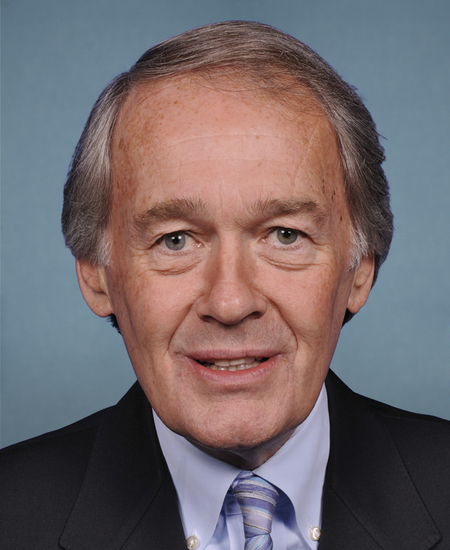
Sen. Edward J. Markey
Sponsored bills
Maddy summaryThe Digital Opportunity Foundation Act of 2026 establishes a new nonprofit organization called the Foundation for Digital Opportunity to help communities with low broadband adoption rates gain access to technology and digital skills. This foundation will be funded by raising money from private donors, philanthropic groups, and government entities rather than using direct federal appropriations. It will operate with a diverse board of directors and an executive team to distribute grants, run training programs, and support startups focused on digital inclusion. The bill also allows the foundation to create for-profit subsidiaries to attract investment and requires regular public reporting on its activities and financial status.
Maddy summaryThis bill increases the corporate tax rate on stock buybacks to 25 percent for large oil and gas companies that meet specific revenue and operational criteria. It targets corporations with an average annual gross receipt of at least $1 billion that are primarily engaged in producing, refining, processing, transporting, or distributing oil or natural gas. The higher tax rate applies only to stock repurchases made after the bill is enacted and before gasoline prices fall below $2.937 per gallon for five consecutive weeks. If gasoline prices drop below this threshold, the special tax provision ceases to apply, and companies may claim a partial reduction in their tax liability based on the duration of the high-price period.
Maddy summaryThe All Students Count Act of 2026 requires schools to break down educational data into more specific categories for Asian American and Native Hawaiian and Pacific Islander students, moving beyond broad groupings to include distinct ethnicities like Chinese, Vietnamese, and Samoan. This change mandates that states report performance metrics for these detailed subgroups within their existing accountability systems to better reflect the diverse backgrounds of these communities. The bill takes effect 18 months after enactment, allowing time for states to adjust their data collection and reporting processes to accommodate the new requirements.
Maddy summaryThis joint resolution seeks to reject a specific rule issued by the Department of Education concerning the William D. Ford Federal Direct Loan Program. If passed, it would nullify the rule and prevent it from taking effect, directly impacting federal student loan policies. The measure uses a congressional disapproval process under Title 5 of the United States Code to override the department's regulatory decision. It does not create new policies but instead stops an existing proposed regulation from being implemented.
Maddy summaryThis resolution honors the life and legacy of John Seymour, a late U.S. Senator from California, by formally acknowledging his public service and contributions. The document details his career highlights, including his roles as Mayor of Anaheim, his work in securing the relocation of the Los Angeles Rams, and his legislative achievements such as passing a major transportation bill. It also lists his committee assignments and advocacy for issues like special education, women's rights, and environmental protection. Finally, the resolution requests that the Senate Secretary communicate this tribute to the House of Representatives and send a copy to Seymour's family.
Maddy summaryThe Ending Passenger Rail Forced Arbitration Act prohibits Amtrak from using mandatory arbitration agreements for consumer and civil rights disputes involving its customers. This legislation invalidates any pre-existing contracts that require passengers to resolve issues like discrimination claims or personal injuries through private arbitration instead of court. Additionally, the bill ensures that customers retain the right to participate in joint, class, or collective legal actions against Amtrak. Courts, rather than arbitrators, will determine whether these arbitration clauses are valid, while disputes covered by the Railway Labor Act remain unaffected.
Maddy summaryThe Loan Forgiveness for Educators Act of 2026 expands existing federal programs to offer debt relief for teachers and early childhood educators who work in high-need schools or specific early education programs. To qualify for full cancellation of their student loans, eligible educators must complete five years of service, which can be consecutive or non-consecutive, in designated schools serving at least 30% low-income students or in Head Start and other qualifying early childhood settings. The bill also introduces a monthly payment assistance feature that covers a portion of loan obligations during the service period and allows parents to receive forgiveness if their children or they themselves are qualifying educators. Verification of service is handled by school administrators or program directors, with simplified self-certification options available for family child care providers, and the law ensures that educators who leave their positions early are not required to repay any forgiven amounts.
Maddy summaryThis bill, titled the Restoring Overtime Pay Act of 2026, raises the minimum salary required for employees to be exempt from federal overtime pay rules, directly affecting workers classified as executive, administrative, or professional staff. It establishes a specific salary schedule that starts at $45,000 per week and increases annually to $75,000 by 2029, after which the threshold will automatically adjust to match the 55th percentile of national earnings for full-time salaried workers. Additionally, the legislation modifies the criteria for determining job duties, requiring that at least 20 percent of an employee's time be spent on executive or administrative tasks rather than the previous 40 percent standard. The law also mandates that the Bureau of Labor Statistics regularly publish earnings data and requires the Department of Labor to provide public notice before implementing any updated salary thresholds.
Maddy summaryThis Senate resolution expresses the non-binding opinion that federal laws regarding medication abortion should rely on scientific evidence rather than political influence. It specifically calls for the FDA to maintain its approval of mifepristone, a drug proven safe and effective over 25 years, and to allow patients to access it through telemedicine or mail-order pharmacies. The measure highlights that current restrictions disproportionately harm marginalized communities, including people of color, low-income individuals, and those in rural areas. By stating these points, the resolution aims to encourage policymakers to ensure equitable and transparent access to abortion care based on medical consensus.