

Keep Our Communities Safe Act of 2022 This bill revises provisions related to the authority of the Department of Homeland Security (DHS) to detain aliens. DHS may detain an alien pending a removal decision for any length of time until the alien is subject to a final removal order. DHS must detain certain aliens, such as those convicted of an aggravated felony, beyond certain time limits for detaining an alien. The authority of the Department of Justice to review DHS custody decisions concerning an alien awaiting a removal decision shall be limited to whether the alien may be detained, released on bond, or released with no bond. DHS may release such an alien on bond only if the alien is not a flight risk or risk to the community. For an alien subject to a removal order, DHS may extend the 90-day removal period (generally the window in which DHS has to remove an alien after a final order of removal) in certain instances, such as when the alien's removal is stayed during an appeal. DHS may continue to detain an alien beyond the removal period and any removal period extensions. DHS shall periodically certify a justification for detaining an alien beyond the removal period. DHS shall establish a detention review process for aliens who (1) have made all reasonable efforts to comply with a removal order, and (2) are not subject to mandatory detention. DHS shall use the review process to determine whether an alien should be detained or released with conditions.
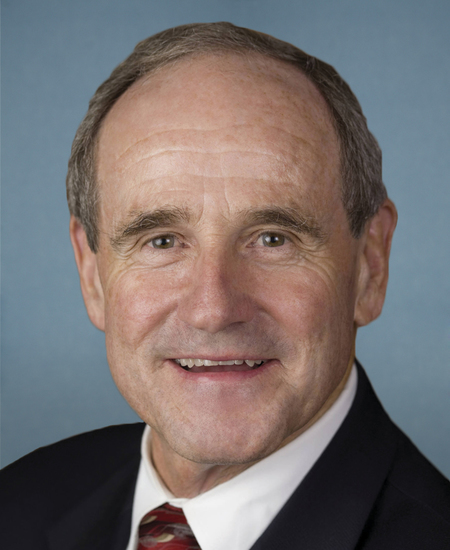
Sen. James E. Risch
Sponsored bills
RECA Extension Act of 2022 This bill extends a program that compensates individuals who were exposed to radiation from atomic weapons testing or uranium mining or processing and who subsequently developed specified cancers or other medical conditions. The bill terminates the program two years after the bill's enactment.
United States Army Rangers Veterans of World War II Congressional Gold Medal Act This bill provides for the award of a single Congressional Gold Medal to the U.S. Army Rangers Veterans of World War II in recognition of their dedicated service during World War II.
This joint resolution nullifies the interim final rule submitted by the Department of Justice and the Department of Homeland Security and published on March 29, 2022, concerning procedures for the consideration of asylum claims and other related issues. (Among other changes, the interim final rule requires an asylum seeker subject to expedited removal to be screened by an asylum officer for a credible fear of persecution or torture, rather than a credible fear of persecution, reasonable possibility of persecution, or reasonable possibility of torture.)
This resolution expresses that the Senate condemns the unjust detention and indicting of Russian opposition leader Vladimir Vladimirovich Kara-Murza; urges the U.S. government and other allied governments to work to secure the immediate release of Vladimir Vladimirovich Kara-Murza, Alexei Navalny, and other Russian citizens imprisoned for opposing the regime of Vladimir Putin and the war against Ukraine; and calls on the President to increase support provided by the U.S. government for those advocating for democracy and independent media in Russia.
This resolution expresses that the Senate supports the Biden administration hosting of a second United States-Africa Leaders Summit as an opportunity to strengthen ties between the United States and African partners; underscores the importance of bipartisan, bicameral congressional participation in the summit; and commits to working with the heads of state, civil society, private sector, and the African diaspora to build stronger ties with the United States and pursue mutual interests.
This resolution commemorates the 70th anniversary of the security treaty between Australia, New Zealand, and the United States and reaffirms the U.S. commitments under the treaty. It also supports new opportunities to deepen and broaden security relations and economic ties between the three countries.
Defending Freedom of Conscience for Cadets and Midshipmen Act of 2022 This bill provides that a cadet or midshipman at a federal service academy (e.g., the U.S. Naval Academy) may not be required to be vaccinated for COVID-19 as a condition for graduation and may not be dismissed from the academy as a result of refusing to be vaccinated. Cadets and midshipmen who are prohibited from fulfilling their service agreement due to their refusal to receive a COVID-19 vaccination may not be subjected to repayment provisions (e.g., bonus repayment) or specified debt repayment collections.
This bill amends the Bureau of Reclamation's authority to carry out emergency work to include certain urban canals of concern and amends certain cost-sharing provisions. Specifically, the bill reclassifies Reclamation's urban canals of concern as emergency extraordinary maintenance and operation work necessary to ensure the continued safe, dependable, and reliable delivery of project benefits. An urban canal of concern conveys water through a densely populated urban area and the canal's failure would result in the loss of life and property in the vicinity of the failure. As emergency work, Reclamation may provide federal funds to an urban canal of concern project on a non-reimbursable basis sufficient to cover 35% of the cost. The bill further specifies that reimbursable funds provided under this provision must be considered a nonfederal source of funds for purposes of federal grant cost-sharing requirements.
Maddy summarySRES 643 is a Senate resolution designating the week of May 15-21, 2022, as "National Police Week" to honor law enforcement officers who serve and sacrifice in their communities. The resolution recognizes the service of law enforcement officers, particularly those killed or injured in the line of duty, and acknowledges their sacrifices during the COVID-19 pandemic. It expresses support for officers' needs for proper equipment, training, and resources, and encourages the public to observe the week by honoring law enforcement personnel. This designation serves as a formal recognition of law enforcement service without creating new legal requirements or policy changes.