

Maddy summaryS 293, the Fair Access to Banking Act, prohibits large financial institutions (with $10 billion+ in assets) from denying banking services to lawful businesses based on political reasons, bias, or industry category. It requires these "covered banks" to justify service denials using documented, objective risk assessments - not subjective political judgments - and to provide written explanations for denials. The bill directly affects businesses operating legally in industries often targeted by banks (like cannabis or firearms), ensuring equal access to services like loans, credit cards, or payment processing. Violations allow affected businesses to sue for treble damages and attorney fees, with payment networks and credit unions also barred from blocking access based on "reputational risk."
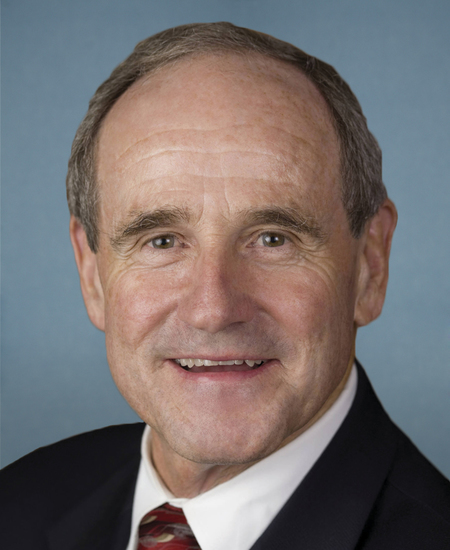
Sen. James E. Risch
Sponsored bills
Maddy summaryS 244, the STOVE Act, prohibits federal agencies from proposing, implementing, or finalizing any rule or guidance that categorically bans natural gas-powered appliances, including stoves, in the United States. This bill directly affects homeowners purchasing gas appliances and manufacturers producing them by blocking potential federal restrictions. The key provision prevents agencies from creating regulations that would restrict or ban the use or purchase of natural gas appliances nationwide. It does not impact state or local regulations but specifically targets federal rulemaking.
Maddy summaryThis bill would allow individuals with valid concealed carry permits from their home state to carry concealed handguns in other states that either permit concealed carry for residents or don't ban it. It requires permit holders to have a government-issued ID, meet federal firearm possession rules, and carry only handguns (excluding machineguns or destructive devices). Carrying would still follow local restrictions in the destination state, such as bans in schools or government buildings. The bill does not change how states issue permits but creates automatic recognition of valid permits across participating states.
Maddy summaryThis concurrent resolution (SCONRES 3) is a symbolic statement affirming religious freedom as a fundamental human right protected under the U.S. Constitution. It specifically recognizes the 237th anniversary of the Virginia Statute for Religious Freedom (enacted January 16, 1786) and affirms that religious freedom allows all people - of any faith or no faith - to live, work, and worship according to their beliefs. The resolution emphasizes that religious freedom is a unifying principle essential to American democracy, citing historical documents like the First Amendment and presidential proclamations. As a non-binding resolution, it does not create new laws or affect any specific group, but serves to publicly affirm this principle on Religious Freedom Day.
Maddy summaryThis bill requires public elementary and middle schools receiving federal funding to obtain parental consent before changing a student's gender markers, pronouns, or preferred name on school forms, or before allowing changes to sex-based accommodations like bathrooms or locker rooms. It directly affects parents of K-8 students in these schools by mandating their involvement in decisions about their child's gender-related information and facility access. The key mechanism is a condition for continued federal funding, requiring schools to seek parental permission for these specific changes. The bill aims to prevent schools from making such decisions without parental knowledge, as cited in its findings about specific school districts.
Maddy summaryS 202 reauthorizes the Collaborative Forest Landscape Restoration Program through 2032, extending its current authorization period and increasing the annual funding cap from $4 million to $8 million. The bill expands eligible projects to include wildfire risk reduction across public, tribal, private, and state lands (including the wildland-urban interface), watershed health improvements, and innovative financing mechanisms like conservation agreements. It requires collaborative projects to include federal staffing plans and standardized monitoring for ecological outcomes. This directly affects forest management groups, landowners, and communities working on landscape-scale restoration across diverse land ownerships.
Maddy summaryS 201 requires most federal agencies to submit zero-based budgets every six years. This means agencies must re-examine all programs, operations, and costs to identify the most essential activities and consider alternatives, ranking programs by importance. Agencies (excluding the Department of Defense and National Nuclear Security Administration) must also recommend at least a 2% cut to discretionary spending in their budget proposals. The bill mandates these submissions to the Office of Management and Budget and congressional budget committees for the next fiscal year and the following four years. This directly affects how federal agencies plan and justify their funding requests.
Maddy summaryThis bill requires healthcare providers performing abortions to provide the same immediate medical care and hospital admission to any infant born alive during or after the procedure, as they would for any newborn. It mandates reporting of any failure to provide this care to law enforcement and imposes penalties including fines or up to 5 years in prison for violations. Women who undergo abortions may pursue civil lawsuits for damages, including compensation for physical/psychological harm and three times the abortion cost, if providers fail to comply. The law directly affects abortion providers, hospitals, and the women receiving abortion services.
Maddy summaryThe Regulations from the Executive in Need of Scrutiny Act of 2023 would require Congress to approve most major federal regulations before they take effect. Major rules, defined as those with significant economic impact (estimated at $100 million or more annually), would need a joint resolution of approval from both chambers within 70 days. Agencies would be required to submit detailed reports to Congress before rules take effect, including cost-benefit analyses, economic effects, and other relevant information. This would increase congressional oversight of the regulatory process, though it includes exceptions for national security, emergencies, and monetary policy rules.
Maddy summaryThis joint resolution (SJRES 5) disapproves the District of Columbia Council’s approval of the Local Resident Voting Rights Amendment Act of 2022 (D.C. Act 24-640), which would have expanded voting rights for D.C. residents. It directly affects the D.C. law that was enacted by the District Council on November 21, 2022, and transmitted to Congress under the Home Rule Act. The resolution uses Congress’s statutory authority to block the D.C. law from taking effect by formally expressing disapproval. This is a procedural action, not a new policy, and does not create new voting rules itself.