

Maddy summaryThis bill redefines who qualifies as a "Palestinian refugee" under U.S. policy, requiring individuals to have been displaced during the 1948 conflict and not accepted citizenship elsewhere. It mandates that U.S. funding for the UNRWA agency (which provides aid to Palestinian refugees) can only continue if the State Department certifies UNRWA is free from terrorist ties, anti-Israel rhetoric in its materials, and misuse of facilities for terrorism. The certification must confirm UNRWA uses vetted staff, avoids anti-Semitic or anti-Israel propaganda in education, and undergoes independent financial audits approved by Israel and the Palestinian Authority. U.S. contributions are also capped at levels matching the highest Arab League member country’s annual support and proportional to U.S. funding for other refugee programs. The bill requires annual reports to Congress on efforts to encourage other nations to withhold UNRWA funding until these conditions are met.
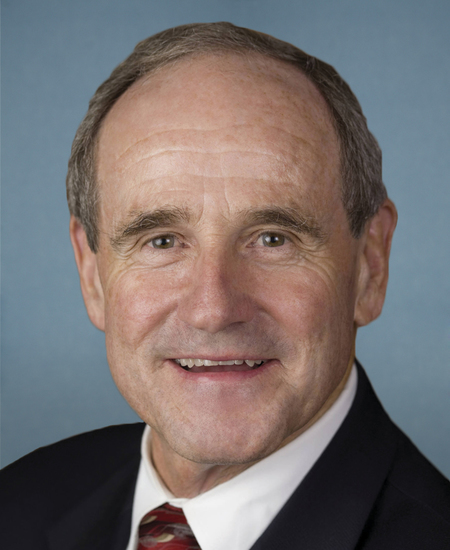
Sen. James E. Risch
Sponsored bills
Maddy summaryThis bill provides tax relief to new car dealers who sold inventory due to supply chain disruptions between March 2020 and January 2022. It allows dealers using the LIFO tax accounting method to avoid recognizing income from those sales in the year they occurred, instead deferring tax consequences until they replace the sold vehicles. Dealers have until 2026 to repurchase similar vehicles; if they fail to fully replace the inventory within this window, they must pay back the tax plus interest. The relief directly affects new car dealers who held LIFO inventory during the specified period and are subject to IRS tax rules.
Maddy summaryS 436, the SAFE Act, requires the U.S. Agency for International Development (USAID) to develop a strategy within 30 days to address a global food crisis worsened by Russia’s invasion of Ukraine. The strategy must focus on improving U.S. emergency food aid to vulnerable populations in Africa and the Middle East - regions already facing severe hunger - and consider how the war affects global food prices and supply chains. Key mechanisms include prioritizing local/regional food procurement (especially from Ukraine and U.S.-supported agricultural programs) while excluding purchases from Russia, China, or sanctioned countries, and allowing emergency food aid to bypass certain shipping restrictions. The bill aims to expand timely food assistance without harming local markets or U.S. agricultural trade.
Maddy summaryS 444 requires the U.S. Senate to approve any World Health Organization (WHO) pandemic preparedness treaty before it becomes binding on the United States. The bill mandates that agreements resulting from the WHO’s pandemic treaty negotiations (currently led by the International Negotiating Body) must be treated as treaties under the U.S. Constitution, requiring Senate ratification with a two-thirds vote. It directly affects U.S. foreign policy implementation by ensuring congressional oversight of international pandemic agreements. The bill responds to concerns about WHO’s pandemic management and aims to prevent executive agreements from bypassing Senate review.
Maddy summaryThis bill directs the Secretary of the Interior to reissue a 2017 rule that removed grizzly bears in the Greater Yellowstone Ecosystem from the federal endangered species list, within 180 days of the bill's enactment. It directly affects states like Montana, Idaho, and Wyoming, which would assume management authority for grizzly bears in that region. The key mechanisms require the rule's reissuance without regard to other legal requirements and explicitly prohibits any judicial review of this action. The bill does not create new management rules but reinstates a previously approved federal decision to transfer management to state agencies.
Maddy summaryS 434, the PAID OFF Act of 2023, amends the Foreign Agents Registration Act (FARA) to require foreign agents representing specific countries to register under FARA, even if they previously qualified for exemptions. It defines "country of concern" to include China, Russia, Iran, North Korea, Cuba, and Syria, removing exemptions for agents of these nations under FARA's subsections (d)(1) and (h). This change directly affects foreign agents operating in the U.S. on behalf of governments from those six countries. The law expires on October 1, 2026, and does not alter FARA's core registration requirements for other foreign principals.
Maddy summaryThis bill prohibits the IRS from requiring financial institutions to report new types of account activity, such as deposits, withdrawals, balances, or transaction details. It directly affects banks and other financial institutions that might otherwise be mandated to share this data. The law blocks any new reporting requirements but allows existing programs (in place when the bill passes) to continue. It does not change current IRS data collection practices under existing laws. The bill aims to limit the scope of financial data the government can access from financial institutions.
Maddy summaryS 430 authorizes the President to create cooperative agreements with Iraq and countries on the Arabian Peninsula (including Bahrain, Kuwait, Oman, Qatar, Saudi Arabia, the UAE, and Yemen) to develop counter-drone technology. The bill enables joint research, testing, and production of systems designed to detect, track, and destroy weaponized drones threatening civilians and U.S. partners. It requires agreements to follow arms control laws and establish intellectual property rules, while explicitly stating it does not authorize military force. The legislation focuses on enhancing regional security through shared defense technology development to protect against drone attacks.
Maddy summaryThis resolution (SRES 63) is a symbolic Senate measure formally celebrating Black History Month. It acknowledges the contributions of African Americans to U.S. history and society, recognizes the origins of Black History Month (beginning as Negro History Week in 1926), and encourages nationwide reflection on this history. The resolution does not create new laws or policies but serves as a formal Senate acknowledgment of the significance of Black History Month in February. It aims to honor the legacy of African American pioneers and promote learning about their impact on the nation.
Maddy summaryThis symbolic Senate resolution designates March 3, 2023, as "National Speech and Debate Education Day" to honor the value of speech and debate programs in schools. It does not create new laws or affect specific groups, but encourages educational institutions, businesses, and communities to recognize these programs. The resolution highlights how speech and debate education develops communication, critical thinking, and civic skills in students. It formally affirms the importance of these programs without imposing any requirements or funding changes.