

Maddy summarySRES 107 is a non-binding Senate resolution recognizing that the Equal Rights Amendment (ERA), proposed by Congress in March 1972, expired when its 7-year ratification deadline passed without enough states approving it. It affirms that Congress has no constitutional authority to alter the terms of a proposed amendment after it is submitted to states or after it expires. The resolution cites legal precedents, including Supreme Court rulings and a 2020 Department of Justice opinion, stating that ratification deadlines are binding and cannot be extended retroactively. It concludes that any future effort to adopt the ERA would require a new congressional proposal, not modifications to the 1972 version. This resolution does not change current law or affect ongoing state ratification efforts for a new ERA proposal.
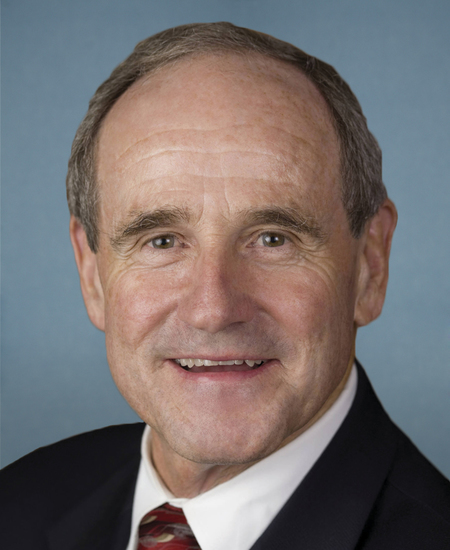
Sen. James E. Risch
Sponsored bills
Maddy summaryThe International Nuclear Energy Act of 2023 establishes a White House office to coordinate U.S. civil nuclear export strategy and international nuclear energy cooperation, focusing on "embarking civil nuclear nations" (countries developing nuclear programs but not yet operating them). It creates a Nuclear Exports Working Group to develop a 10-year civil nuclear trade strategy with biennial targets for exporting nuclear technologies, while authorizing $50 million annually for the State Department to provide financial assistance to these nations for building nuclear program capacity. The bill also establishes a biennial conference on nuclear safety, security, and sustainability to strengthen international cooperation and promote U.S. nuclear energy company involvement in global projects. Key provisions include developing financing relationships, facilitating U.S. nuclear exports, and supporting nuclear safety, security, and safeguards training for partner nations.
Maddy summaryThis bill removes a permitting requirement for fire retardant discharges during firefighting operations. It states that federal agencies (like the Forest Service and National Park Service), state governments, local governments, and tribal governments do not need a permit under the Clean Water Act for fire retardant used in fire suppression, control, or prevention. The key provision eliminates a specific permit requirement (Section 402 of the Federal Water Pollution Control Act) for these emergency fire activities. This directly affects agencies and personnel conducting wildfire response operations across public lands and communities.
Maddy summaryS 741, the Traveler's Gun Rights Act, amends federal gun law definitions to clarify where individuals are considered "residents" for background check purposes. It specifies that active-duty military members can use their duty station state or daily commute location as their "state of residence," and people without a physical home may use a mailbox address. The bill also requires background checks to include either a physical address or mailbox address for the buyer, ensuring consistent application across state lines. This directly affects travelers, military personnel, and individuals using mailboxes when purchasing firearms.
Maddy summaryThis bill bans imports of unirradiated low-enriched uranium (nuclear fuel) from Russia or Russian-owned companies into the U.S., effective 90 days after enactment. It sets annual import limits (e.g., 578,877 kg in 2023, decreasing to 459,083 kg by 2027) and allows limited waivers by the Energy Secretary for national security or if no alternative fuel source exists, but waivers expire by 2028. Exemptions include Department of Energy national security contracts and non-uranium isotopes. The ban ends completely on December 31, 2040.
Maddy summaryThis bill provides travel assistance and support for families of U.S. citizens wrongfully or unlawfully detained abroad. It covers costs for family members to travel to Washington, DC (over 50 miles away) for meetings with U.S. officials, with a limit of two trips per year per detained person. The bill also requires the government to provide mental health support through psychologists and social workers for both detained individuals and their families, and mandates annual reports to Congress on spending and services. These provisions expire on December 31, 2027.
Maddy summarySRES 96 is a non-binding Senate resolution celebrating the economic contributions of women business owners in the United States. It recognizes that women-owned businesses employ over 10 million people and generate nearly $1.9 trillion in annual revenue, while commending their entrepreneurial spirit and highlighting their growth from 4.6% to 42% of all U.S. businesses since 1972. The resolution does not create new laws or policies but serves as a symbolic acknowledgment of their role in the economy. It directly affects public recognition of women entrepreneurs, not specific individuals or businesses.
Maddy summarySRES 97 is a Senate resolution expressing concern about Mexico's economic policies and security challenges, while reaffirming U.S. interests in strengthening bilateral relations. It specifically highlights issues like restrictions on U.S. agricultural exports, energy sector disruptions, and Mexico's deteriorating security environment - including cartel violence, fentanyl trafficking, and weak border management. The resolution calls on the U.S. President to defend American economic interests, address border security, and partner with Mexico to combat transnational crime and drug trafficking. It also urges Mexico to uphold regulatory independence, protect U.S. investments under USMCA, and reduce foreign influence from China and Russia. As a non-binding resolution, it does not create new laws but formally states congressional priorities for U.S.-Mexico cooperation.
Maddy summaryS 697, the "Treating Tribes and Counties as Good Neighbors Act," amends federal law to allow Indian tribes and counties to retain and use revenue from timber sales under "good neighbor agreements" for forest restoration projects. Specifically, it modifies Section 8206 of the Agricultural Act of 2014 to explicitly include tribes and counties alongside governors as entities that can keep funds from timber sales to fund restoration services under these agreements. The bill requires that funds first cover restoration under the current agreement, with any remaining funds usable for other agreements. This directly affects tribes and counties participating in federal forest management agreements, changing how they access and use revenue from timber sales. The changes apply to projects initiated after the 2018 Agriculture Improvement Act.
Maddy summaryS 716, the "Solving the Border Crisis Act," directs the immediate resumption of border wall construction along the U.S.-Mexico border, requiring completion by September 30, 2024, using existing funds. It mandates minimum staffing levels for border operations, including 10,000 full-time employees in enforcement, 25,000 Border Patrol agents, and 25,000 CBP officers. The bill also requires mandatory detention funding through DHS fees, terminates pandemic-related border entry suspensions after a 120-day window, and modifies asylum processing to prioritize returning aliens to Mexico or detaining them for credible fear assessments. These provisions directly affect border security operations, immigration enforcement, and the processing of individuals arriving at the southern border.