Maddy summaryThis bill ensures that U.S. Customs and Border Protection (CBP) and U.S. Immigration and Customs Enforcement (ICE) border agents, officers, and certain contractors continue receiving pay and benefits during government funding gaps. It appropriates funds from the Treasury to cover salaries and specific benefits (like disability compensation and funeral expenses) for essential personnel in key border units, including CBP’s Border Patrol and ICE’s Enforcement and Removal Operations. The law applies during any lapse in appropriations for the Department of Homeland Security.
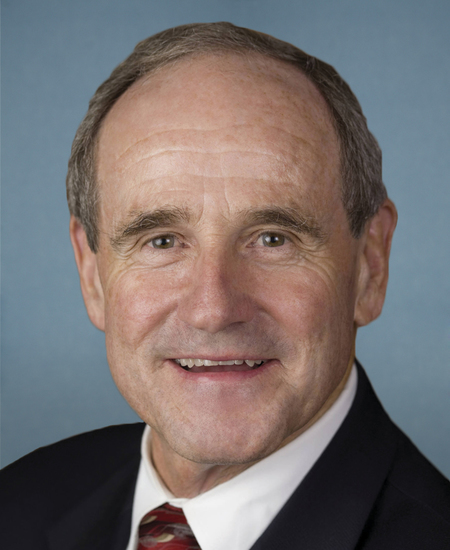
Sen. James E. Risch
Sponsored bills
Maddy summarySRES 380 is a non-binding Senate resolution designating October 1-7, 2023, as "Religious Education Week" to recognize the role of religious education in U.S. schools. It calls on all 50 states, territories, and the District of Columbia to accommodate students attending religious classes during school hours through "released time" programs. The resolution affirms that religious education contributes to students' moral, ethical, and civic development, referencing existing programs where approximately 540,000 public school students participate annually. As a symbolic gesture, it does not create new laws or alter funding, focusing instead on celebrating current religious education practices.
This resolution supports the designation of September 21, 2023, as National Teach Ag Day and recognizes the important role of agricultural education and the National FFA Organization in developing the next generation of agricultural leaders.
Maddy summarySenate Resolution 376 clarifies the existing requirement for business attire on the Senate floor, specifying that men must wear a coat, tie, and long pants. The resolution designates the Senate Sergeant at Arms to enforce this dress code and mandates that any future changes to the rule require a two-thirds vote of all senators. This procedural resolution formalizes current standards without altering them, ensuring consistency in Senate decorum.
Maddy summaryS 2953 requires the federal government to annually identify and review significant regulations that are duplicative (overlapping with other rules), burdensome (imposing excessive costs or unfunded mandates), or outdated (not updated in 10 years). The Office of Information and Regulatory Affairs Administrator must compile a list of such regulations, consult with agencies, and submit it to Congress for review. Congress then has 30 days to propose joint resolutions for repeal, which would move through expedited procedures in both chambers with limited debate and no amendments. The bill directly affects federal agencies responsible for creating regulations and businesses/individuals subject to those regulations, but does not automatically repeal any rules - only establishes a process for Congress to act on identified regulations.
Maddy summaryThe Assad Regime Anti-Normalization Act of 2023 amends the Caesar Syria Civilian Protection Act to expand sanctions against foreign entities engaging with Syria's government under Bashar al-Assad. It specifically targets those providing significant financial support, aircraft parts, or commercial services to Syria, including airlines Syria Arab Airlines and Cham Wings, and prohibits U.S. recognition of the Assad regime. The bill requires annual reports detailing foreign governments' diplomatic and economic engagement with Syria and mandates determinations about the Syria Trust for Development nonprofit, led by Asma al-Assad. It also requires assessments of how foreign normalization impacts U.S. national security, humanitarian efforts, and accountability for war crimes in Syria. The legislation aims to prevent diplomatic normalization and economic engagement with the Assad government through expanded sanctions and reporting requirements.
Maddy summarySRES 359 is a Senate resolution recognizing the week of September 17-23, 2023, as National Forensic Science Week. It supports the goals of this week and encourages forensic science service providers, local policymakers, the public, and media to participate in activities like community events, laboratory tours, and discussions about forensic science's role in criminal investigations. The resolution does not create new laws or funding but serves as a symbolic gesture to highlight how forensic science contributes to justice system accuracy and public safety.
Maddy summarySRES 208 is a Senate resolution designating November 12, 2023, as "National Warrior Call Day." It encourages U.S. citizens, particularly those connected to military service, to reach out to veterans through peer-to-peer conversations to support their mental health and transition from military life. The resolution highlights veteran suicide statistics (6,146 deaths in 2020) and emphasizes that isolation - exacerbated by the pandemic - increases risks for conditions like PTSD. It does not create new programs but urges public engagement to connect veterans with support systems. This is a symbolic, awareness-raising measure with no binding policy changes.
Maddy summaryS 2895, the Adoption Tax Credit Refundability Act of 2023, makes the federal adoption tax credit refundable. This change directly affects low-income adoptive parents who previously could not claim the credit if they owed no federal income tax. The bill restructures the credit in the tax code to allow families to receive it as a direct payment, even if their tax liability was zero. It applies to taxable years beginning after December 31, 2022, and includes a transitional rule for credits carried forward from prior years. The law does not alter the credit amount or eligibility criteria, only its refundability.
Maddy summaryThe Protecting Access to Recreation with Cash Act (PARC Act) requires all National Park System units that charge entrance fees to accept cash payments. This ensures visitors can pay with cash at every park entrance where a fee is collected, not just through electronic methods. The bill amends existing law to explicitly mandate cash acceptance at all such fee locations. The policy change applies to all national parks, monuments, and other units currently charging entrance fees under federal regulations.