Maddy summaryThis bill amends the Natural Gas Act to give the Federal Energy Regulatory Commission (FERC) exclusive authority to approve or deny applications for LNG terminal construction, expansion, or operation for exporting or importing natural gas. It requires FERC to deem LNG exports consistent with the public interest when making decisions, streamlining the approval process for energy companies seeking to build or expand export facilities. The bill clarifies that this change does not affect other federal agencies' responsibilities regarding LNG facilities or existing laws governing imports/exports. It directly affects LNG terminal developers, energy exporters, and the federal regulatory process for natural gas trade.
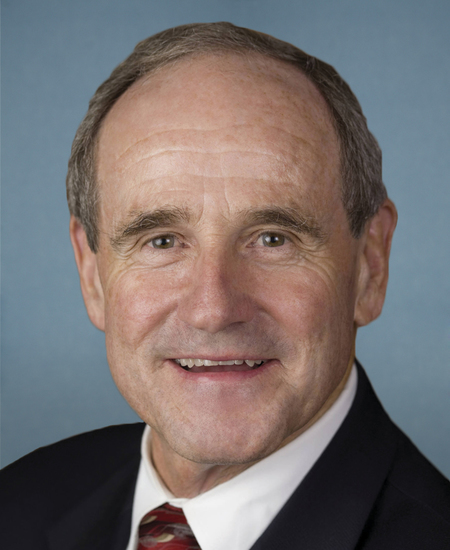
Sen. James E. Risch
Sponsored bills
Maddy summaryThe Protecting Life and Integrity in Research Act of 2024 prohibits federal agencies from funding or supporting research using human fetal tissue obtained from induced abortions. It permits federal research on tissue from miscarriages (before 20 weeks) or stillbirths (20 weeks or more), requiring compliance with existing Public Health Service Act regulations. The bill also bans soliciting or knowingly acquiring tissue obtained from induced abortions. These changes amend the Public Health Service Act to restrict federal research to tissue from natural pregnancy losses, not intentional procedures.
Maddy summaryThe MALDEN Act (S 3683) amends the Stafford Act to improve federal disaster assistance for rural communities impacted by wildfires. It directly affects rural residents and local governments recovering from wildfires, particularly those denied individual assistance under Section 408. Key provisions require federal agencies to coordinate with state/Tribal emergency agencies to help rural areas develop recovery teams focused on preventing secondary disasters (like mudslides) and identifying short- and long-term recovery resources. Additionally, it mandates case worker availability for residents denied assistance in rural wildfire zones. The bill makes concrete policy changes to FEMA's coordination and support processes for rural wildfire recovery.
Maddy summaryThis bill requires the U.S. Census Bureau to add a citizenship status question to the 2030 and future decennial censuses, asking households to identify each member as a U.S. citizen, U.S. national (not citizen), lawfully residing alien, or unlawfully residing alien. It mandates that the Census Bureau publicly release state-level population data broken down by these four categories after each census. The bill also changes apportionment rules to exclude noncitizens from the population count used to determine the number of House seats and electoral votes each state receives, starting with the 2030 census. This directly affects how congressional representation and electoral votes are allocated among states based on population data.
Maddy summaryThis Senate resolution (SRES 531) formally designates January 21-27, 2024, as "National School Choice Week." It recognizes existing annual events celebrating parental choice in K-12 education options, including public schools, charters, private schools, and homeschooling. The resolution encourages parents to learn about educational choices and urges the public to participate in awareness events during this week. It does not create new laws, funding, or regulations - it is a symbolic recognition of an established observance.
Maddy summaryS.1108, the Death Tax Repeal Act of 2023, repeals the federal estate tax and generation-skipping transfer tax for estates of people who die after the bill's enactment. It also modifies the gift tax by establishing a $10 million lifetime exemption (adjusted for inflation) and creating a new tax rate schedule for gifts. This bill directly affects high-net-worth individuals who would have paid estate or gift taxes on large transfers of wealth. The changes take effect after the bill's passage, with the exemption adjusted annually for inflation.
Maddy summarySRES 523 is a Senate resolution honoring the late Senator Herb Kohl of Wisconsin. The resolution expresses the Senate's sorrow at his death, directs the Secretary of the Senate to communicate it to the House of Representatives and send a copy to his family, and instructs the Senate to adjourn as a mark of respect. This procedural resolution does not create new laws or affect policy, but formally commemorates Kohl's service and legacy. It was introduced by a bipartisan group of Senators and passed unanimously on January 11, 2024.
Maddy summaryS 993, the Combating Illicit Xylazine Act, makes the illicit distribution and use of xylazine illegal under federal drug laws. The bill defines xylazine broadly (including multiple chemical variants) and prohibits all human use or non-lici distribution, while allowing only veterinary and pharmaceutical uses approved under existing regulations. It requires the DEA and FDA to report to Congress within a year on xylazine's spread and impacts, with a follow-up report four years later. This directly affects drug traffickers and distributors adding xylazine to illicit drugs like fentanyl, aiming to address a public health threat linked to severe health consequences including necrosis.
Maddy summaryThis bill (SJRES 32) seeks congressional disapproval of a specific rule issued by the Bureau of Consumer Financial Protection (CFPB) on May 31, 2023. The rule, published as Regulation B under the Equal Credit Opportunity Act (ECOA), addressed how lenders must evaluate small business loan applications to prevent discrimination. If passed, the resolution would block this rule from taking effect, meaning lenders would not be required to follow these specific small business lending provisions. The bill directly affects the CFPB's regulatory authority and financial institutions that process small business loans under ECOA.
Maddy summaryThis bill requires a comprehensive audit of the Federal Reserve Board and its regional banks within one year of enactment, conducted by the nonpartisan government auditor (Comptroller General). The audit findings and recommendations must be reported to Congress within 90 days, with the report shared widely among congressional leadership and members. It repeals a previous legal limitation that restricted such audits and updates related provisions in federal law to clarify what activities are subject to oversight. The law directly affects the Federal Reserve System by mandating greater financial transparency and accountability for its operations.