

Maddy summaryThe Working Families Flexibility Act of 2024 allows private-sector employees to choose compensatory time off (1.5 hours for each overtime hour worked) instead of cash overtime pay, provided they have worked at least 1,000 hours for their employer in the past 12 months. Employers must offer this option only through collective bargaining agreements or written employee agreements made voluntarily before work begins, with strict limits: employees can accrue no more than 160 hours of comp time, and unused time must be paid out in cash by January 31 each year (or within 30 days after a chosen 12-month period). The bill also requires employers to pay unused comp time at the higher of the employee’s regular rate when earned or their final rate, and prohibits intimidation for choosing comp time or cash. This applies only to private-sector employees (not public agencies) and expires 5 years after enactment.
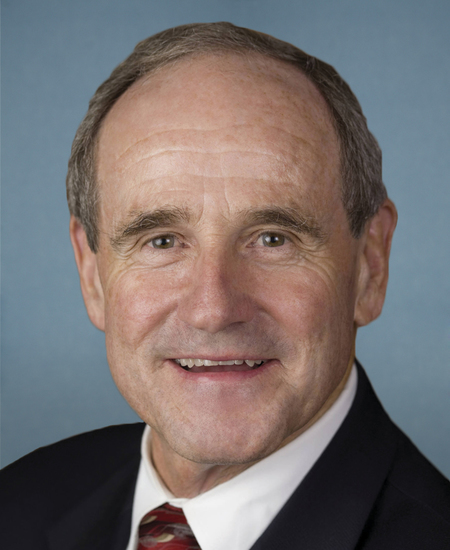
Sen. James E. Risch
Sponsored bills
Maddy summaryThis bill requires that public comments on federal land management rules must come only from U.S. citizens, amending existing law to specify "citizens of the United States" instead of general "citizens." It mandates that online comment systems use CAPTCHA technology to prevent automated submissions by artificial intelligence. The bill directly affects anyone submitting public comments on rules for federal lands managed by the Bureau of Land Management or National Forest System. It does not change land management policies but alters who can participate in the rulemaking comment process.
Maddy summaryThis bill updates military health coverage to better support pregnant service members and their families. It requires the Defense Secretary to add pregnancy and pregnancy loss to TRICARE's list of qualifying life events (allowing automatic coverage adjustments) and mandates a detailed report on maternal care access within military facilities by 2026. The bill also directs the creation of a new Military OneSource online resource guide listing maternal health services, prenatal/postpartum care, and continuity-of-care support for military families - excluding abortion information. These changes directly affect military spouses and children covered under TRICARE who need maternal health services.
Maddy summarySRES 762 designates July 27, 2024, as "National Day of the American Cowboy" to honor the cultural significance of cowboys and cowgirls in American history, including their contributions to the economy (through ranching), traditions, and values like integrity and environmental stewardship. The resolution encourages public observance through ceremonies and activities but does not create new laws or affect specific groups financially or legally. It is a symbolic gesture recognizing the cowboy as an American icon, as outlined in the Senate's preamble.
Maddy summaryThis bill amends federal firearms laws to simplify interstate transactions. It allows licensed dealers to sell firearms to other licensed individuals anywhere in the U.S. and permits sales to non-licensed buyers at temporary locations (like gun shows) across state lines. It also updates residency definitions to clarify that active-duty military members and their spouses can be considered residents of multiple states for firearms purposes, including their duty station location. These changes directly affect licensed firearm dealers, military personnel, and civilians purchasing firearms across state borders. The bill removes current restrictions on where transactions can occur and clarifies applicable state laws.
Maddy summaryThe Unemployment Insurance Integrity and Accessibility Act (S 4663) improves the administration of unemployment benefits by strengthening fraud prevention and expanding access to benefits. The bill extends the statute of limitations for fraud cases from 5 to 10 years for pandemic unemployment programs, while allowing states to waive recovery of non-fraud overpayments when repayment would cause financial hardship or be contrary to equity and good conscience. It requires states to use the National Directory of New Hires and cross-match unemployment claims with employment and prisoner databases to detect fraud, and mandates states to improve online claim filing systems with multilingual support, accessibility features, and 24/7 availability. These changes directly affect states administering unemployment programs, employers reporting to state agencies, and unemployed workers seeking benefits. The bill also requires a GAO study on how funds for fraud prevention and equitable access are being used.
Maddy summaryThis bill (SJRES 99) is a congressional resolution seeking to block a specific environmental regulation. It targets the Council on Environmental Quality's "National Environmental Policy Act Implementing Regulations Revisions Phase 2" rule, which was published in the Federal Register on May 1, 2024. If passed, the resolution would formally disapprove this rule, preventing it from taking effect and halting its implementation by federal agencies. The rule would have modified how agencies conduct environmental reviews under the National Environmental Policy Act (NEPA), but the resolution directly stops that change without altering NEPA itself.
Maddy summaryThis is a ceremonial Senate resolution (SRES 739) introduced by Senators Rubio, Tuberville, and others on June 18, 2024. It commemorates the second anniversary of the Supreme Court's June 24, 2022, *Dobbs v. Jackson Women's Health Organization* decision, which overturned *Roe v. Wade*. The resolution expresses support for the Court's ruling that the Constitution does not guarantee a right to abortion, and it includes statements about protecting "unborn life" and supporting families. As a symbolic measure, it does not create new laws or policies.
Maddy summaryThe ADVANCE Act of 2023 promotes U.S. nuclear energy development through several key provisions. It establishes prizes for the first entities to receive licenses for advanced nuclear reactors, including those for non-electric applications like hydrogen production and district heating. The bill extends the Price-Anderson Act through 2045, providing liability protection for nuclear power plant operators, and requires the Nuclear Regulatory Commission to report on reducing reliance on Russian uranium. Additionally, it includes provisions to streamline regulatory processes for nuclear facilities at brownfield sites and support workforce development in the nuclear industry.
Maddy summaryThis joint resolution (SJRES 97) seeks to block a Department of Labor rule finalized in April 2024 that redefined overtime exemptions for certain white-collar workers. The rule would have changed how employers classify executive, administrative, professional, outside sales, and computer employees for overtime pay purposes. By invoking Chapter 8 of Title 5, U.S. Code, this resolution aims to nullify the rule, preventing it from taking effect. It directly affects employers and workers covered by the rule, but the resolution itself does not change existing labor standards - it only prevents the rule from being implemented.