Maddy summaryThe Simplifying Subcontracting Act requires prime contractors (companies winning federal government contracts) to use clear, plain language in all subcontract solicitations and subcontracts. This ensures small businesses seeking subcontracting opportunities can easily understand the requirements, as defined by the Plain Writing Act of 2010. If the Small Business Administration finds a contractor failed to use plain language, the contractor must resend the solicitation in plain language within 30 days. The Small Business Administration must issue implementing regulations within 90 days of the law's enactment.
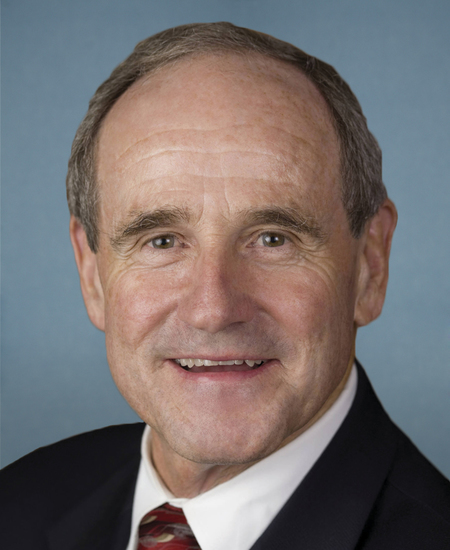
Sen. James E. Risch
Sponsored bills
Maddy summaryThis joint resolution would block a Department of Energy rule setting new efficiency standards for gas-fired instant water heaters. The rule, published in the Federal Register on December 26, 2024, would have required manufacturers to produce more energy-efficient models. If passed, the resolution would prevent this rule from taking effect, keeping current efficiency standards in place. The direct impact is on water heater manufacturers and consumers purchasing these products.
Maddy summaryS 533, the National Right-to-Work Act, eliminates requirements for workers to join a union or pay dues as a condition of employment in private-sector workplaces and railroads. It amends the National Labor Relations Act (NLRA) and Railway Labor Act by removing language that allowed "union security agreements," meaning employers and unions can no longer mandate union membership or financial dues for employees. This directly affects workers in unionized private companies and railroad jobs covered by collective bargaining agreements. The law applies to new or renewed contracts after its enactment, changing how labor agreements can structure financial obligations for employees.
Maddy summaryThis bill prohibits federal agencies (like the Fish and Wildlife Service and Forest Service) from banning lead ammunition or tackle on public lands and waters used for hunting or fishing, directly affecting hunters and anglers who use federal lands. It blocks new federal regulations on lead levels in hunting gear, except in limited cases where a specific area's wildlife decline is linked to lead use and the state wildlife agency approves the restriction. The law requires federal agencies to explain in notices how any exception meets state wildlife department requirements or state law. It does not change existing state laws or allow federal bans on lead where states already prohibit it.
Maddy summaryThis bill, S 557, repeals Section 704B of the Equal Credit Opportunity Act, which required financial institutions to collect and report detailed data on small business loan applications. It directly affects banks and credit unions - especially smaller community institutions - that previously had to comply with these reporting rules. The key provision removes the data collection and reporting obligations, aiming to reduce administrative costs for lenders. This change would eliminate a specific regulatory requirement without altering how small business loans are issued or approved.
Maddy summaryThis bill amends the Fair Labor Standards Act to create a specific exemption for 16- and 17-year-olds working in family-owned logging operations. It defines "logging operation" to include mechanized equipment (like skidders and processors) but explicitly excludes manual chainsaw work and cable skidders. The exemption allows teens to work in these family businesses without applying standard child labor restrictions for hazardous occupations, provided the employer is their parent or legal guardian. This change directly affects young workers in small, family-run logging operations across the logging industry.
Credit Union Board Modernization Act This bill revises the required frequency of meetings held by a credit union's board of directors. Specifically, new credit unions and credit unions with a low soundness rating must meet monthly. All other credit unions must hold at least six meetings annually, with at least one meeting held during each fiscal quarter. Currently, all credit union boards must meet at least once a month.
Maddy summaryS 530, the WEST Act of 2025, repeals a specific Bureau of Land Management (BLM) rule titled "Conservation and Landscape Health" (88 Fed. Reg. 19583, April 3, 2023). The bill directly affects the BLM by nullifying the legal force of this 2023 regulation. It contains no new provisions or policy changes, only the repeal of an existing rule. This is a procedural legislative action with no direct impact on the public, businesses, or other entities.
Maddy summaryThis bill creates new Small Business Administration (SBA) loan programs specifically for nonprofit child care centers that meet strict criteria, such as being tax-exempt 501(c)(3) organizations providing care for children from birth to school age. It makes these eligible centers qualify for standard SBA loans under sections 7(a) and 504, but requires loan guarantees for amounts over $500,000 and prohibits direct SBA lending (requiring partnerships with banks or financial institutions). The bill also mandates annual SBA reports to Congress tracking the number and value of these loans, while prohibiting loan denials based on religious associations and banning the use of funds for religious activities. This directly affects nonprofit child care centers seeking financing for facility improvements, staffing, or program expansion.
Maddy summaryThis joint resolution proposes a constitutional amendment to permanently set the number of justices on the Supreme Court at nine. It would require the Supreme Court to always consist of exactly nine justices, directly affecting the Court's composition. The amendment would become part of the Constitution only if ratified by three-fourths of state legislatures within seven years. This is a procedural change to the Constitution's structure, not a policy affecting other areas.