

Maddy summaryThis bill extends tax deferral for company stock sold to employee stock ownership plans (ESOPs) and fixes a rule that previously caused small businesses to lose government benefits after 49% ownership transferred to an ESOP. It creates a new Treasury Department office to provide education and technical assistance for companies adopting ESOPs, and establishes a Labor Department Advocate for Employee Ownership to coordinate federal efforts and promote employee ownership. These changes directly affect S corporations considering ESOPs, current ESOP-owned businesses, and small businesses seeking to maintain eligibility for government programs. The bill focuses on removing barriers to employee ownership through concrete tax, eligibility, and support mechanisms.
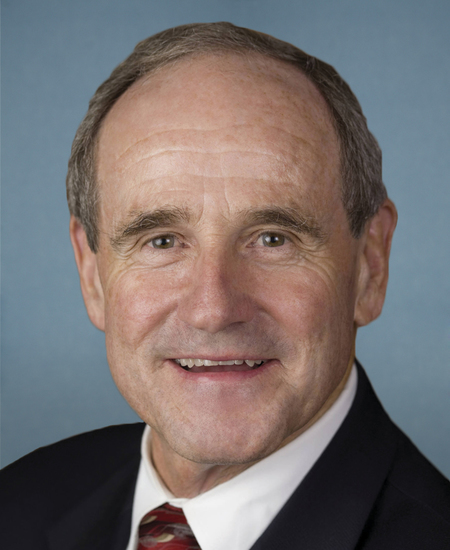
Sen. James E. Risch
Sponsored bills
Maddy summaryThis bill requires energy-related federal agencies to set expiration dates for their regulations. It applies to agencies like the Department of Energy, Bureau of Land Management, and Federal Energy Regulatory Commission. All current regulations must expire within one year of the bill's passage, while new regulations must expire within five years unless the agency gets a waiver by proving the rule has a "net deregulatory effect." Agencies can extend expirations only after public comment and by demonstrating the rule's benefits, but each extension is limited to five years.
Maddy summaryThis bill strengthens the federal 287(g) program, which allows state and local law enforcement agencies to collaborate with U.S. Immigration and Customs Enforcement (ICE) on immigration enforcement. It requires the Department of Homeland Security (DHS) to approve state/local requests for 287(g) agreements unless there is a compelling reason to deny them, prohibits limiting the number of agreements, and prevents arbitrary termination of existing agreements without due process. The bill also mandates annual public reports tracking participation, outcomes (like arrests and removals), compliance with training standards, and reasons for any agreement terminations. Additionally, it clarifies funding for the program by adding 287(g) expenses to the Breached Bond/Detention Fund and requires DHS to establish uniform training standards aligned with federal law enforcement training.
Maddy summaryThis bill expands paid leave under the Family and Medical Leave Act (FMLA) to cover "spontaneous loss of an unborn child" (defined as unplanned, non-purposeful loss in the womb), allowing eligible employees to take leave for their own or their spouse's loss. It also creates a new refundable tax credit for individuals who experienced a stillbirth (defined as spontaneous fetal death before delivery), requiring a state-issued stillbirth certificate for eligibility. The bill adds specific certification requirements for leave requests and clarifies how the tax credit integrates with existing tax filing rules. It directly affects private-sector employees covered by FMLA and taxpayers who suffered a stillbirth.
Maddy summaryThe CLEAR Waters Act (S 2421) clarifies the definition of "navigable waters" under the Clean Water Act by explicitly excluding certain water features from federal regulation. It directly affects wastewater treatment facilities (like lagoons and ponds), seasonal streams that flow only after rain, and groundwater by removing them from the Clean Water Act's jurisdiction. Key provisions add specific exclusions to the definition, including waste treatment systems, ephemeral features, groundwater, and future exclusions determined by the EPA and Army Corps. This changes which water bodies require federal permits for pollution control, shifting oversight away from these excluded features.
Maddy summaryS 2423, the Streamlining Rural Housing Act of 2025, aims to simplify the approval process for rural housing projects funded by the Department of Housing and Urban Development (HUD) or the Department of Agriculture (USDA). It requires HUD and USDA to create a shared process within 180 days to streamline environmental reviews, designate a lead agency for projects, and establish an advisory group with housing stakeholders (including nonprofits, developers, residents, and public housing agencies). The bill mandates a report within one year with recommendations to speed up project approvals while maintaining safety, resident costs, and environmental standards. This directly affects rural housing developers, public housing agencies, and residents of HUD/USDA-funded housing projects by reducing bureaucratic delays in construction.
Maddy summaryThe Judicial Reorganization Act of 2025 splits the current U.S. Court of Appeals for the Ninth Circuit into two new circuits: the reconfigured Ninth Circuit (covering California, Guam, Hawaii) and a new Twelfth Circuit (covering Alaska, Arizona, Idaho, Montana, Nevada, Oregon, Washington). It adds two new judgeships to the former Ninth Circuit - assigning one judge to the new Ninth Circuit states and one to the new Twelfth Circuit states - and updates court locations and judge assignments based on existing duty stations. The bill affects federal judges currently serving on the Ninth Circuit, requiring reassignment to the new circuits, and ensures ongoing cases filed before the effective date are transferred or handled without disruption. The changes take effect one year after enactment, with funding authorized for new facilities and staff.
Maddy summaryThis bill requires IRS supervisors to provide written approval before applying penalties or disallowance periods to taxpayers, mandating that approval occur before any penalty notice is sent. It defines an "initial determination" as a specific written notice detailing the exact penalty amount or disallowance period, excluding general inquiries. The bill also mandates annual IRS reports on all penalties assessed, broken down by IRS unit and process step. It directly affects taxpayers facing penalties for tax credits under Sections 24, 25A, or 32, and requires the IRS to publicly report penalty data starting 24 months after enactment.
Maddy summaryThis bill creates a new federal crime for assaulting first responders (like police, firefighters, and paramedics) causing serious injury or death, with enhanced penalties. It specifically applies when the assault involves interstate travel, weapons that crossed state lines, or interference with the responder's work affecting commerce. Penalties include up to 10 years in prison for serious injury, or life imprisonment if death occurs, kidnapping, or an attempt to kill happens. Federal prosecution requires Attorney General certification unless states decline jurisdiction or fail to adequately address the crime.
Maddy summaryThe PRICE Act (S 2269) increases penalties for assaulting, resisting, or impeding U.S. Immigration and Customs Enforcement (ICE) officers or employees. It would double the maximum prison sentence and adjust the fine for such offenses when committed against ICE personnel, as specified in amended federal law (18 U.S.C. § 111). This bill directly affects individuals convicted of violent or obstructive acts against ICE officers, making their penalties more severe than for similar crimes against other federal officers. The key provision modifies existing penalties without changing the definition of the offense or creating new requirements for ICE operations.