Maddy summaryHR 4130, the Small Business Relief Act, exempts certain small businesses from mandatory securities registration requirements under the Securities Exchange Act of 1934. Specifically, it amends Section 12(g)(1) to exclude "qualified institutional buyers or institutional accredited investors" from the registration threshold, meaning these businesses won't need to register with the SEC if they meet the criteria. The bill also ensures Section 36 of the Act doesn't apply to these changes, reinforcing the exemption. This directly affects small businesses that qualify as institutional accredited investors, reducing their regulatory burden under federal securities law.
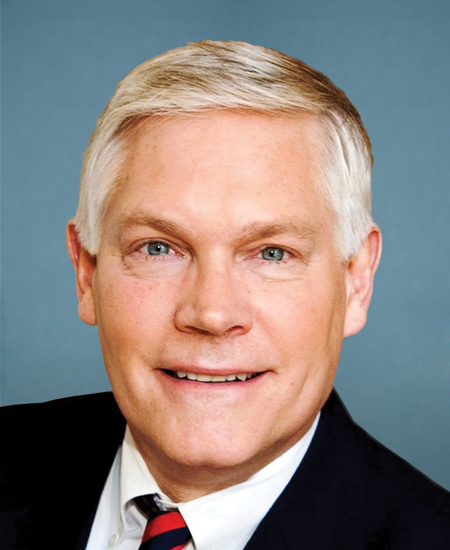
Rep. Pete Sessions
Sponsored bills
Maddy summaryThis bill permanently exempts fixed-income securities (like bonds, notes, and certificates of deposit) from a specific SEC disclosure rule (Rule 15c2-11) that was being applied to debt markets without proper regulatory process. It directly affects businesses raising capital through fixed-income markets, which the bill states are critical for thousands of companies. The exemption removes requirements originally designed for equity markets but mistakenly applied to debt markets. This change makes permanent an existing SEC exemption granted in 2023 and 2024. The bill aims to maintain clear regulatory separation between equity and fixed-income markets.
Respect State Housing Laws Act This bill eliminates a provision that requires a 30-day notice period before a landlord may begin eviction proceedings against a tenant in federally assisted or federally backed housing.
Maddy summaryHRES 1073 is a non-binding resolution designating February 21-28, 2026, as "National FFA Week" to recognize the National Future Farmers of America (FFA) Organization’s role in developing agricultural education leaders and to celebrate the 50th anniversary of Alaska’s State FFA Association. It does not create new laws or affect any specific groups or policies; instead, it formally expresses the House’s support for this commemorative week. The resolution highlights FFA’s mission to prepare students for leadership and careers in agriculture, food, and natural resources. As a symbolic gesture, it has no direct legislative or financial impact on constituents.
Maddy summaryThis bill directs U.S. agencies to support Iranian people's access to uncensored information and hold Iranian officials accountable for human rights abuses. It requires the State Department and FCC to report on technologies (like satellite networks and mesh systems) that could bypass internet restrictions in Iran, and authorizes $2 million annually to develop such tools. The bill also establishes a new "Iran Kleptocracy Initiative" at FinCEN to track corruption, freeze assets of Iranian regime officials and state-owned businesses, and coordinate with international partners. These measures apply to U.S. policy toward Iran but do not alter Iran's domestic laws; they focus on U.S. sanctions, technology development, and anti-corruption efforts targeting the Iranian regime.
Maddy summaryHR 7442 establishes a new National Bridge Program under federal highway law to allocate funding for bridge replacement, rehabilitation, and construction. It changes how funds are distributed: 75% based on the total deck area of bridges on federal-aid highways in each state, and 25% based on the deck area of bridges in poor condition. This directly affects state transportation departments managing federal-aid highway bridges, requiring them to prioritize projects using this updated formula starting after December 31, 2024. The bill eliminates prior programs (Carbon Reduction and PROTECT) and revises related funding mechanisms.
Maddy summaryHRES 1041 is a non-binding resolution supporting the designation of February 8, 2026, as "Scouting America Day" to celebrate the 116th anniversary of the organization's incorporation. It recognizes Scouting America's history, including its founding in 1910, its youth development programs, and its contributions to community service (e.g., over 7 million service hours in 2025). The resolution does not create new laws or directly affect any group, as it serves only as a symbolic expression of congressional support. It honors Scouting America's role in fostering leadership and character among youth, citing its long-standing partnership with national initiatives like America 250.
Maddy summaryHR 7265, the Vote by Mail Tracking Act, requires all government entities sending mail-in ballots for federal elections to use a standardized Postal Service barcode on ballot envelopes. This barcode enables tracking of each individual ballot, while also mandating specific envelope designs and machineability standards set by the Postal Service. The bill applies to all mail-in ballots for federal office elections starting in 2026, but excludes Federal write-in absentee ballots under the Uniformed and Overseas Citizens Absentee Voting Act. The Postmaster General must provide compliance guidance to government entities by June each year to implement the tracking system.
Maddy summaryThis bill modifies federal budget rules for unspent agency funds. It requires federal agencies to allocate 49% of unused funds to the next fiscal year, 49% toward paying the national debt, and 2% for retention bonuses (capped at 10% of an employee's base pay). Agencies must also limit future budget requests to the previous year's amount adjusted for inflation. The bill directly affects all executive branch agencies (excluding the Red Cross), altering how they manage leftover budget authority. It does not create new savings programs for individuals but changes government fiscal management procedures.
Maddy summaryThe No More SCAMS Act establishes a new Federal Fraud Interagency Task Force to investigate and combat fraud involving federal funds. It directly affects covered agencies like the Departments of Treasury, Defense, Health and Human Services, and others, requiring them to provide subject-matter expert members. The Task Force will coordinate fraud investigations across agencies, develop prevention best practices, and share data to recover misused funds. Annual reports to Congress and GAO audits will track investigations, funds recovered, and fraud trends across federal programs.