Maddy summaryThis bill authorizes the U.S. Mint to produce commemorative $5 gold and $1 silver coins marking the 25th anniversary of the September 11, 2001, terrorist attacks. The coins must feature designs honoring victims and first responders (including the inscription "Never Forget") and will be sold only during 2027-2028. All surcharges ($35 per gold coin, $10 per silver coin) collected from sales will fund the National September 11 Memorial and Museum at the World Trade Center, with no net cost to the federal government. The coins are legal tender but primarily intended for collectors, not circulation.
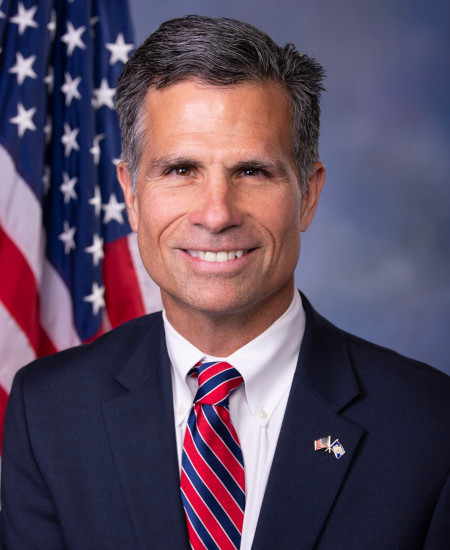
Rep. Daniel Meuser
Sponsored bills
Maddy summaryThe Smithsonian American Women’s History Museum Act authorizes the creation of a new Smithsonian museum dedicated to women’s history, to be located within the National Mall Reserve in Washington, D.C. If the site is managed by another federal agency, the bill requires that agency to transfer the land after notifying Congress and relevant committees. The museum must ensure exhibits and programs accurately represent diverse women’s experiences by consulting a broad range of experts and community voices. The Smithsonian will submit biennial reports to Congress detailing how the museum meets these representation standards.
Maddy summaryThis bill directs the Department of Defense to connect military recruits who cannot enlist with the Job Corps program for training in skilled industrial jobs within the defense industry. It expands specific workforce incentives to include Job Corps centers and gives local operators more flexibility to hire staff, partner with educational institutions, and manage their programs without waiting for federal approval. The legislation also updates rules to allow Job Corps centers to accept cash donations and grants more easily while streamlining enrollment for veterans and active-duty service members. Overall, the act aims to reduce shortages of skilled workers in defense manufacturing by aligning Job Corps training with the needs of the defense industrial base.
Maddy summaryThe Investing in All of America Act of 2025 amends the Small Business Investment Act of 1958 to adjust leverage rules for Small Business Investment Companies (SBICs), which provide capital to small businesses. It lowers the maximum allowable leverage ratio from 300% to 200% and expands eligible investments to include companies in rural areas, critical technology sectors, and small manufacturers. The bill caps excluded leverage at $125 million or 50% of a company’s private capital, whichever is lower, and requires annual inflation adjustments to these dollar amounts. These changes directly affect SBICs, private investment firms that support small business growth nationwide.
Maddy summaryThis resolution formally designates May 14, 2026, as "National Scam Survivor Day" to raise awareness about the rising prevalence of fraud in the United States. The bill highlights statistics showing significant financial losses and increased scam reports across various groups, including seniors, veterans, and young adults. It encourages public education on scam prevention and acknowledges the efforts of federal and local law enforcement in combating these crimes. The measure serves as a symbolic gesture to recognize victims and promote collaboration among government, private, and nonprofit organizations to support survivors and prevent future incidents.
This concurrent resolution expresses support for law enforcement officers. It also appreciates the contributions and recognizes the sacrifices of law enforcement officers.
Maddy summaryThis bill increases loan limits for small manufacturers under two federal programs. It defines "small manufacturer" as a business primarily in U.S. manufacturing sectors (31-33) with all facilities in the U.S. The bill raises the maximum Small Business Administration 7(a) loan limit for these manufacturers from $3.75 million to $7.5 million (capping at $10 million), and doubles the export loan limit from $5 million to $10 million. These changes directly affect qualifying U.S.-based manufacturing businesses seeking federal loan support for operations or exports. The policy modifies specific loan caps without altering other program requirements.
Maddy summaryThis bill would amend federal law to strengthen penalties for organized retail crime by expanding definitions of theft to include digital goods, gift cards, and setting a $5,000 aggregate value threshold for charges over a 12-month period. It would establish a new "Organized Retail and Supply Chain Crime Coordination Center" under Homeland Security to coordinate Federal, State, local, and Tribal law enforcement efforts against cross-jurisdictional theft groups. The Center would share information with retailers, transportation companies, and law enforcement agencies, track crime trends, and produce annual reports on organized retail crime. This legislation directly affects retailers, supply chain businesses, and law enforcement agencies, while targeting organized crime groups responsible for a 93% increase in larceny incidents and rising safety concerns for retail employees. The bill aims to address significant financial losses and supply chain disruptions noted in the National Retail Federation's 2023 data.
Maddy summaryThis resolution expresses support for designating the week of May 3 through May 9, 2026, as "National Small Business Week." It aims to honor the contributions of small businesses and entrepreneurs across the United States, acknowledging their role in supporting millions of jobs. The bill does not create new laws or regulations but serves as a formal statement of appreciation from the House of Representatives.
Maddy summaryThis bill requires federal agencies to analyze indirect economic costs on small businesses when creating new rules, including costs affecting businesses that interact with regulated entities (like suppliers or partners). It creates a new process allowing small businesses to petition the Small Business Administration's Chief Counsel to review agency certifications claiming a rule won't significantly impact them. Agencies must then provide detailed cost analyses, publish guidance online for small business feedback, and face penalties if they fail to cooperate with reviews. The bill does not change existing regulations but adds new review steps for small business input.