

In committee Sep 24, 2026
1 co-sponsor
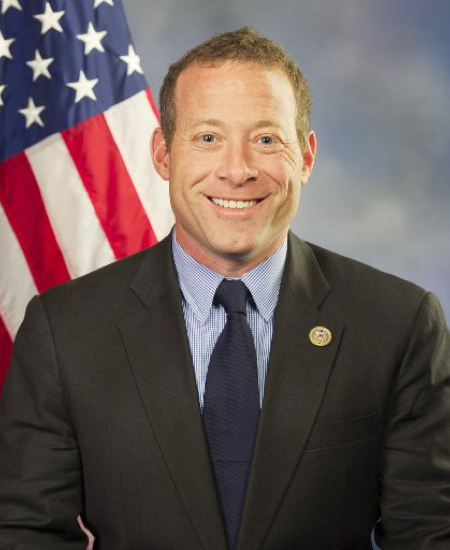
Rep. Josh Gottheimer
Total votes
2,837
all sessions
Attendance
94%
174 missed
Lower than 94% of chamber peers
With party
93%
of cast votes
Lower than 94% of chamber peers
Bipartisan score
4%
crosses aisle rarely
Higher than 92% of chamber peers
Sponsored
2,781
bills & resolutions
Higher than 98% of chamber peers
Committees
7
assignments
2,781 bills and resolutions
Sponsored bills
Total
2,781
Primary
164
Co-sponsor
2,617
This page
2,781
matching current filters
In committee Sep 24, 2026
1 co-sponsor
Ratepayer Protection Act
Maddy summaryThis bill, known as the Ratepayer Protection Act, modifies federal energy laws to ensure that large industrial customers pay for the specific infrastructure upgrades needed to serve their high electricity demands. It directly affects non-residential facilities with a peak power usage of 100 megawatts or more, requiring utilities to charge these customers the full incremental cost of any necessary generation, transmission, or distribution improvements. Under the new rules, large customers must also provide financial guarantees or contributions before such upgrades are made, ensuring utilities can recover costs even if the customer leaves the contract early. State regulators have two years to implement these standards, though the bill exempts utilities in states that have already enacted similar measures or are actively considering them.
Passed Sep 24, 2026
1 co-sponsor
In committee Sep 21, 2026
0 co-sponsors
In committee Sep 21, 2026
1 co-sponsor
Lower Commuting Costs Act of 2026
Maddy summaryThe Lower Commuting Costs Act of 2026 creates a new tax deduction for individuals who pay for travel between their home and workplace or for business purposes that are not reimbursed by an employer. This deduction is classified as "above-the-line," meaning taxpayers can claim it without itemizing their deductions, which directly benefits workers who currently bear these costs out of pocket. The bill sets a maximum annual deduction limit of $4,080 for single filers and twice that amount for married couples filing jointly, with the cap adjusted for inflation in years after 2026. To simplify compliance, the law requires the Treasury Department to issue guidance that may reduce the documentation burden for standard commuting expenses, while also preventing taxpayers from claiming other tax benefits for the same travel costs.
Budget & TaxesSupports Budget & TaxesThe bill creates a new above-the-line tax deduction for commuting costs, directly providing tax relief to individuals and thus advancing the topic of Budget & Taxes by impacting government revenue and individual fiscal management.
Labor & EmploymentSupports Labor & EmploymentThe bill creates a new tax deduction for commuting costs, directly benefiting workers by reducing their out-of-pocket expenses related to employment, thus advancing their financial well-being.
TransportationSupports TransportationThe bill provides a tax deduction for commuting and business travel costs, which indirectly supports transportation by making it more affordable for individuals, thus encouraging its use.
In committee Sep 21, 2026
1 co-sponsor
Lindsey O. Graham Sanctioning Russia and Iran Act of 2026
Maddy summaryHR 5334, the SEED Act of 2025, expands the existing educator expense deduction under federal tax law to explicitly include early childhood educators. It revises the Internal Revenue Code to cover expenses for "early childhood educators" and broadens the educational levels affected to include "pre-kindergarten through grade 12." This change allows early childhood educators (such as preschool teachers) to deduct work-related expenses like classroom supplies and professional development costs, which they previously could not claim under the existing deduction for "kindergarten through grade 12" teachers. The amendment applies to expenses incurred in taxable years beginning after December 31, 2024.
Budget & TaxesSupports Budget & TaxesExpands tax deduction for early childhood educators, providing tax relief for lower/middle-income educators under IRS code, aligning with support indicators for tax relief.
EducationSupports EducationExpands tax deduction for early childhood educators' work expenses, directly supporting teachers by reducing out-of-pocket costs for supplies and professional development.
Labor & EmploymentSupports Labor & EmploymentBill expands tax deductions for early childhood educators, supporting worker benefits and financial relief for educators.
Signed into law Sep 18, 2026
1 co-sponsor
To designate the facility of the United States Postal Service located at 1225 Kempsville Road in Virginia Beach, Virginia, as the "Colonel Edward Shames Post Office Building".
This bill designates the facility of the United States Postal Service located at 1225 Kempsville Road in Virginia Beach, Virginia, as the "Colonel Edward Shames Post Office Building".
Passed Sep 17, 2026
1 co-sponsor
Disapproving the proposed civilian nuclear cooperation agreement between the United States and Saudi Arabia submitted to the Congress on September 14, 2026.
Maddy summaryThis joint resolution seeks to disapprove a proposed civilian nuclear cooperation agreement between the United States and Saudi Arabia that was submitted to Congress in September 2026. The bill directly affects U.S.-Saudi diplomatic and energy relations by blocking the formalization of this specific nuclear partnership. It operates as a procedural vote where members of Congress can reject the executive branch's submission under the Atomic Energy Act.
In committee Sep 16, 2026
1 co-sponsor
Kylie’s Voices for Childhood Cancer Act
Maddy summaryThe Kylie's Voices for Childhood Cancer Act requires state comprehensive cancer control coalitions to include at least two pediatric cancer experts as a condition for receiving federal funding. It also establishes a temporary advisory committee within the Department of Health and Human Services, composed of representatives from federal agencies and individuals with experience in pediatric cancer care or survival. This committee is tasked with developing best practices and recommendations for addressing pediatric cancer in state plans, including specific guidance on using existing block grant funds for these initiatives. The bill further amends maternal and child health services block grants to explicitly allow states to use funds for pediatric-specific cancer control goals and to implement the advisory committee's recommendations.
In committee Sep 16, 2026
0 co-sponsors
Ask Maddy
·
AI policy assistant
Ask Maddy about Josh Gottheimer
Scope: illinois
Hi! I can help you understand Josh Gottheimer's legislative record. What would you like to know?
Try one of these
i
Maddy answers using official bill text and legislative records. Always verify before sharing.
Sources cited inline