

Maddy summaryThis bill authorizes $250 million over five years to fund grants for states, school districts, and eligible Tribal schools to expand computer science education. It requires grantees to provide computer science courses for all high school students within five years, create early access from pre-K through middle school, and implement plans to close equity gaps for underrepresented groups (including minority students, girls, and low-income youth). Grant funds must cover teacher training, high-quality learning materials, and targeted support for underrepresented students, with strict limits on equipment spending (max 15%). Grantees must report annually on student participation data disaggregated by race, gender, and socioeconomic status.
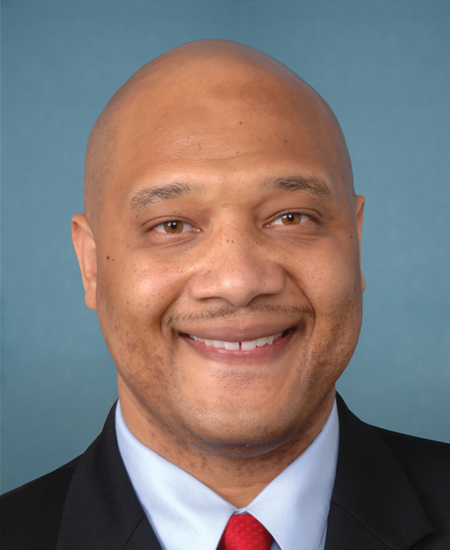
Rep. André Carson
Sponsored bills
Maddy summaryHR 6565, the Reuniting Families Act, would significantly reform family-based immigration by reclassifying spouses, permanent partners, and minor children of legal permanent residents as "immediate relatives," eliminating current visa backlogs for these family members. The bill creates a new legal definition of "permanent partner" to provide equal treatment for same-sex partners in immigration processes, expanding eligibility for family-based visas. It increases the worldwide level of family-sponsored immigrant visas and adjusts allocation numbers to reduce processing delays, while also providing specific relief for orphans, widows, widowers, and certain Filipino veterans. The bill also expands refugee family reunification provisions and increases diversity visa numbers from 55,000 to 80,000. These changes would directly affect family members seeking to reunite with U.S. citizens or legal permanent residents through family-based immigration pathways.
Maddy summaryHR 6597, the LET’S Protect Workers Act, increases civil penalties for employers violating key labor laws to strengthen worker protections. It raises fines for child labor violations to up to $700,000 per incident causing death or serious injury, and doubles penalties for repeated wage/hour violations (up to $50,000 per violation). The bill also significantly boosts OSHA penalties (e.g., up to $800,000 for serious violations), adds new retaliation penalties for mine safety violations (up to $200,000 for repeat offenses), and clarifies that recordkeeping violations continue until corrected. These changes apply to employers across sectors, including manufacturing, agriculture, and mining, under the Fair Labor Standards Act, Occupational Safety and Health Act, and Mine Safety Act.
Maddy summaryHR 6567 creates a new Federal Food Administration within the Department of Health and Human Services to oversee food safety and regulation, replacing the Food and Drug Administration's food-related responsibilities. It transfers all FDA functions related to food (including inspections, labeling, and enforcement under the Federal Food, Drug, and Cosmetic Act) to this new agency, headed by a presidentially appointed Commissioner of Foods. The bill establishes risk-based inspection schedules: high-risk facilities (like meat processors) must be inspected annually, intermediate-risk facilities every two years, and low-risk facilities (such as warehouses) every three years, with infant formula facilities inspected every six months. This reorganization directly affects food manufacturers, distributors, and retailers by shifting oversight from the FDA to a dedicated agency focused solely on food safety.
Maddy summaryHR 6509, the SAFE Drugs Act of 2025, limits how often pharmacies and healthcare providers can create custom drug formulations that copy standard medications. It restricts compounding any drug essentially identical to a commercially available product to no more than 20 times per month for individual patients. The bill also requires pharmacies compounding such drugs for out-of-state patients more than 20 times monthly to report details to the FDA, while exempting hospital pharmacies. These changes aim to improve safety oversight of non-standard drug compounding by setting clear limits and reporting rules.
Maddy summaryHR 5995, the "Have You Served Act," provides grants to states and tribes with veteran suicide prevention plans to fund "Ask the Question Campaigns." These campaigns train human services professionals, local governments, and community providers to respectfully ask clients if they or a loved one served in the military, then connect them to VA resources. The bill authorizes $6 million annually (2026-2030) for up to 25 grants of $200,000 each to support this training and outreach. It directly affects veterans and their families by improving access to VA services through community-based referrals, without changing eligibility for benefits.
Maddy summaryThis bill directs the American Battle Monuments Commission to correct historical errors by identifying Jewish World War I and II veterans buried overseas under incorrect Christian markers (Latin crosses) and replacing them with appropriate markers. It establishes a 10-year program to contact families of affected veterans, with the Commission funding the effort at $500,000 annually through nonprofit contracts. The program specifically targets veterans buried in foreign U.S. military cemeteries with markers indicating non-Jewish faith, addressing a documented mistake affecting approximately 900 Jewish servicemembers. This directly affects Jewish veterans' families by honoring their heritage and correcting past burial inaccuracies.
Maddy summaryHRES 934 is a symbolic resolution designating November 2025 as "Carbon Monoxide Action and Awareness Month" to promote public safety. It does not create new laws or funding but encourages nationwide education, prevention, and detection efforts to protect families from carbon monoxide poisoning. The resolution urges all U.S. households to install and maintain certified carbon monoxide alarms, test them regularly, and recognize poisoning symptoms. It specifically highlights that 36% of homes lack detectors and emphasizes collaboration between government agencies, health organizations, and communities to reduce risks. This resolution directly affects all U.S. residents, particularly vulnerable groups like children and the elderly, by advancing existing prevention strategies.
Maddy summaryHR 6497, the Temporary Immigration Judge Integrity Act, establishes specific rules for appointing temporary immigration judges to handle cases while permanent judges are being hired. It limits temporary judges to 6-month terms (renewable up to four times for a maximum of 24 months), requires them to have at least 10 years of immigration law experience (e.g., former judges, DOJ attorneys, or experienced administrative law judges), and mandates 8 weeks of initial training plus weekly training unless they recently served as permanent judges. The bill also requires the Attorney General to oversee caseloads and performance, ensuring temporary judges have the same authority as permanent judges but emphasizing they should not replace permanent positions. This directly affects immigration courts and the temporary judges appointed under these new standards.
Maddy summaryThe Expanding Cybersecurity Workforce Act of 2025 establishes a new program under CISA to promote cybersecurity careers to underrepresented groups, including racial and ethnic minorities, veterans, formerly incarcerated individuals, people with disabilities, older adults (40+), and those from low-income or nontraditional educational backgrounds (like community colleges or HBCUs). The program requires CISA to tailor outreach to regional needs, partner with schools, unions, and community organizations, and report annually on workforce impact. It authorizes $20 million annually for fiscal years 2026-2031 to support these efforts, aiming to diversify the cybersecurity workforce through targeted recruitment and training.