Fair and Open Competition Act or the FOCA Act This bill prohibits federal construction contracts or controlling documents for federally supported construction projects from requiring or prohibiting project labor agreements. Such documents also may not discriminate against or give preference to a bidder or contractor who signs or refuses to sign a project labor agreement. An agency may exempt a project from this prohibition to avert an imminent threat to public health or safety or to serve the national security.
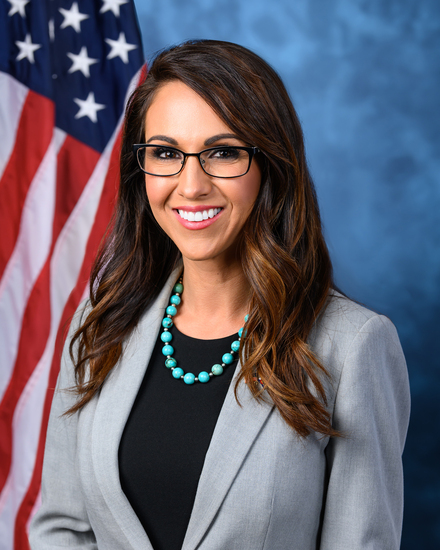
Rep. Lauren Boebert
Sponsored bills
Protecting Our Wealth of Energy Resources Act or the POWER Act This bill requires the President and federal agencies to obtain the approval of Congress before prohibiting or substantially delaying certain new energy or mineral leases or permits on federal lands, including oil and gas leases, coal leases, hard rock leases, or critical minerals leases. In addition, the President and agencies must obtain the approval of Congress before withdrawing certain federal lands from mineral and geothermal leasing activities.
Eliminate Agency Excess Space Act This bill modifies requirements with respect to the disposal of surplus and excess property by federal agencies. Among other things, the bill repeals provisions that require federal agencies to report excess property to the General Services Administration (GSA). Additionally, the GSA must issue regulations that allow federal agencies to dispose of surplus and excess property without first making the property available to other agencies or state or local governments. The bill also requires the GSA to survey all unused or underutilized office spaces held by federal agencies, make recommendations to reduce agency real estate assets, and report on costs associated with property disposal.
This resolution honors the life and legacy of Rush Limbaugh and commends him for his devotion to the United States.
Earmark Elimination Act of 2021 This bill establishes a point of order in the House of Representatives against considering legislation that contains a congressional earmark, limited tax benefit, or limited tariff benefit. If the point of order is raised and sustained, the congressional earmark, limited tax benefit, or limited tariff benefit shall be deemed to be stricken from the legislation.
Managing Predators Act This bill gives states the authority to manage the populations of gray wolves and to determine if the wolves are endangered or threatened species. Specifically, the bill permanently removes the populations of gray wolf in Wisconsin, Michigan, Minnesota, and Wyoming from the federal endangered and threatened species list. In addition, the bill revises requirements for the gray wolf in any state other than Wisconsin, Michigan, Minnesota, and Wyoming. If the population of the gray wolf, as estimated by such state, is at or above a population goal established by the state, then the Department of the Interior may not make a determination that the wolf in such state is an endangered or threatened species.
This resolution requests that the President transmit to the House of Representatives documents related to the amount of funding that was provided in specified laws regarding COVID-19 (i.e., coronavirus disease 2019) and is currently unspent. The specified laws include the Coronavirus Preparedness and Response Supplemental Appropriations Act, 2020; the Families First Coronavirus Response Act; the Coronavirus Aid, Relief, and Economic Security Act (CARES Act); the Paycheck Protection Program and Health Care Enhancement Act; and Division N of the Consolidated Appropriations Act, 2021.
No taxpayer funding for United Nations Human Rights Council Act This bill prohibits the Department of State from making contributions to the United Nations Human Rights Council, either as a percentage of the U.S. contribution to the regular budget of the United Nations or as a voluntary contribution to the council.
This bill terminates the Department of Education on December 31, 2022.
Vaccinate Americans, Not Terrorists Act This bill prohibits federal entities from administering COVID-19 (i.e., coronavirus disease 2019) vaccines to prisoners at the United States Naval Station in Guantanamo Bay, Cuba, until certain conditions are met. Specifically, federal entities may not vaccinate any prisoners if there are outstanding requests from states, tribal nations, and territories for vaccines or other COVID-19 relief; or members of the Armed Forces or reserve components who intend to get the COVID-19 vaccine and have yet to receive it.