Issue · Criminal Justice

Criminal Justice (Courts)

Every criminal justice bill, vote, and legislator stance in Illinois, automatically classified by Maddy, our AI policy reader.

Total bills
115
104th Regular Session
Top supporter
Lisa Davis
100% support rate
Top opponent
John Cabello
0% support rate
Ranked legislators
10
5 support · 5 oppose
Key legislators

Who's moving courts in Illinois

Legislators moving courts in Illinois
Legislator Party Stance Support rate Votes
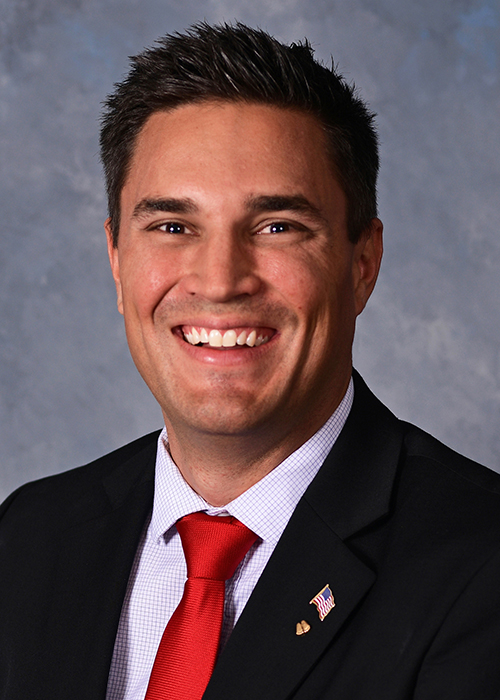
Lisa Davis
Lisa Davis House · District 32
D
Strong +
100% 23
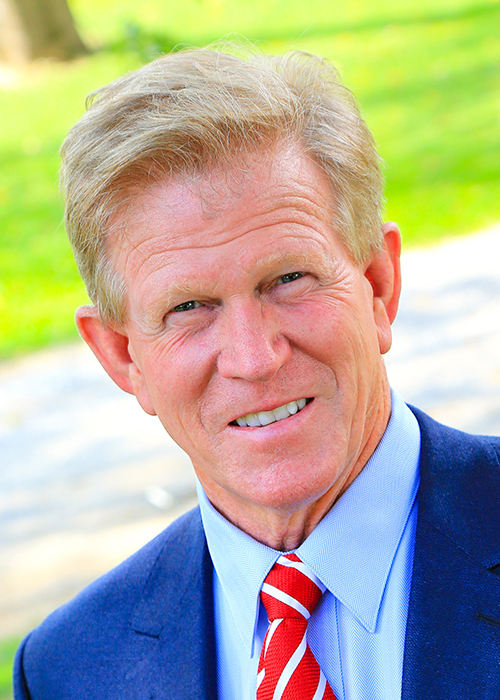
Justin Slaughter
Justin Slaughter House · District 27
D
Strong +
100% 22
Bob Morgan
Bob Morgan House · District 58
D
Strong +
100% 21
Kevin Olickal
Kevin Olickal House · District 16
D
Strong +
100% 21
Will Guzzardi
Will Guzzardi House · District 39
D
Strong +
100% 19
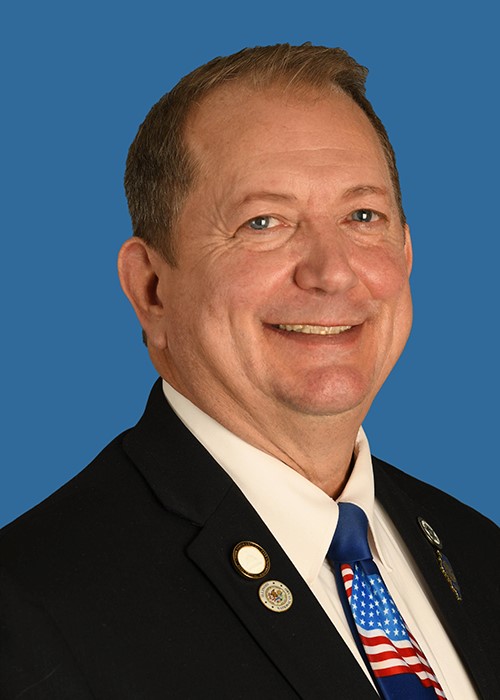
John Cabello
John Cabello House · District 90
R
Strong −
0% 19
Adam Niemerg
Adam Niemerg House · District 102
R
Strong −
0% 12
Jed Davis
Jed Davis House · District 75
R
Strong −
0% 11
Tom Weber
Tom Weber House · District 64
R
Strong −
0% 11
Chris Miller
Chris Miller House · District 101
R
Strong −
0% 10
Showing 81–90 of 115 bills

All criminal justice bills

in committee · Illinois · House Mar 27, 2026

HB 4578: ENDANGERING CHILD & EVIDENCE

Amends the Criminal Code of 2012. Provides that a second or subsequent violation of endangering the life or health of a child or a similar statute of this State or any other state of an offense that is substantially equivalent to the offense of endangering the life or health of a child is a Class 3 felony. Provides that in addition to any other penalty provided by law, upon conviction for endangering the life or health of a child, the court may order the convicted person to undergo a psychological or psychiatric evaluation and to undergo any treatment at the convicted person's expense that the court determines to be appropriate after due consideration of the evaluation. Provides that the special probation provisions are not applicable to a person convicted of a second or subsequent violation of endangering the life or health of a child or child abandonment or similar statutes of other states. Amends the Code of Criminal Procedure of 1963. Provides that in a prosecution for a physical or sexual act perpetrated upon or against a youth who is a victim of trafficking in persons, involuntary servitude, and related offenses, provides for the admission of certain evidence as an exception to the hearsay rule. Amends the Bill of Rights for Children. Provides that a child reported to the Department of Children and Family Services or law enforcement to be a victim of a physical act or a youth who is a victim of trafficking in persons, involuntary servitude, and related offenses, whose case is accepted by either agency for investigation has the right to have that child's forensic interview conducted by a forensic interviewer from a children's advocacy center accredited according to the Children's Advocacy Center Act and serving the child's area or jurisdiction where the incident occurred, when such service is accessible based on the children's advocacy center's available resources. Amends the Privacy of Child Victims of Criminal Sexual Offenses Act. In a prosecution or investigation of sexual abuse against children under 18 years of age, permits disclosure to a multidisciplinary team member, as defined in the Children's Advocacy Center Act, and to a nonoffending parent or guardian of the identity of any child who is a victim of such criminal sexual offense or alleged criminal sexual offense. Defines "child" and "youth".
in committee · Illinois · House Apr 17, 2026

HB 4367: CRIM PRO-VACATING SENTENCE

Amends the Code of Criminal Procedure of 1963. Provides that any person may file a petition to vacate a conviction or sentence, regardless of criminal custody status or citizenship or immigration status, as defined in the Illinois TRUST Act, if the person asserts that: (1) the conviction or sentence is legally invalid due to prejudicial error damaging the petitioner's ability to meaningfully understand, defend against, or knowingly accept the actual or potential adverse immigration consequences of a conviction or sentence; or (2) newly discovered evidence of actual innocence exists that requires vacation of the conviction or sentence as a matter of law or in the interests of justice. Provides that such a petition shall be deemed timely filed at any time notwithstanding any other provision of law. Provides that the time limitations for petitions filed in the trial court under the Post-Conviction Hearing Article of the Code do not apply to a petition filed under this provision. Amends the Code of Civil Procedure. Provides that a provision granting relief from a final order or judgment entered based on a plea of guilty or nolo contendere and that has potential consequences under federal immigration law applies to orders or judgments entered before, on, or after the effective date of the amendatory Act.
signed · Illinois · House Jul 31, 2026

HB 4639: JUV CT-COMMUNITY MEDIATION

Amends the Juvenile Court Act of 1987. Provides that either the court or the State's Attorney, or both, (rather than the State's Attorney) or an entity designated by the State's Attorney, may establish community mediation programs designed to provide citizen participation in addressing juvenile delinquency. Provides that prior to entering a sentence, the court shall require the parties involved to consider participation in a restorative practice, such as a conference or circle as defined in the Code of Civil Procedure, to identify and repair harm to the extent possible, address trauma, reduce the likelihood of further harm, and strengthen community ties by focusing on the needs and obligations of all parties involved through a participatory process. Provides that participation in the process shall be voluntary by all parties, and any resulting agreement shall contain only reasonable and proportionate obligations. Provides that the agreement shall be recommended to the court as an alternative to sentencing.
signed · Illinois · Senate Aug 7, 2026

SB 3020: DOMESTIC VIOLENCE-HARASSMENT

Amends the Protective Orders Article of the Code of Criminal Procedure of 1963. Changes the definition of "harassment". Provides that the court may order the respondent to cease harassment. Establishes procedures for motions to extend plenary protective orders. Provides that the court may order the respondent to stop creating, using, and disseminating; remove; and delete the following harassing conduct: (1) any and all material or statements that constitute harassment, including, but not limited to, doxing, electronically generated or digitally altered content, and sexual private images and digitally altered sexual images; and (2) any and all electronic tracking or monitoring devices, system, or other electronic means, or tracking information. Provides that the court may order the respondent to present sufficient evidence that such compliance has occurred. Amends the Illinois Domestic Violence Act of 1986 to make conforming changes.
in committee · Illinois · Senate Apr 15, 2026

SB 2915: PREVENTING SEXUAL ASSAULT

Creates the Judicial Sexual Assault Training Act. Requires the Administrative Office of the Illinois Courts to develop and implement a sexual assault continuing education program for judges and relevant court personnel. Provides issues to be included in the program. Requires the program to be included in the New Judge Seminar curriculum and be a mandatory program at the biennial Judicial Education Conference. Requires the Administrative Office of the Illinois Courts to make a record of a judge's completion of the program after the New Judge Seminar and the Judicial Education Conference and make that record available to the public upon request.
in committee · Illinois · House Jan 14, 2026

HB 4325: POST CONVICTION-RESENTENCING

Amends the Code of Criminal Procedure of 1963. Provides that an eligible offender or an eligible offender's attorney or an attorney associate of the attorney (rather than the State's Attorney of the county in which the defendant was sentenced) may petition the sentencing court or the sentencing court's successor to resentence the offender if the original sentence no longer advances the interests of justice. Provides that the court has 6 months from when a petition was filed to respond to the petition. Provides that the criteria for being an "eligible offender" are that the eligible offender: (1) must have been originally sentenced to 10 or more years in the Department of Corrections by a circuit court of this State; (2) must have been convicted for a crime that is not a violent crime for which the offender is seeking resentencing; (3) must have participated in educational programs, drug programs, or received earned credit through work programs; (4) must have served a minimum of 24 months in the Department of Corrections for the conviction in which the offender is seeking resentencing; (5) must not have violated serious rules or disciplinary standards within the Department of Corrections in the last 24 months prior the filing of the petition; and (6) must have remained in the least restrictive privilege level for privileges within the Department of Corrections for incarcerated persons, one year prior to the petition.
signed · Illinois · House Aug 15, 2025

HB 2690: CHILD SEXUAL ABUSE MATERIAL

Amends the Criminal Code of 2012. Changes the statute of limitations for grooming to provide that when the victim is under 17 years of age at the time of the offense, a prosecution for grooming may be commenced within 10 years after the victim or the person with a disability attains 17 years of age. Changes the name of the offense of child pornography to child sexual abuse material. Deletes references to criminal transmission of HIV in various statutes. In the Sex Offenses Article of the Criminal Code of 2012, provides a definition for "unable to give knowing consent" and changes the definition of "family member" to include a sibling and an accused who has resided in the household for at least 3 (rather than 6) months. Provides that a person commits sexual exploitation of a child if in the presence or virtual presence, or both, of a child and with knowledge that a child or one whom he or she believes to be a child would view his or her acts, that person knowingly entices, coerces, or persuades a child to participate in the production of the recording or memorializing a sexual act of persons ages 18 or older. Provides that a violation of this provision of sexual exploitation of a child is a Class 4 felony. Provides that a defendant, in order to commit grooming, must be 5 years or more older than the groomed child, or hold a position of trust, authority, or supervision in relation to the child at the time of the offense. Amends the Code of Criminal Procedure of 1963. Provides that the court may set any conditions it finds just and appropriate on the taking of testimony of a victim or witness who is under 18 years of age or an intellectually disabled person or a person affected by a developmental disability (rather than a victim who is a child under the age of 18 years or a moderately, severely, or profoundly intellectually disabled person or a person affected by a developmental disability) involving the use of a facility dog in any criminal proceeding. Makes other changes concerning the admissibility of evidence in cases involving involuntary servitude, involuntary sexual servitude of a minor, and trafficking in persons. Amends various Acts to change references from "child pornography" to "child sexual abuse material".
Sub-Topics Courts
in committee · Illinois · Senate Apr 11, 2025

SB 179: CD CORR-MED RELEASE-HEARINGS

Amends the Unified Code of Corrections. Provides that the Prisoner Review Board shall place no additional restrictions, limitations, or requirements than that provided by the statute creating the procedure for medical release. Provides that upon a determination that the petitioner is eligible for a hearing on medical release, the Prisoner Review Board shall: (1) provide public notice of the petitioner's name, docket number, counsel, and hearing date; and (2) provide a copy of the evaluation and any medical records provided by the Department of Corrections to the petitioner or the petitioner's attorney upon scheduling the institutional hearing. Provides that a hearing on a petitioner's application for medical release is public unless the petitioner requests a non-public hearing. Provides that members of the public shall be permitted to freely attend public hearings on medical release without restriction. Provides that upon denying an eligible petitioner's application for medical release, the Prisoner Review Board shall publish a decision letter outlining the reason for denial. Provides that the decision letter must include an explanation of each statutory factor and the estimated annual cost of the petitioner's continued incarceration, including the petitioner's medical care. Makes technical changes.
Sub-Topics Corrections Courts
in committee · Illinois · House Mar 27, 2026

HB 4072: CHILD SEXUAL ABUSE-CIV PRO

Amends the Court of Claims Act. Provides that exhaustion of remedies is not required for any person who files a claim in the court for damages based on the Code of Civil Procedure provisions pertaining to actions for personal injury based on childhood sexual abuse. Contains a statement of findings and intent. Provides that the changes made by the amendatory Act applies to all actions pending or commenced on or after the effective date of the amendatory Act and to any action that would not have been time barred under the statute of limitations or statute of repose under the Code of Civil Procedure affecting childhood sexual abuse before the effective date of the amendatory Act.
Sub-Topics Courts
in committee · Illinois · Senate Feb 21, 2025

SB 2373: CRIM PRO-UNFIT DEFENDANT

Amends the Code of Criminal Procedure of 1963 concerning defendants found unfit to stand trial. Provides that if the defendant is remanded to the custody of the Department of Human Services for inpatient services, the defendant shall be placed in a secure setting. Provides that during the period of time required to determine bed and placement availability at the designated facility, the defendant shall remain in jail and the pretrial release provisions do not apply. Provides that no physician or other person employed by the Department of Human Services shall be ordered to perform, in the person's official capacity, an examination of the defendant's fitness. Provides that if the defendant with mental disabilities is ordered to outpatient treatment, the defendant shall be released from custody with instructions to contact the Department of Human Services to schedule the receipt of restoration services in the community. Provides that a defendant who either fails to arrange for the receipt of community restoration services or whom the Department reports has failed to comply in any other respect with the outpatient treatment order shall be remanded to the Department to receive inpatient services at a secure facility designated by the Department. Provides that the initial fitness report shall indicate what information, if any, contained in the report may be harmful to the mental condition of the defendant if made known to the defendant and the court may determine if the defendant is restricted from receiving the report. Provides that if the defendant is unfit due to a traumatic brain injury or organic brain disease such as Alzheimer's or dementia, or any other condition other than one treatable as a mental illness or developmental disability, the court may order the defendant placed in a suitable public or private treatment facility or program that has agreed to provide treatment to the defendant. Provides that no person who has not been determined to be unfit due to an identified condition may be placed in a facility operated by the Department of Human Services. Makes other changes. Defines terms.
Sub-Topics Corrections Courts
Showing 81 to 90 of 115 bills
Previous 1 8 9 10 12 Next