

Maddy summaryThe Army Organic Industrial Base Mineral Partnerships Act of 2026 allows the Army to partner with private companies to extract and process strategic minerals on Army-owned land and facilities. Under this bill, private entities would handle the mining operations while the Army retains control of the property and receives compensation in the form of cash, materials, or industrial improvements. The legislation requires these partners to follow all environmental laws, assume full responsibility for cleanup costs, and provide financial security to protect the government from liability. Additionally, the Act exempts these operations from certain federal leasing rules and mandates that the Army submit annual reports detailing the number of contracts and the types of minerals involved.
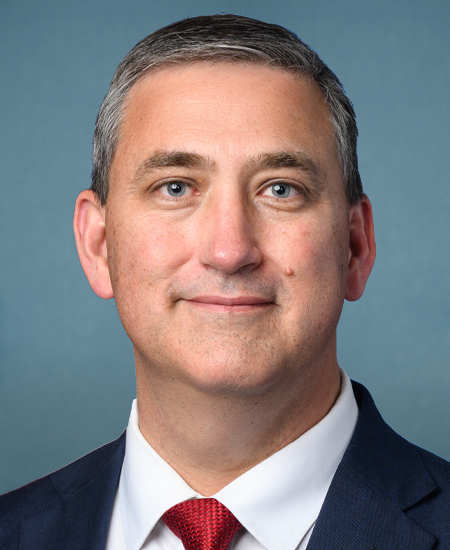
Rep. Nathaniel Moran
Sponsored bills
Maddy summaryThe IGNITE HBCU Excellence Act authorizes federal grants to Historically Black Colleges and Universities (HBCUs) to fund long-term improvements to their campus facilities and infrastructure. These grants are awarded competitively to eligible HBCUs based on criteria such as the age of their facilities, deferred maintenance needs, financial capacity, and student enrollment levels. Recipients may use the funds to construct or renovate buildings, upgrade technology and broadband systems, improve safety measures, and develop workforce training hubs, while being prohibited from using the money for routine maintenance or athletic facilities. The legislation also includes provisions for reporting on project outcomes and requires institutions to create comprehensive master plans that involve consultation with diverse campus and community stakeholders.
Maddy summaryThis bill increases loan limits for small manufacturers under two federal programs. It defines "small manufacturer" as a business primarily in U.S. manufacturing sectors (31-33) with all facilities in the U.S. The bill raises the maximum Small Business Administration 7(a) loan limit for these manufacturers from $3.75 million to $7.5 million (capping at $10 million), and doubles the export loan limit from $5 million to $10 million. These changes directly affect qualifying U.S.-based manufacturing businesses seeking federal loan support for operations or exports. The policy modifies specific loan caps without altering other program requirements.
Maddy summaryThis bill would amend federal law to strengthen penalties for organized retail crime by expanding definitions of theft to include digital goods, gift cards, and setting a $5,000 aggregate value threshold for charges over a 12-month period. It would establish a new "Organized Retail and Supply Chain Crime Coordination Center" under Homeland Security to coordinate Federal, State, local, and Tribal law enforcement efforts against cross-jurisdictional theft groups. The Center would share information with retailers, transportation companies, and law enforcement agencies, track crime trends, and produce annual reports on organized retail crime. This legislation directly affects retailers, supply chain businesses, and law enforcement agencies, while targeting organized crime groups responsible for a 93% increase in larceny incidents and rising safety concerns for retail employees. The bill aims to address significant financial losses and supply chain disruptions noted in the National Retail Federation's 2023 data.
Maddy summaryThis resolution formally recognizes the importance of motherhood and honors mothers on Mother's Day. It explicitly supports policies that define mothers as women and opposes recent legislative efforts to remove the term "mother" from official House rules. The text also acknowledges various types of mothers, including stepmothers, adopted mothers, and single mothers, while rejecting alternative terms like "birthing person" or "gestational parent." Ultimately, the bill encourages the public to celebrate the sacrifices and contributions of mothers to the nation.
Maddy summaryThis bill expands the review authority of the Committee on Foreign Investment in the United States to include real estate transactions involving specific foreign nations and entities linked to them. It designates certain locations, such as military bases, agricultural land, and critical infrastructure, as "sensitive sites" where purchases or leases by foreign adversaries face stricter scrutiny. Under the new rules, these transactions are presumed to pose an unresolvable national security risk unless the committee provides clear evidence that the threat can be mitigated. The legislation also ensures that existing state laws restricting foreign ownership of farmland remain in effect and requires the committee to issue new regulations within 120 days of enactment.
Maddy summaryThis bill increases the maximum annual education voucher amount for foster youth from $5,000 to $12,000 under the Social Security Act. It requires states to improve awareness of these benefits through simplified application forms, electronic access, and coordination with other programs. The bill directly affects foster youth aged 18-26 who are pursuing postsecondary education, providing greater financial support and clearer pathways to access education. States must also develop outreach strategies based on youth input to ensure eligible individuals can access these resources.
Maddy summaryThis bill requires federal agencies to analyze indirect economic costs on small businesses when creating new rules, including costs affecting businesses that interact with regulated entities (like suppliers or partners). It creates a new process allowing small businesses to petition the Small Business Administration's Chief Counsel to review agency certifications claiming a rule won't significantly impact them. Agencies must then provide detailed cost analyses, publish guidance online for small business feedback, and face penalties if they fail to cooperate with reviews. The bill does not change existing regulations but adds new review steps for small business input.
Maddy summaryThe WAGES Act of 2026 creates a new tax credit to encourage employers to hire and train workers through registered apprenticeship programs. Eligible businesses can claim a credit equal to 50% of qualified wages and program expenses for each apprentice, with specific caps on the amount that can be claimed per quarter. The bill also clarifies that certain awards given to apprentices, such as those for completing training milestones, are treated as non-taxable employee achievement awards rather than taxable income. These changes are designed to provide financial incentives for companies to invest in on-the-job training while expanding career pathways for workers without four-year degrees.
Maddy summaryThe Save America's Family Forests Act of 2026 provides tax incentives to encourage landowners to replant forests damaged by natural disasters. It increases the standard tax deduction for routine reforestation projects from $10,000 to $30,000 per property and adjusts these amounts annually for inflation. Additionally, the bill allows a special deduction of up to $1 million for expenses related to replanting trees destroyed by federally declared disasters, with specific rules to prevent double-dipping with other tax benefits. These financial benefits are designed to help taxpayers recover costs and promote forest regeneration without changing the underlying laws governing disaster relief or timber management.