

Maddy summaryThe 9-8-8 Implementation Act of 2026 expands federal funding and mandates insurance coverage for behavioral health crisis services, directly affecting individuals experiencing mental health or substance use emergencies as well as the providers who serve them. The bill authorizes grants to upgrade local lifeline call centers, build new crisis stabilization facilities, and train a larger workforce of behavioral health professionals. It requires Medicare, Medicaid, private group health plans, TRICARE, and other federal insurance programs to cover crisis response services with financial terms no more restrictive than standard medical care. Additionally, the legislation establishes a federal panel to develop training protocols for 9-1-1 dispatchers to better connect callers to appropriate crisis care rather than law enforcement responses.
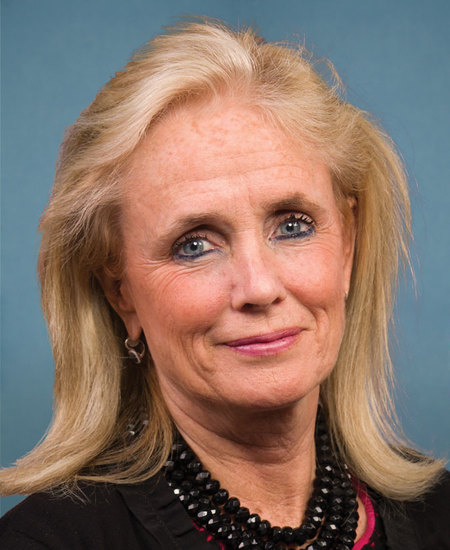
Rep. Debbie Dingell
Sponsored bills
Maddy summaryThe Automotive National and Economic Security Act of 2026 directs the Secretary of Commerce to conduct a study on commercial partnerships between U.S. automotive manufacturers and entities controlled by foreign adversaries. The bill defines these covered activities to include ownership interests, joint ventures, technology sharing agreements, and investments involving critical hardware or software for vehicles and automated driving systems. The study must assess potential impacts on national security, economic competitiveness, and intellectual property protection, including any involvement of state-directed investment vehicles from adversary nations. Within two years of enactment, the Secretary is required to submit a report to Congress and publish an unclassified summary online while protecting confidential business information and trade secrets.
Maddy summaryHR 6152, the Foreign Robocall Elimination Act, establishes an interagency task force to address foreign robocalls entering the United States. The task force, composed of the FCC, FTC, DOJ, and private sector representatives, will study the origins, impacts, and potential solutions to foreign robocalls and must submit a report to Congress within 360 days. The bill also modifies existing law to require FCC notices about robocall mitigation every three years instead of annually, and introduces a bond requirement for providers using the Robocall Mitigation Database. This legislation affects telecommunications providers, federal agencies, and all U.S. telephone users who receive unwanted calls. The bill aims to improve coordination between U.S. agencies and foreign countries in combating illegal robocalls through concrete policy changes.
Maddy summaryThis bill would require Medicare to cover early detection screening tests for Alzheimer's disease and related dementias starting January 1, 2028. It defines eligible tests as FDA-cleared genomic blood tests, blood product analyses, or equivalent medical imaging methods (like protein expression or whole genome sequencing) that detect pre-symptomatic or early-stage conditions. Medicare beneficiaries would receive this coverage without cost-sharing for these specific screenings. The bill amends Medicare coverage rules to explicitly include these tests under Section 1861(nnn) of the Social Security Act.
Maddy summaryHR 5967 establishes a federal task force led by the FTC and DOJ to combat scams. The task force, including agencies like the FBI, SEC, and Social Security Administration, will develop a national strategy using existing tools such as the Consumer Sentinel Network and Internet Crime Complaint Center. Key actions include public education, coordination with industry (like banks and social media platforms), and enforcement using current laws against fraud and money laundering. The task force must report to Congress within one year and dissolve after 10 years.
Maddy summaryHR 2004, titled "Tyler’s Law," requires the Secretary of Health and Human Services to study how often hospital emergency departments test for fentanyl during overdose cases (beyond standard drug tests), including associated costs, patient benefits/risks, and impacts on privacy and patient-physician relationships. The study must be completed within one year of the bill's enactment. Based on the study results, the Secretary must issue guidance within six months on whether emergency departments should routinely test for fentanyl, how to inform clinicians about test contents, and how such testing may affect future overdose risks and health outcomes. This bill directly affects hospital emergency departments and patients experiencing overdoses by shaping future testing protocols.
Maddy summaryThis House resolution designates September 2026 as National Voting Rights Month to highlight the historical and ongoing challenges faced by various groups in exercising their right to vote. It encourages Congress to pass legislation that strengthens voting protections, specifically endorsing the John R. Lewis Voting Rights Advancement Act of 2025 while opposing bills that could restrict voter eligibility. The resolution also recommends that public schools develop curricula on voting history and current suppression tactics, and it invites funding for public service announcements to promote voter registration and participation.
Maddy summaryThe CHC REBASE Act of 2026 amends the Medicare program to adjust payment rates for Federally Qualified Health Centers (FQHCs) so that they cover 100 percent of estimated reasonable costs by 2028, effectively removing previous financial caps on these services. To support this change, the bill requires the Secretary of Health and Human Services to convene a working group with stakeholders from health centers, physicians, and CMS to review payment methodologies and recommend further modifications. Additionally, the legislation ensures that telehealth services provided by FQHCs and rural health clinics are paid at standard rates starting in 2027, treating associated costs as allowable expenses. The bill also mandates new guidance for Medicare Advantage plans to streamline "wraparound" payments to FQHCs and requires a Government Accountability Office report on how well these centers are included in insurance provider networks for underserved populations.
Maddy summaryThe Survivors' Rights Restitution Act of 2026 establishes a federal compensation program administered by the Attorney General for victims of sexual assault, abuse, trafficking, or exploitation involving Jeffrey Epstein or Ghislaine Maxwell, as well as victims whose rights were violated by the federal government. Petitions are filed with the United States Court of Federal Claims and assigned to special adjudicators who must be mental health professionals or experts in victim services, civil rights law, or claims administration. The process is designed to be informal and less adversarial than standard litigation, with decisions required within 120 days and a minimum compensation award of $123,000. Compensation is funded by a dedicated Treasury account that accepts forfeited assets and voluntary contributions, and payments are exempt from federal income tax and means-tested benefit calculations.
Maddy summaryThe WIC for Kids Act expands eligibility for the Special Supplemental Nutrition Program for Women, Infants, and Children (WIC) to include children in households receiving Head Start services, food assistance on Indian reservations, or nutrition block grants in Puerto Rico, American Samoa, and the Northern Mariana Islands. The bill extends the standard certification period for WIC-eligible children from one year to two years and allows state agencies to align recertification dates for all eligible family members within a household. Additionally, it requires states to automatically certify infants born to participating mothers without requiring a new application and grants automatic eligibility to children in kinship care arrangements.