Benjamin Berell Ferencz Congressional Gold Medal Act This bill provides for the award of a Congressional Gold Medal to Benjamin Berell Ferencz in recognition of his service to the United States and the international community during the post-World War II Nuremberg trials and his lifelong advocacy for international criminal justice and the rule of law.
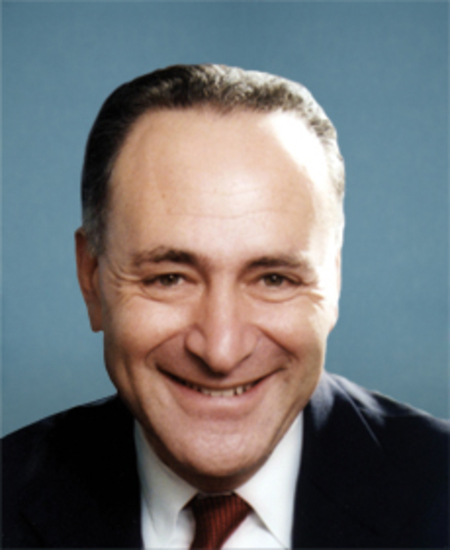
Sen. Charles E. Schumer
Sponsored bills
Cannabis Administration and Opportunity Act This bill decriminalizes cannabis and removes it from scheduling under the Controlled Substances Act. It also provides for (1) a federal regulatory framework with respect to the commercial sale of cannabis and other areas, and (2) the expungement of certain federal cannabis offenses.
Democracy Is Strengthened by Casting Light On Spending in Elections Act of 2021 or the DISCLOSE Act of 2021 This bill addresses campaign finance, including by expanding the prohibition on campaign spending by foreign nationals, requiring additional disclosures of campaign expenditures, and requiring additional disclosures regarding certain political advertisements. First, the bill prohibits foreign nationals from participating in the decision-making process regarding an election expenditure. Additionally, the bill expands existing foreign money prohibitions to include disbursements for paid web-based or digital communications and federal judicial nomination communications. It also prohibits foreign nationals from contributing to campaigns related to ballot initiatives and referenda. The Federal Election Commission (FEC) must conduct an audit after each federal election cycle to determine the incidence of illicit foreign money. Next, the bill makes it unlawful to establish or use a corporation, company, or other entity with the intent to conceal an election contribution or donation by a foreign national. A violator is subject to criminal penalties—a fine, a prison term of up to five years, or both. Covered organizations (e.g., corporations, labor organizations, and political organizations) must, within 24 hours, file reports with the FEC to disclose campaign expenditures of more than $10,000 during an election cycle. Finally, the bill requires organizations to provide additional disclosures regarding political advertisements, including the donors who contributed the most money to that organization in the last year.
Democracy Technology Partnership Act This bill establishes the International Technology Partnership Office, led by the Special Ambassador for Technology, in the Department of State. The office shall advance U.S. technology policy through the creation of an International Technology Partnership with specified foreign countries. Specifically, the office must create a partnership of democratic countries to develop technology governance regimes, with a focus on key technologies such as artificial intelligence and machine learning, 5G telecommunications, semiconductor chip manufacturing, biotechnology, and quantum computing. Partner countries must be democratic countries with advanced technology sectors that have a demonstrated record of trust or an expressed interest in international cooperation and coordination with the United States on defense and intelligence matters. The bill also establishes the International Technology Partnership Fund in the Department of the Treasury. The State Department may use amounts from this fund to support joint research projects from International Technology Partnership member countries and technology investments in third-country markets. The State Department must also submit reports (1) outlining a national strategy for technology and national security; and (2) assessing other countries' standards and governance regimes for privacy, human rights, consumer protection, and free expression.
This concurrent resolution recognizes Hershel Woodrow "Woody" Williams, the last surviving recipient of the Medal of Honor for acts performed during World War II. The concurrent resolution also permits Williams' remains to lie in honor in the rotunda of the Capitol on Thursday, July 14, 2022, in order to honor the Greatest Generation and the more than 16 million men and women who served in the U.S. Armed Forces from 1941 to 1945.
This resolution recognizes the critical role the Equal Employment Opportunity Commission plays in addressing long-standing issues including the wage gap, combating workplace harassment, and ensuring all workers are treated with dignity and respect in the workplace.
Freedom to Travel for Health Care Act of 2022 This bill prohibits anyone from interfering with a person's ability to access out-of-state reproductive health care. (Reproductive health care is defined as medical, surgical, counseling, or referral services related to pregnancy, the termination of a pregnancy, contraception services, and other reproductive care.) Specifically, the bill prohibits anyone from restricting, discriminating against, or otherwise disadvantaging anyone who receives, provides, or assists with out-of-state reproductive health care that is legal in the state in which it is provided. The bill allows the Department of Justice to bring a civil action and establishes a private right of action for violations. The bill specifically waives any applicable governmental immunity and preempts any contravening state laws.
This resolution celebrates the 50th anniversary of the Federal Pell Grant program and expresses support for the designation of June 23 as National Pell Grant Day.
Protecting the Right to Organize Act of 20 21 This bill expands various labor protections related to employees' rights to organize and collectively bargain in the workplace. Among other things, it revises the definitions of employee , supervisor , and employer to broaden the scope of individuals covered by the fair labor standards; permits labor organizations to encourage participation of union members in strikes initiated by employees represented by a different labor organization (i.e., secondary strikes); and prohibits employers from bringing claims against unions that conduct such secondary strikes. The bill also allows collective bargaining agreements to require all employees represented by the bargaining unit to contribute fees to the labor organization for the cost of such representation, notwithstanding a state law to the contrary; and expands unfair labor practices to include prohibitions against replacement of, or discrimination against, workers who participate in strikes. The bill makes it an unfair labor practice to require or coerce employees to attend employer meetings designed to discourage union membership and prohibits employers from entering into agreements with employees under which employees waive the right to pursue or a join collective or class-action litigation. Finally, the bill addresses the procedures for union representation elections, modifies the protections against unfair labor practices that result in serious economic harm, and establishes penalties and permits injunctive relief against entities that fail to comply with National Labor Relations Board orders.
Lake Champlain Basin Program Reauthorization Act of 2022 This bill revises and reauthorizes through FY2033 the Lake Champlain Basin Program, which supports restoration and protection efforts for Lake Champlain and its surrounding watershed located in New York, Vermont, and Quebec.