

Maddy summaryThis bill, titled the Safeguarding Women from Chemical Abortion Act, aims to revoke federal approval for the drug mifepristone (also known as RU-486) for use in terminating pregnancies. If enacted, the Food and Drug Administration's approval for mifepristone for this indication would be withdrawn within 14 days, making its introduction into interstate commerce for pregnancy termination a violation of federal law. Additionally, the bill establishes a new federal right for individuals to sue manufacturers of mifepristone if they experience bodily injury or harm to mental health attributed to its use for pregnancy termination. This legislation directly affects drug manufacturers, distributors, healthcare providers, and individuals seeking or having used medication abortion.
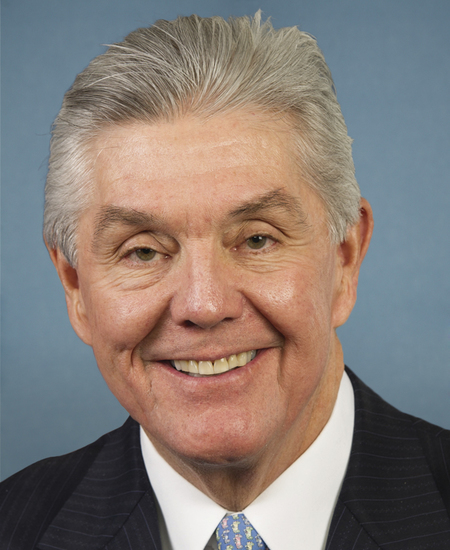
Rep. Roger Williams
Sponsored bills
Maddy summaryHR 7678, the Gun Owner Registration Information Protection Act, prohibits federal funding for state or local databases that track lawfully owned firearms or their owners. The bill allows federal funding for databases recording lost or stolen firearms but bans it for databases listing legal gun ownership. This means states cannot use federal money to create or maintain systems that compile information about legally owned guns. The bill directly affects state and local governments that rely on federal funds for firearm ownership databases.
Maddy summaryThe TIER Act of 2025 adjusts financial regulatory thresholds to account for economic growth. It raises key asset thresholds for large banks and financial institutions - from $250 billion to $370 billion in most cases (e.g., in the Federal Reserve Act and Financial Stability Act). The bill also establishes a new mechanism requiring periodic, automatic adjustments to these thresholds every five years based on U.S. GDP growth, starting in 2031. These changes directly affect large bank holding companies and financial firms subject to federal oversight under current regulations. The adjustments aim to keep regulatory standards aligned with the evolving size of the economy.
Maddy summaryHR 6554, the Community Bank Representation Act, creates a new "Community Bank Member" position on the Federal Reserve Board of Governors. This member must have primary experience in community banking and is tasked with developing policy recommendations and overseeing regulation for banks with less than $17 billion in assets. The bill also requires the Federal Reserve to annually adjust this $17 billion threshold using changes in nominal U.S. GDP. The new member must report semi-annually to relevant congressional committees on the Federal Reserve's regulatory efforts for community banks.
Maddy summaryHR 6546, the Merger Process Review Act, requires the Inspector General of four federal banking regulators (the Federal Reserve, Comptroller of the Currency, FDIC, and NCUA) to annually review and report on how quickly and efficiently these agencies process applications for bank and credit union mergers. The reviews, conducted every three years starting one year after the bill's enactment, will analyze metrics like average processing times, identify delays, and recommend improvements to speed up the merger approval process. This directly affects banks, credit unions, and the federal agencies that oversee their mergers by mandating transparency and accountability in handling these applications. The bill does not change merger rules but requires regular, data-driven evaluations to reduce unnecessary delays in the approval process.
Respect State Housing Laws Act This bill eliminates a provision that requires a 30-day notice period before a landlord may begin eviction proceedings against a tenant in federally assisted or federally backed housing.
Maddy summaryHRES 1076 is a House resolution recognizing the 10th anniversary of the first U.S. liquefied natural gas (LNG) export shipment from the lower 48 states, which occurred on February 24, 2016. The resolution celebrates this milestone as a historic achievement in American energy production, highlighting its role in supporting over 273,000 annual jobs and $400 billion in economic growth over the past decade. It honors the workers and communities involved and acknowledges LNG exports' contribution to U.S. economic growth, energy security, and global partnerships. The resolution has no binding effect or policy changes - it solely expresses recognition of a past event.
Maddy summaryHR 7412, the "Put America on Commission Act of 2026," creates a new Office of Whistleblower Awards within the Small Business Administration (SBA) to incentivize reporting of fraud related to SBA COVID-19 relief loans. The bill establishes a Whistleblower Award Fund funded by civil penalties collected from individuals or entities convicted of or settling fraud in these specific loan cases. Whistleblowers who provide original information leading to a final conviction or settlement can receive 10% (for U.S. persons/entities) or 15% (for foreign persons/entities) of the penalties collected. The program includes anti-retaliation protections, requires the SBA to track submissions, and expires once all related cases are resolved. It directly affects whistleblowers reporting SBA loan fraud and SBA loan recipients facing fraud allegations.
Protection of Women in Olympic and Amateur Sports Act This bill requires certified national governing bodies (NGBs) of amateur sports (e.g., USA Gymnastics) to prohibit a person whose sex is male from participating in an amateur athletic competition that is designated for females, women, or girls. Under the bill, male means an individual who has, had, will have—or would have, but for a developmental or genetic anomaly or historical accident—the reproductive system that at some point produces, transports, and utilizes sperm for fertilization.
Maddy summaryHR 7539, the SAFE Act, requires the Comptroller General to study "chameleon carriers" (motor carriers evading safety rules by changing names or ownership) and develop an automated tool for the Federal Motor Carrier Safety Administration (FMCSA) to detect such applicants during Department of Transportation (DOT) number registration. The bill mandates the tool to identify patterns like shared ownership, similar addresses, insurance lapses, or continuity of operations to flag suspicious applications. It directly affects motor carriers applying for DOT numbers and FMCSA staff, who must use the tool to review applications while preserving final decision-making authority. The law also requires an appeals process for denied applications, data privacy safeguards, and a two-year effectiveness report on the tool.