Maddy summaryThis House resolution marks the 50th anniversary of the Hyde Amendment and honors its original sponsor, Congressman Henry Hyde. It asserts that the amendment has prevented over 2.6 million abortions by restricting federal funding for elective procedures. The text emphasizes that this policy protects taxpayer conscience rights by ensuring public money is not used to finance abortions. Additionally, it encourages Americans to reflect on the history of the amendment and the total number of abortions performed since the Roe v. Wade decision.
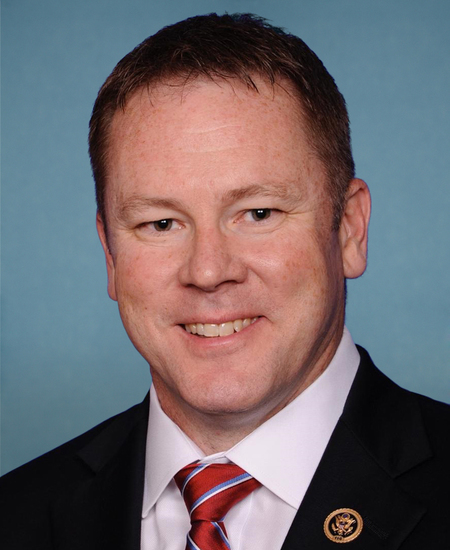
Rep. Warren Davidson
Sponsored bills
Maddy summaryThis bill requires the Director of National Intelligence to submit a report to Congress within 180 days detailing how artificial intelligence systems are used to access information under Section 702 of the Foreign Intelligence Surveillance Act. The report must include an overview of these AI applications, an evaluation of safeguards ensuring compliance with the law and the Fourth Amendment, and a list of the specific AI models in use. Additionally, it requires disclosure of any related information previously submitted to the Foreign Intelligence Surveillance Court by the Department of Justice or intelligence agencies. The Director of National Intelligence must coordinate this effort with the heads of major intelligence agencies, including the FBI, CIA, and NSA.
Maddy summaryThe CHARGE Act requires the National Institutes of Health to conduct a study on the potential effects of high-voltage power lines, specifically those rated at 750 kilovolts or greater, on human health, livestock, and crop yields. The Secretary of Health and Human Services would oversee this research and must submit a report detailing the findings upon completion. This report would be delivered to the relevant House and Senate committees responsible for agriculture and energy policy.
This bill designates the facility of the United States Postal Service located at 189 East Main Street in Xenia, Ohio, as the "Gilman 'Gil' Whitney Post Office Building".
Maddy summaryThe CLAIM Act creates a federal safe harbor that prevents government agencies from penalizing or discouraging insurers for providing coverage to businesses legally operating in the cannabis industry under state or tribal laws. The bill protects these companies, their employees, and property owners from having insurance policies canceled or facing adverse regulatory actions solely because of their connection to legal cannabis operations. It also grants immunity from federal liability for insurers who engage in this business within jurisdictions where cannabis is permitted. Additionally, the legislation requires the Government Accountability Office to study and report on barriers that minority-owned and women-owned cannabis businesses face when entering the market and accessing financial services.
Maddy summaryThe Consumer Financial Protection Accountability and Reform Act of 2026 significantly restructures the Bureau of Consumer Financial Protection by subjecting it to the regular federal appropriations process and establishing an independent Inspector General appointed by the President. The bill restricts the Bureau's supervisory authority over banks and credit unions with assets under $30 billion, allowing these institutions to elect to remain under their existing prudential regulators instead. It also introduces a safe harbor for small-dollar loans of $3,500 or less that meet specific structural requirements, shielding compliant lenders from civil money penalties and private damages. Additionally, the legislation creates federal standards for earned wage access services, requiring providers to offer a no-cost option for early wage access and prohibiting them from treating these services as credit or debt under federal law.
Maddy summaryThis bill, the "American Lending Fairness Act of 2026," makes changes to federal laws governing interest rates charged by financial institutions, primarily impacting how state-chartered banks and credit unions operate across state lines. It repeals a current federal law (Section 525 of the Depository Institutions Deregulation and Monetary Control Act of 1980) that has allowed states
Maddy summaryThis bill extends existing whistleblower protections to workers on all contracts funded by the Department of Housing and Urban Development (HUD). It applies Section 4712 of U.S. law - which prohibits retaliation against employees reporting fraud or waste - to every HUD contract, subcontract, grant, or personal services agreement, regardless of when the contract was signed. This means employees working on HUD-funded projects can now seek legal protection if they face retaliation for raising concerns about misconduct. The law directly affects HUD contractors and their employees by ensuring they have the same legal safeguards as other federal contract workers.
Maddy summaryThe Make Apportionment Great Again Act would change how U.S. House seats are distributed among states by excluding noncitizens from the population count used for apportionment. It requires the Secretary of Commerce to recalculate state populations using existing federal and state government records, without conducting a new census, and mandates that future censuses include a question on citizenship status. The bill establishes a legal presumption that any resulting changes in seat allocation are valid, allowing courts to overturn them only with clear evidence of statutory or constitutional violations. Additionally, it creates an expedited judicial process for legal challenges, requiring cases to be heard by three-judge panels and permitting direct appeal to the Supreme Court.