

Born-Alive Abortion Survivors Protection Act This bill establishes requirements for the degree of care a health care practitioner must provide in the case of a child born alive following an abortion or attempted abortion. Specifically, a health care practitioner who is present must (1) exercise the same degree of care as would reasonably be provided to any other child born alive at the same gestational age, and (2) ensure the child is immediately admitted to a hospital. Additionally, a health care practitioner or other employee who has knowledge of a failure to comply with the degree-of-care requirements must immediately report such failure to law enforcement. A health care practitioner who fails to provide the required degree of care, or a health care practitioner or other employee who fails to report such failure, is subject to criminal penalties—a fine, up to five years in prison, or both. An individual who intentionally kills or attempts to kill a child born alive is subject to prosecution for murder. The bill bars the criminal prosecution of a mother of a child born alive under this bill and allows her to bring a civil action against a health care practitioner or other employee for violations.
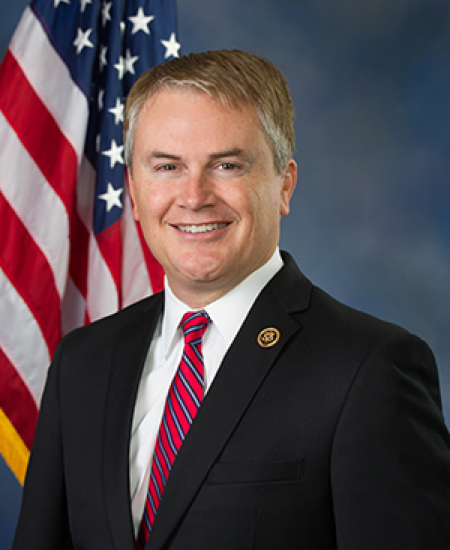
Rep. James Comer
Sponsored bills
Whole Milk for Healthy Kids Act of 2021 This bill revises requirements for milk provided by the National School Lunch Program of the Department of Agriculture (USDA). Currently, schools participating in the program must provide milk that is consistent with the most recent Dietary Guidelines for Americans; USDA regulations require milk to be fat-free or low-fat and allow only fat-free milk to be flavored. The bill removes these restrictions and instead permits schools to offer students whole, reduced-fat, low-fat, and fat-free flavored and unflavored milk.
Protect Seniors and Cut Waste Act This bill prohibits the budgetary effects of the American Rescue Plan Act of 2021 from being counted for the purposes of determining whether a specified sequester occurs under the Statutory Pay-As-You-Go Act of 2010. (The American Rescue Plan Act of 2021 provided funding to address the impact of COVID-19. Sequestration is a process of automatic, usually across-the-board spending reductions under which budgetary resources are permanently cancelled to enforce specific budget policy goals.) The bill also modifies several other provisions related to COVID-19 spending. Among other modifications, the bill provides supplemental appropriations for the Public Health and Social Services Emergency Fund to reimburse certain health care providers for health care related expenses or lost revenues that are attributable to the coronavirus; rescinds certain funds that were provided for payments to states, territories, and tribal governments to mitigate the fiscal effects stemming from the COVID-19 public health emergency; prohibits individuals who are incarcerated or unlawfully present in the United States from receiving 2021 recovery rebates; and rescinds funds that were provided by the American Rescue Plan Act of 2021 for the National Endowment for the Arts, the National Endowment for the Humanities, and the Emergency Federal Employee Leave Fund.
Enhancing Credit Opportunities in Rural America Act of 2021 or the ECORA Act of 2021 This bill modifies the requirements for calculating taxable income to exclude from gross income interest received by a lender from real estate loans secured by agricultural real estate or by a leasehold mortgage (with a status as a lien) on agricultural real estate. Agricultural real estate includes real property that is substantially used for the production of one or more agricultural products. It also includes any single family residence that is (1) the principal residence of its occupant, (2) located in a rural area which is not within a Metropolitan Statistical Area and has a population of 2,500 or less, and (3) is purchased or improved with the proceeds of a loan secured by agricultural real estate or by a household mortgage.
This bill directs the Speaker of the House and the President pro tempore of the Senate to arrange for the award of three Congressional Gold Medals to the U.S. Capitol Police (USCP) and other law enforcement agencies that protected the U.S. Capitol on January 6, 2021. Following the award of these medals, one medal shall be given to the USCP, one medal shall be given to the Metropolitan Police Department of the District of Columbia, and one medal shall be given to the Smithsonian Institution and displayed with a plaque listing all law enforcement agencies that participated in protecting the Capitol on January 6, 2021.
Stronger Child Abuse Prevention and Treatment Act This bill reauthorizes through FY2027 and revises the Child Abuse Prevention and Treatment Act and the Child Abuse Prevention and Treatment and Adoption Reform Act of 1978 to expand services for preventing and treating child abuse. Specifically, the bill establishes requirements concerning collecting and exchanging data about child abuse and neglect. For instance, the bill requires the Department of Health and Human Services (HHS) to (1) establish uniform national standards for tracking and reporting child fatalities and near fatalities resulting from maltreatment, and (2) develop an electronic interstate data exchange system that allows states to share information from their child abuse and neglect registries with other states. The bill also addresses child abuse and neglect related to families impacted by substance use disorders, racial bias in the child protective services system, and child sexual abuse. Further, the bill revises the community-based grants program to emphasize access to effective services for diverse populations and to promote the development of statewide strategies to scale up family strengthening services. Finally, the bill requires HHS to examine unregulated custody transfers and make recommendations for preventing, identifying, and responding to such transfers.
Developing Responsible Individuals for a Vibrant Economy Act or the DRIVE-SAFE Act This bill directs the Department of Transportation to promulgate regulations to implement an apprenticeship program for licensed commercial motor vehicle drivers under the age of 21. Under the program, an apprentice must complete two probationary periods that total 400 hours of on-duty time, of which at least 240 hours must be driving time in a commercial motor vehicle. Additionally, the apprentice must be accompanied in the cab of the commercial motor vehicle by an experienced driver. Further, the bill requires all commercial motor vehicles used in the program for training to be equipped with safety technology such as active braking collision mitigation systems and video event capturing systems. An employer shall not knowingly allow, require, permit, or authorize a driver under the age of 21 to operate a commercial motor vehicle unless the driver is participating in, or has completed, an apprenticeship program that meets the requirements set forth in this bill.
Fair Access to Banking Act This bill restricts certain banks, credit unions, and payment card networks from refusing to do business with a person who is in compliance with the law. Restrictions include prohibiting the use of certain lending programs, initiating the process of terminating an institution's depository insurance, and instituting specified civil penalties.
This resolution supports the designation of a National FFA Week. It also (1) recognizes the important role of the National FFA Organization (Future Farmers of America) in developing the next generation of leaders who will change the world, and (2) celebrates 50 years of National FFA alumni and supporters.
Death Tax Repeal Act This bill repeals the estate and generation-skipping transfer taxes. It also makes conforming amendments related to the gift tax.