

In committee Sep 24, 2026
1 co-sponsor
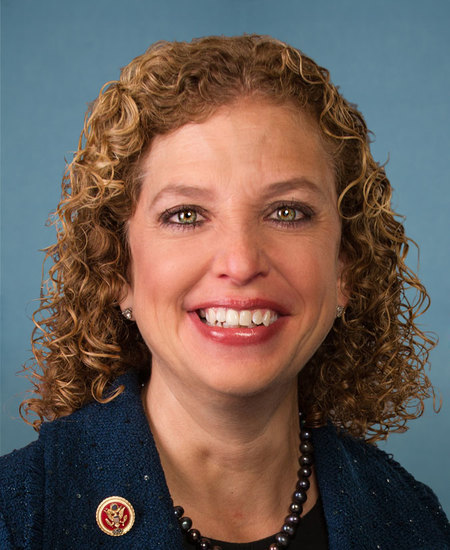
Rep. Debbie Wasserman Schultz
Total votes
2,837
all sessions
Attendance
99%
28 missed
Near the chamber average
With party
97%
of cast votes
Near the chamber average
Bipartisan score
2%
crosses aisle rarely
Near the chamber average
Sponsored
1,409
bills & resolutions
Higher than 82% of chamber peers
Committees
5
assignments
1,409 bills and resolutions
Sponsored bills
Total
1,409
Primary
92
Co-sponsor
1,317
This page
1,409
matching current filters
In committee Sep 21, 2026
1 co-sponsor
Disaster Relief Fairness Act of 2026
Maddy summaryThe Disaster Relief Fairness Act of 2026 would automatically approve major disaster declarations requested by state governors or tribal leaders between January 20, 2025, and January 20, 2029. Under this bill, the President is required to provide federal assistance if a preliminary damage assessment meets specific cost thresholds for public aid or if a regional official determines that individual assistance is warranted. Additionally, the legislation prohibits the denial of disaster relief solely because a request was submitted after a deadline.
Budget & TaxesSupports Budget & TaxesThe bill would provide federal assistance for disaster relief, which involves government spending and fiscal management. It strengthens the provision of aid, indicating support for budget allocation towards disaster response.
HousingSupports HousingThe bill provides for automatic approval of disaster declarations and federal assistance, which would include aid for housing repair and rebuilding after disasters, thus supporting housing stability and recovery.
In committee Sep 21, 2026
1 co-sponsor
Relief Without Delay Act
Maddy summaryThe Relief Without Delay Act ensures that FEMA can continue disaster relief operations and access its Disaster Relief Fund even if the government shuts down due to a lapse in appropriations. It requires FEMA to submit monthly public reports detailing how disaster funds are obligated and spent, while also mandating the Department of Housing and Urban Development to assess unmet housing needs after major disasters. Additionally, the bill directs NOAA and FEMA to improve tornado detection capabilities using new technologies like artificial intelligence and establishes a grant program for communities to build storm shelters and upgrade warning systems.
HousingSupports HousingThe bill mandates HUD to assess unmet housing needs after major disasters, which directly supports addressing housing issues in affected communities.
TechnologySupports TechnologyThe bill directs NOAA and FEMA to improve tornado detection capabilities, which implies an advancement in technology for public safety.
In committee Sep 17, 2026
1 co-sponsor
Justice for Ukrainian Children Act
Maddy summaryThe Justice for Ukrainian Children Act directs the U.S. government to support efforts to locate and rescue Ukrainian children forcibly transferred by Russia, while imposing mandatory sanctions on foreign individuals who facilitate these transfers. The bill authorizes at least $15 million annually from fiscal years 2027 through 2032 to fund evidence collection, maintain a centralized database, and assist in the rehabilitation of affected children. It requires the President to block the assets and revoke the visas of any foreign person found to have knowingly participated in the abduction or indoctrination of Ukrainian minors, with limited exceptions for humanitarian aid and national security needs. Additionally, the legislation allocates $10 million annually to expand U.S. media broadcasting services in Ukraine and neighboring regions to counter disinformation.
Budget & TaxesSupports Budget & TaxesThe bill authorizes at least $15 million annually from fiscal years 2027 through 2032, directly impacting government spending and appropriations for a specific program.
Criminal JusticeSupports Criminal JusticeThe bill supports international efforts to address crimes against children, which aligns with broader criminal justice principles of accountability and victim support, although it is not domestic criminal justice reform.
In committee Sep 16, 2026
1 co-sponsor
Reverse Big Ugly Tax Breaks for Data Centers Act
Maddy summaryThe Reverse Big Ugly Tax Breaks for Data Centers Act removes specific tax incentives for large-scale data centers and artificial intelligence facilities. It excludes these facilities from bonus depreciation, a provision that currently allows businesses to deduct the full cost of certain equipment in the year it is purchased. Additionally, the bill prevents these properties from qualifying as opportunity zone business property, which would otherwise offer significant tax benefits for investments in designated areas. The legislation targets structures with a power capacity exceeding 50 megawatts that are dedicated to data storage, processing, or AI operations.
Budget & TaxesOpposes Budget & TaxesThe bill removes specific tax incentives for large-scale data centers and AI facilities, thereby limiting tax benefits for certain businesses.
TechnologyOpposes TechnologyThe bill removes tax incentives for data centers and AI facilities, which could hinder investment and development in the technology sector.
In committee Sep 16, 2026
1 co-sponsor
ASAP Act
Maddy summaryThis bill would require Medicare to cover early detection screening tests for Alzheimer's disease and related dementias starting January 1, 2028. It defines eligible tests as FDA-cleared genomic blood tests, blood product analyses, or equivalent medical imaging methods (like protein expression or whole genome sequencing) that detect pre-symptomatic or early-stage conditions. Medicare beneficiaries would receive this coverage without cost-sharing for these specific screenings. The bill amends Medicare coverage rules to explicitly include these tests under Section 1861(nnn) of the Social Security Act.
In committee Sep 16, 2026
1 co-sponsor
Tyler’s Law
Maddy summaryHR 2004, titled "Tyler’s Law," requires the Secretary of Health and Human Services to study how often hospital emergency departments test for fentanyl during overdose cases (beyond standard drug tests), including associated costs, patient benefits/risks, and impacts on privacy and patient-physician relationships. The study must be completed within one year of the bill's enactment. Based on the study results, the Secretary must issue guidance within six months on whether emergency departments should routinely test for fentanyl, how to inform clinicians about test contents, and how such testing may affect future overdose risks and health outcomes. This bill directly affects hospital emergency departments and patients experiencing overdoses by shaping future testing protocols.
Passed Sep 16, 2026
1 co-sponsor
AM Radio for Every Vehicle Act of 2025
Maddy summaryThis bill requires all new passenger vehicles manufactured for sale in the U.S. to include AM radio as standard equipment (not an optional add-on) by 2027-2028, depending on manufacturer size. It mandates that AM radio receivers must be easily accessible to drivers and allows compliance through digital AM broadcast technology. During a transition period, manufacturers must clearly label vehicles without AM radio but cannot charge extra for this feature. The bill also mandates a GAO study on AM radio's role in emergency alerts and includes a 10-year sunset provision for the rule. It preempts state laws regarding AM radio access in vehicles.
Passed Sep 16, 2026
1 co-sponsor
Proposing an amendment to the Constitution of the United States to prohibit the use of slavery and involuntary servitude as a punishment for a crime.
Maddy summaryH.J. Res. 216 proposes a constitutional amendment to eliminate the exception in the Thirteenth Amendment that currently permits slavery and involuntary servitude as punishment for a crime. The resolution would amend the Constitution to explicitly state that neither slavery nor involuntary servitude may be imposed on anyone as a penalty for criminal conduct. This change would directly affect incarcerated individuals by prohibiting forced labor practices within the criminal justice system, while clarifying that voluntary work programs and community service alternatives remain permissible.
Criminal JusticeSupports Criminal JusticeProposes constitutional amendment to ban involuntary servitude as punishment, directly advancing criminal justice reform and protecting inmate rights.
Labor & EmploymentSupports Labor & EmploymentThe bill prohibits involuntary servitude and forced labor for prisoners, directly strengthening protections against exploitative labor practices.
In committee Sep 15, 2026
1 co-sponsor
Ask Maddy
·
AI policy assistant
Ask Maddy about Debbie Wasserman Schultz
Scope: hawaii
Hi! I can help you understand Debbie Wasserman Schultz's legislative record. What would you like to know?
Try one of these
i
Maddy answers using official bill text and legislative records. Always verify before sharing.
Sources cited inline