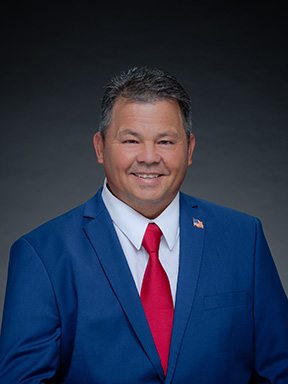
This is not a legislative bill but a gubernatorial nomination submission (GM 623) for the Correctional Industries Advisory Committee. Governor Green has submitted Raymond Mullins for Senate confirmation to serve on the committee, with his term set to expire June 30, 2028. The committee advises the state on prison work programs and inmate employment initiatives. The Senate must confirm this appointment before Mullins can assume the role.
Establishes the procedure that a circuit court shall follow upon the reversal or vacation of a person's judgment of conviction on grounds consistent with innocence, and where the charges were dismissed. Requires the State to pay, through a warrant for payment issued by the Comptroller, advance compensation to any petitioner who was convicted in a court of the State, imprisoned for at least one year, and whose judgment of conviction was reversed or vacated, or was pardoned, on grounds consistent with innocence. Requires the Department of Corrections and Rehabilitation to immediately notify the Department of Human Services so the Department of Human Services may assign a case manager to a petitioner upon the petitioner's release. Requires the State to provide medical coverage to a person for a certain duration upon the reversal or vacation of the person's judgment of conviction on grounds consistent with innocence and where the charges were dismissed. Provides that the Judiciary and Department of Corrections and Rehabilitation shall retain jurisdiction over the person for the purposes of effectuating this process. Authorizes the State to seek reimbursement from the applicable county for any losses incurred by the State pursuant to this process. Requires the Department of the Attorney General to submit an annual report to the Legislature. Clarifies eligibility to seek compensation for persons whose judgment of conviction was reversed or vacated, or who were pardoned, on grounds consistent with innocence, and where the charges were dismissed. Shifts the burden of proof to the State to prove by a preponderance of evidence that the reversal or vacation of the judgment of conviction for a petitioner, or the pardoning of the petitioner, was inconsistent with innocence. Effective 7/1/3000. (HD2)
Establishes the offenses of dangerous intoxication and habitual dangerous intoxication. Provides for civil protective custody and transport for emergency examination in lieu of arrest for dangerous intoxication in specified circumstances, and bars prosecution when civil protective custody is used. Requires probation with mandatory treatment for habitual dangerous intoxication, with incarceration only upon probation violation. Makes conforming amendments to chapter 334, HRS, relating to admission to psychiatric facilities and assisted community treatment. Delays implementation by one year. Effective 7/1/3000. (HD1)
SB 2253 updates the "negligent injury in the first degree" offense to explicitly include injuries caused by drivers operating vehicles while intoxicated. This change directly affects drivers who cause injury to others while under the influence of alcohol or drugs. The bill modifies the legal definition so that such incidents are prosecuted under this specific charge, ensuring they are treated as deliberate negligence under existing law. It does not change penalty levels but clarifies that intoxicated driving causing injury falls within this offense.
Establishes the offense of failure to report bribery by a state elected official as a misdemeanor. Requires a state elected official who knows of or witnesses the conferring, offering, solicitation, or acceptance of a pecuniary benefit in violation of the bribery statute to report the conduct to the Department of the Attorney General, a county prosecuting attorney, a law enforcement agency, the State Ethics Commission, or a county ethics board within sixty days. Defines "state elected official". Effective 7/1/3000. (HD1)
This Senate Concurrent Resolution asks the U.S. Congress to remove cannabis from the federal Controlled Substances Act, support states that are expunging cannabis-related criminal records, and allow cannabis businesses to access full banking services. The bill directly affects cannabis dispensaries, businesses, and individuals with past cannabis convictions in Hawaii and other states. It seeks to align federal law with state-level legalization efforts by requesting federal action rather than creating new state laws. The resolution does not change any state laws but instead asks federal lawmakers to update national policies regarding cannabis classification and financial services.
Requires the Judiciary to contract with a collection agency or licensed attorney to collect delinquent court-ordered fees, fines, sanctions, and court costs. Repeals the authority of the Judiciary to contract with a collection agency or licensed attorney to collect delinquent restitution. Expressly allows courts to specify a period of time or installments for payment of fees and restitution. Requires district courts to hold payment compliance hearings once per year or as soon as practicable, until all fees, fines, and restitution are fully paid, and requires a defendant in district court to appear and show cause if the defendant fails to pay in full within a time specified by the court or fails to pay three consecutive installments. Makes conforming amendments to related statutes. Appropriates funds. Effective 7/1/3000. (HD2)
Requires the Department of Corrections and Rehabilitation to submit an annual report to the Legislature. Appropriates funds to the Department of Corrections and Rehabilitation for reentry services to connect offenders with community-based services. Effective 7/1/3000. (SD1)
Authorizes a court to modify sentences imposed on juvenile offenders if certain conditions are met and the court finds that, after considering certain factors, the defendant is not a danger to the safety of any person or the community and the modification is in the interests of justice. Establishes procedures, provides for hearings and representation by counsel, and authorizes appellate review. (HD1)
Prohibits certain solicitation and inducement practices relating to insurance claims. Establishes disaster-related insurance fraud offenses. Broadens the scope of the offense of insurance fraud and the acts that constitute insurance fraud. Clarifies the penalties for the offense of insurance fraud and the capabilities and operations of the Insurance Fraud Investigations Branch, including the annual report to the Legislature and the use of fraud analytics. Reiterates protections for insurance fraud whistleblowers. Appropriates funds. Effective 7/1/3000. (HD2)