Maddy summaryThis bill directs the National Medal of Honor Museum Foundation to place a monument honoring Medal of Honor recipients on federal land near the Lincoln Memorial in Washington, D.C., overriding standard location rules. It specifically requires the monument to be located within the National Mall's "Reserve" area adjacent to the Lincoln Memorial, as defined in federal law. The bill affects the museum foundation's construction plans and the public's access to this new memorial site. It does not change how the Medal of Honor is awarded, only the physical location of its commemorative monument.
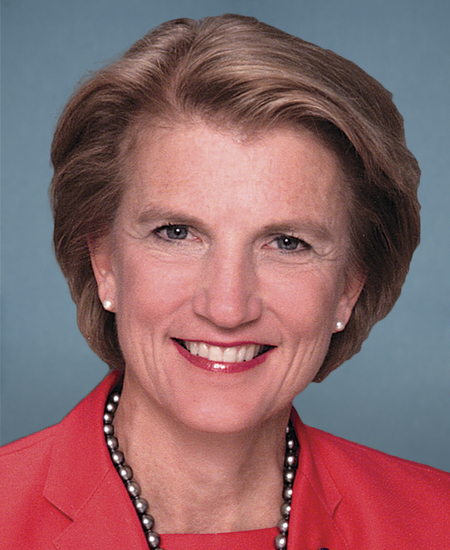
Sen. Shelley Moore Capito
Sponsored bills
Maddy summaryThis bill extends the funding authorization for the Accelerating Access to Critical Therapies for ALS Act from 2026 to 2031, ensuring continued financial support for research into treatments for amyotrophic lateral sclerosis. It requires the Food and Drug Administration to review clinical trial data more rigorously by assessing patient enrollment numbers and requesting interim results from drug manufacturers before renewing research grants. Additionally, the legislation clarifies that clinical trials in phase 3 include combined phase 2/3 studies and planned trials that have not yet started enrolling participants. The bill also mandates the FDA to publish a report within a year of enactment detailing its progress on rare neurodegenerative disease action plans and how it coordinates with broader disease communities. Finally, it adjusts the timeline for a Government Accountability Office report to cover a five-year period instead of four.
Maddy summaryThis bill extends two existing public health programs focused on tick-borne diseases through 2030. It updates the funding timeline for national vector-borne disease centers and health department support from 2021-2025 to 2026-2030. The bill does not change program content or eligibility but ensures continued funding for efforts addressing tick-related illnesses. It directly affects public health agencies administering these programs, not specific individuals.
Maddy summaryThis bill establishes the "INCLUDE Project" at the National Institutes of Health (NIH) to advance research on Down syndrome. It directs NIH to coordinate and expand research into co-occurring health conditions (like Alzheimer's, heart disease, and autoimmune disorders) affecting individuals with Down syndrome, while avoiding duplication of existing efforts. The law requires NIH to build large study populations, support inclusive clinical trials, identify biomarkers, and improve quality of life for people with Down syndrome and their families. NIH must submit biennial reports to Congress detailing research progress and findings. The bill directly affects NIH research programs and future medical care for people with Down syndrome.
National Plan for Epilepsy Act This bill requires the Department of Health and Human Services (HHS) to establish a national plan, form an advisory council, and take other actions to address epilepsy. The requirements sunset on December 31, 2035. Specifically, the bill requires HHS to carry out a National Plan for Epilepsy to prevent, diagnose, treat, and cure epilepsy. In carrying out the plan, HHS must implement activities such as coordinating research and services across all federal agencies and soliciting public comments. Also, HHS must establish an Advisory Council on Epilepsy Research, Care, and Services. The advisory council must report to HHS and Congress every two years with an evaluation of federally funded efforts. Additionally, HHS must annually report to Congress with recommended actions based on its assessments of the nation’s progress on epilepsy.
Maddy summaryThis Senate resolution designates the first week of August 2026 as "National Community Health Center Week" to recognize the role these facilities play in providing affordable primary care across the United States. The bill highlights that community health centers serve a diverse range of populations, including those in rural and urban areas, by offering integrated services such as mental health, dental, and pharmacy care. It encourages the general public to participate in the observance by visiting local centers and celebrating the partnership between these organizations and their communities.
Maddy summaryThe INSULIN Act of 2026 requires health insurance plans to limit insulin copayments to $35 per 30-day supply starting in 2027, with plans choosing to cap costs at 25% of the negotiated price after 2028. The bill also mandates that pharmacy benefit managers pass all rebates and discounts related to insulin directly to health plans rather than retaining them. Additional provisions include measures to speed up the approval process for generic and biosimilar insulin products, establish a pilot program to provide affordable insulin to uninsured individuals in 10 states, and create a resource center and hotline to help uninsured people access assistance programs.
Maddy summaryThis resolution designates the week of August 22 through August 30, 2026, as "National Park Week." It directly affects the public by encouraging responsible visits and support for the National Park System, which includes parks, battlefields, and historical sites located across the United States and its territories. The measure serves as a formal declaration to highlight the parks' role in recreation, education, and economic activity without altering any laws or funding.
Maddy summaryThis resolution honors the 100th anniversary of the Golf Course Superintendents Association of America (GCSAA), recognizing its role in advancing the profession of golf course management since its founding in 1926. The bill highlights the organization’s contributions to environmental stewardship, workforce development, and educational programs that connect students with science and technology concepts. It also notes the significant economic impact of the golf industry and the GCSAA's efforts to promote sustainable practices across the United States.
Maddy summaryThe SUSTAIN 340B Act overhauls the federal drug discount program to tighten oversight and prevent fraud by requiring covered entities to register their contract pharmacies and child sites with the Department of Health and Human Services. It establishes a new independent data clearinghouse to track claims and stop duplicate discounts, while also mandating that health insurers and pharmacy benefit managers treat 340B providers on equal footing without imposing discriminatory reimbursement terms. The bill defines strict criteria for what constitutes a valid patient relationship and authorizes a user fee program starting in fiscal year 2031 to fund additional audits and enforcement activities. These provisions directly affect safety-net healthcare providers, drug manufacturers, and insurance companies by increasing transparency requirements and expanding the government's authority to penalize non-compliance.