Maddy summaryThis bill would require federal agencies to submit detailed reports about new regulations to Congress before they take effect. Major rules (defined as those with an annual economic effect of $100 million or more, or significant effects on competition, employment, or public safety) would need congressional approval via a joint resolution before taking effect, with Congress having 70 days to act. Nonmajor rules would have a different, shorter review process. The bill would also require agencies to publish cost-benefit analyses and other supporting documentation, and would mandate that rules be reviewed and potentially reapproved after 10 years.
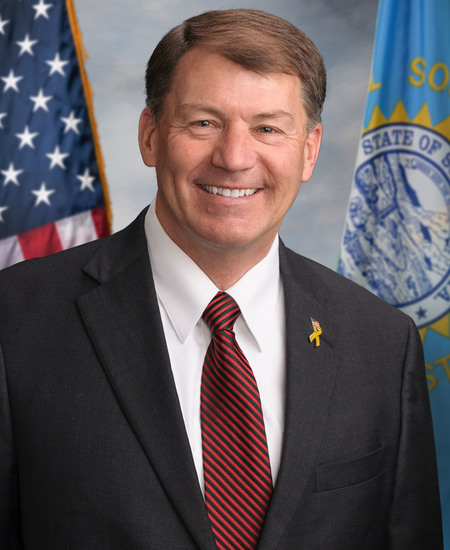
Sen. Mike Rounds
Sponsored bills
Maddy summaryThis bill requires mandatory country of origin labeling for beef products, including ground beef, so consumers can see where their beef comes from. It updates existing labeling rules under the Agricultural Marketing Act of 1946 to specifically include beef (and ground beef) alongside other meats. The law directs the U.S. Trade Representative and Agriculture Secretary to find a World Trade Organization-compliant way to reinstate this labeling within a year of enactment. It directly affects beef producers, retailers, and consumers by changing how beef packaging must identify its country of origin.
Maddy summaryThis bill amends federal securities laws to expand regulatory exemptions for retirement plans used by charities and educational institutions. It specifically updates definitions to include 403(b) plans (common for nonprofit employees) under exemptions from certain registration and oversight rules, provided they meet three conditions: (1) they follow federal retirement law (ERISA), (2) the employer acts as a fiduciary for investment choices, or (3) they are governmental plans. This change directly affects employees of qualifying charities and educational institutions who participate in these 403(b) plans, reducing compliance burdens for their retirement plans. The policy change streamlines regulatory requirements without altering retirement benefits or funding.
Maddy summaryS 427 (TAILOR Act of 2025) requires federal banking regulators (like the Federal Reserve and FDIC) to adjust rules based on each financial institution’s specific risk level and business model, rather than applying uniform regulations. It directly affects all federally regulated banks, particularly community banks, by limiting unnecessary regulatory burdens like costly reporting. Key provisions include tailoring rules to minimize costs (e.g., reducing reporting requirements for community banks eligible under the Community Bank Leverage Ratio, as specified in Section 3), documenting this tailoring in rulemaking notices, and submitting annual reports to Congress on implementation. The bill aims to modernize supervision while preserving flexibility for institutions serving local communities.
Maddy summaryThis bill amends federal law to explicitly include "conspiracy" as a punishable offense under computer crime statutes (Section 1030 of Title 18). It updates language that previously only covered "attempted" violations to now include "conspiracy to commit" those violations. The change directly affects federal prosecutors and courts handling cybercrime cases, allowing charges for planning or organizing cyberattacks even if the crime wasn't completed. The bill makes no new policy changes but clarifies existing legal standards for prosecuting cybercrime conspiracies.
Maddy summaryThis bill establishes the PIVOTT Program to build a cybersecurity workforce by providing full tuition scholarships for students at community colleges and technical schools pursuing cybersecurity or cyber-relevant associate's degrees. Students must complete a 2-year service obligation in cybersecurity roles after graduation, with exceptions for military service, and must participate in skills-based exercises like hackathons and labs. The program requires participating institutions to offer these training components and coordinate internships with government agencies, including critical infrastructure entities and Federal departments. CISA will coordinate implementation with enrollment targets of 250 students in the first year, growing to 10,000 annually within 10 years.
Maddy summaryS 364, titled the "Hearing Protection Act" (though it regulates firearm silencers, not hearing protection), changes federal law to treat firearm silencers like firearms for tax and regulatory purposes. It imposes a 10% federal tax on silencers (similar to firearms), preempts state laws that tax or regulate silencers beyond federal rules, and requires the destruction of existing silencer registration records within one year. The bill clarifies definitions of "firearm silencer" in federal law and modifies licensing requirements for these devices. This directly affects silencer owners, manufacturers, and state governments that previously imposed additional restrictions or taxes.
Maddy summarySRES 49 is a ceremonial Senate resolution designating the week beginning February 3, 2025, as "National Tribal Colleges and Universities Week." It recognizes Tribal Colleges and Universities (TCUs), which serve over 230 federally recognized tribes and provide culturally grounded education to Native and non-Native students in underserved communities. The resolution calls for public observance through activities that highlight TCUs' role in preserving indigenous languages, supporting tribal communities, and preparing students for the workforce. This symbolic measure does not create new laws or allocate funding, but aims to raise national awareness of TCUs' contributions.
Nancy Gardner Sewell Medicare Multi-Cancer Early Detection Screening Coverage Act This bill allows, beginning in 2028, for Medicare coverage and payment for multi-cancer early detection screening tests that are approved by the Food and Drug Administration and that are used to screen for cancer across many cancer types, if the Centers for Medicare & Medicaid Services determines such coverage is appropriate. Coverage is limited to those under a certain age (age 68 in 2028, increased by one year every year thereafter) and to one test every 11 months.
Maddy summaryThe WALL Act of 2025 appropriates $25 billion for constructing a physical barrier along the southern U.S. border. It implements new Social Security number requirements for tax credits like the child tax credit and earned income tax credit, with exceptions for individuals prohibited from working in the U.S. The bill also mandates E-Verify checks for eligibility for certain federal benefits, including housing assistance, and increases civil penalties for illegal entry and overstay. These provisions directly affect immigrants seeking tax benefits, housing assistance, and those who enter the country without authorization.