Maddy summaryThis bill requires that AM radio receivers be included as standard equipment in all new motor vehicles (such as cars and trucks) sold in the United States, with a rule to be issued by the Department of Transportation within one year. The rule must ensure AM radio is easily accessible on the dashboard and allows manufacturers to use digital AM radio technology instead of traditional AM. During the one-year period between the bill's enactment and the rule's effective date, manufacturers must clearly label vehicles without AM radio. The bill also directs a study to evaluate whether an alternative system could deliver emergency alerts as reliably as AM radio across the country, especially during crises.
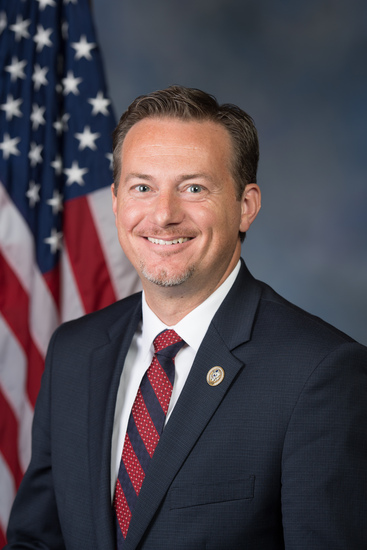
Rep. Michael Cloud
Sponsored bills
Maddy summaryHCONRES 46, the "Fiscal State of the Nation Resolution," requires the House and Senate Budget Committees to hold an annual joint hearing within 45 days of the Treasury's submission of the federal government's audited financial statement. At this hearing, the Comptroller General will present an objective, nonpartisan analysis of the government's financial condition, including deficits, surpluses, and long-term fiscal projections, as required by the Government Accountability Office's standards. The hearing must be open to the public and allow all members of Congress to participate, regardless of committee membership. This resolution ensures Congress receives regular, factual reviews of federal finances without political bias.
Maddy summaryThe Housing PLUS Act of 2023 modifies federal homeless assistance funding under the McKinney-Vento Act to ensure grantees providing supportive services (like job training or addiction treatment) or requiring conditions for housing (such as sobriety) cannot be restricted from receiving funds. It mandates that at least 30% of Continuum of Care funds each year must support entities offering these wraparound services. The bill directly affects homeless assistance grantees, project sponsors, and faith-based organizations receiving federal housing funds. It also requires the Secretary to report annually to Congress confirming compliance with these funding rules.
Processing Revival and Intrastate Meat Exemption Act or the PRIME Act This bill exempts from federal inspection requirements animals and meats that are slaughtered and prepared at custom animal slaughter facilities for distribution within the state. Under current law, a custom slaughter exemption applies if the meat is slaughtered exclusively for personal, household, guest, or employee uses. Specifically, the bill expands the federal inspection exemption to include the slaughter of animals or the preparation of carcasses, meat, and meat food products that are slaughtered and prepared at a custom slaughter facility in accordance with the laws of the state where the facility is located; and prepared exclusively for distribution to household consumers in the state or restaurants, hotels, boarding houses, grocery stores, or other establishments in the state that either prepare meals served directly to consumers or offer meat and food products for sale directly to consumers in the state. The bill does not preempt any state law concerning (1) the slaughter of animals or the preparation of carcasses, meat, and meat food products at a custom slaughter facility; or (2) the sale of meat or meat food products.
Maddy summaryHRES 396 is a non-binding House resolution recognizing motherhood on Mother's Day. It expresses support for the term "mother" and criticizes language alternatives like "pregnant people" or "birthing person," while stating mothers are defined as women. The resolution contains no policy changes or concrete effects - it is purely symbolic, affirming traditional definitions of motherhood without altering laws or impacting any programs. It was introduced by multiple House members and referred to the Education and Workforce Committee.
Maddy summaryHR 3175, the Regulation Reduction Act of 2023, requires federal agencies to repeal two existing regulations before issuing a new rule, and three for "major rules" (those with significant economic impact). For major rules, the new rule's cost must not exceed the cost of the repealed rules, and the Office of Management and Budget must certify this. Agencies must also submit a 90-day review to Congress identifying costly, ineffective, duplicative, or outdated regulations. This bill directly affects federal agencies and the businesses, states, and local governments subject to federal regulations.
Maddy summaryHR 3039, the DRIVE Act, prohibits the Federal Motor Carrier Safety Administration (FMCSA) from requiring speed limiting devices on trucks weighing over 26,000 pounds operating in interstate commerce. This directly affects commercial trucking companies and drivers transporting goods across state lines. The bill's key provision explicitly bans the FMCSA from issuing any rule mandating such devices, which are typically set to limit vehicle speed. The law applies specifically to interstate trucking operations and does not affect state-level regulations.
Maddy summaryThe You Own the Data Act (YODA) gives U.S. users control over their personal data collected by large online platforms and data brokers. It requires covered entities (like major social media companies or data brokers with over 100 million users) to obtain explicit written consent before sharing user contacts or data, and to provide users with free access to view, correct, delete, or port their data within 90 days of a request. The bill also mandates data minimization - limiting collection to what’s necessary for services - and bans tracking cookies without consent, while requiring clear privacy notices under 1,000 words. Enforcement is handled by the FTC, state attorneys general, and allows private lawsuits for violations, with penalties up to $750 per violation for users.
Maddy summaryThis bill prohibits financial institutions (like banks and credit card processors) from using special transaction codes that separately identify firearm or ammunition sellers. It directly affects gun retailers and the financial services they use, ensuring these businesses are treated the same as other merchants for payment processing. The key provision amends the Truth in Lending Act to ban covered entities from categorizing firearm transactions differently, requiring uniform handling of all business types. This changes how payment systems classify transactions but does not alter gun ownership laws.
Maddy summaryHR 2991, the TEACH Act of 2023, modifies federal education law to tie funding to school firearm policies and create grants for defensive training. It prohibits the Department of Education from funding schools that restrict firearm possession beyond existing federal limits (Section 2(b)), and directs the Secretary to award competitive grants using ESEA funds for "defensive training programs" focused on firearm use for school safety (Section 3(a)). These programs include training on carrying, using, and storing firearms on school property to protect students from intruders (Section 3(e)(1)). The bill directly affects schools receiving federal education funds by requiring them to allow firearm possession for training or face funding restrictions, and prioritizes grant applications from entities supporting Second Amendment rights.