Maddy summaryThis bill, titled the Permanent CBDC Ban Act, aims to permanently prohibit the Federal Reserve from issuing a central bank digital currency. It achieves this by amending the Federal Reserve Act to remove the specific legal authority that allows the Reserve to create such a digital currency. The legislation directly affects the Federal Reserve by stripping away its power to launch a digital version of the dollar. By deleting the relevant subsection of the law, the bill ensures that the Reserve cannot issue a CBDC in the future.
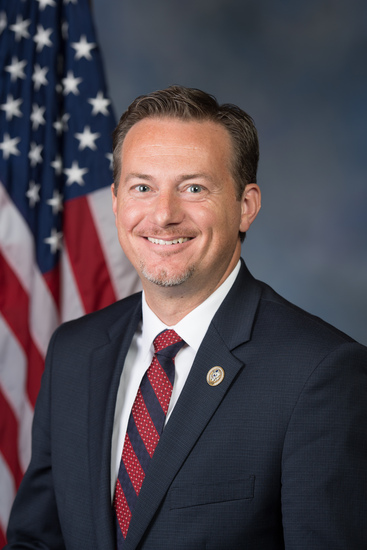
Rep. Michael Cloud
Sponsored bills
Maddy summaryThe Freedom to Ship Act prohibits motor carriers from discriminating against the lawful transportation of firearms, ammunition, and related components across state lines. It specifically bans carriers from refusing to transport these items, imposing unreasonable conditions, charging higher fees than for similar goods, or forcing shippers to waive privacy protections. Violations can result in civil penalties of up to $10,000 per incident and allow harmed shippers to sue for damages. The bill also repeals an existing federal statute that previously allowed carriers to refuse such shipments based on state laws.
Maddy summaryThis bill, known as the D.C. Taxing Authority Review Act, modifies the rules for how new taxes and fees proposed by the District of Columbia government are reviewed by Congress. It requires that any D.C. law imposing or increasing a tax or fee must receive explicit approval from a joint resolution passed by both the House of Representatives and the Senate within 60 days, or else the law will not take effect. Additionally, the bill limits the time for debating these specific approval resolutions to one hour, split evenly between supporters and opponents. These changes directly affect the District of Columbia government's ability to enact new financial measures without prior congressional consent.
Maddy summaryThe Protection Against Mass Surveillance Act prohibits federal agencies from buying, using, or contracting for automated surveillance systems that rely on license plate recognition, facial recognition, biometric identification, or other technologies designed for mass tracking. It also prevents state, local, and tribal governments from using federal funds to acquire or operate these same surveillance tools. If federal agencies obtain data in violation of these rules, the law requires them to delete the information within 30 days and bars its use as evidence in any court or administrative proceeding.
Maddy summaryThe SAFE CATTLE Act requires the U.S. Departments of Agriculture and Interior to coordinate federal efforts to prevent, monitor, and eradicate New World screwworm - a pest that attacks livestock and wildlife - across federal lands managed by agencies like the National Park Service and Fish and Wildlife Service. It mandates joint surveillance protocols, outbreak response plans with state officials, and science-based strategies to protect livestock industries and food supply chains. The bill also requires annual reports to Congress detailing interagency progress, outbreak responses, and recommendations for improving pest control until screwworm is contained south of Panama. This legislation directly affects federal land managers, livestock producers, and the broader agricultural economy by establishing a formal federal framework for addressing this specific animal health threat.
Maddy summaryHR 6213, the Heat Workforce Standards Act of 2025, prohibits the U.S. Department of Labor from finalizing, implementing, or enforcing OSHA's proposed "Heat Injury and Illness Prevention" standard (published August 30, 2024). This bill directly blocks the specific regulatory proposal targeting heat safety in both outdoor and indoor work settings. It does not create new requirements or affect workers; it solely prevents the implementation of the existing OSHA proposal. The bill is procedural, focusing on halting a regulatory action rather than establishing new policy.
Maddy summaryHR 4986, the Parents Opt-in Protection Act, amends federal law to require written permission before schools administer certain student surveys or evaluations. It directly affects students (especially minors) and their parents, requiring schools to obtain prior written consent from the student (if an adult or emancipated minor) or the parent (for minors) for each specific survey. The bill clarifies that schools cannot force participation without this written consent for surveys related to sensitive topics like health or behavior. This change updates existing consent rules from verbal permission to a written requirement for targeted school assessments.
Maddy summaryH.Res. 1439 is a non-binding resolution that formally expresses the House of Representatives' view that the Senate's current filibuster rules violate the constitutional design of two co-equal legislative bodies. The bill argues that these rules allow a small minority of Senators to block legislation passed by the House without engaging in substantive debate, thereby undermining the principle of majority rule and disenfranchising House members and their constituents. It calls on the Senate to reform or abolish its cloture procedures to ensure that bills passed by the House receive a timely floor vote determined by a simple majority. The resolution concludes by directing the Clerk of the House to send a copy of the text to key Senate leadership and all Senators.
Maddy summaryThis resolution honors the late Senator Lindsey Graham and condemns Omar Suleiman for publicly celebrating Graham's death. It also acknowledges that House Democrats invited Suleiman to serve as a guest chaplain in 2019 and highlights his past statements and affiliations. The measure expresses support for the House Republicans' Sharia-Free America Caucus, which aims to protect constitutional principles from what it describes as an ideology incompatible with American life.
Maddy summaryThe PRIVACY Act restricts Federal law enforcement agencies from accessing surveillance data collected by State or local agencies without a warrant issued by a Federal judge. It establishes a "Jurisdictional Wall List" maintained by the Attorney General that includes technologies like automated license plate readers and long-range microphones, prohibiting the use of Federal funds to purchase these specific devices. While the bill allows for limited exceptions in emergencies or with consent, it mandates strict rules on data retention, requiring agencies to delete most collected information within 30 days unless it becomes evidence in an active prosecution. Additionally, the legislation bans the use of this data to monitor individuals exercising First Amendment rights and requires regular reporting to Congress on how these surveillance tools are utilized.