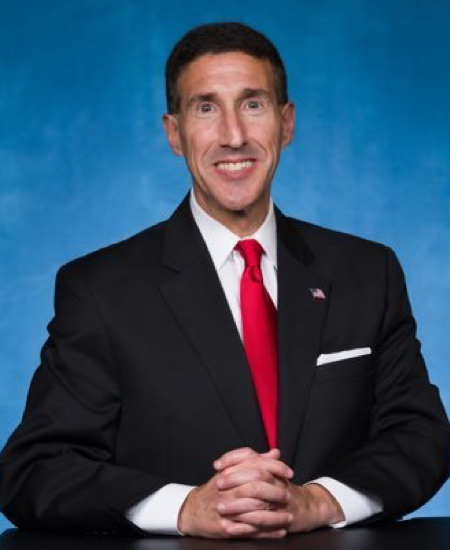
Photo of David Kustoff
R United States House · District 8 · Tennessee On the 2026 ballot

Rep. David Kustoff

Compare
Total votes
2,837
all sessions
Attendance
98%
48 missed
Higher than 78% of chamber peers
With party
96%
of cast votes
Higher than 90% of chamber peers
Bipartisan score
2%
crosses aisle rarely
Lower than 91% of chamber peers
Sponsored
718
bills & resolutions
Lower than 76% of chamber peers
Committees
3
assignments
718 bills and resolutions

Sponsored bills

Total
718
Primary
82
Co-sponsor
636
This page
718
matching current filters
Co-sponsor HR 452
Signed into law · Georgia House · Co-sponsor
Miracle on Ice Congressional Gold Medal Act

Miracle on Ice Congressional Gold Medal Act This act provides for the award of Congressional Gold Medals to the members of the 1980 U.S. Olympic men's ice hockey team in recognition of the team's achievement at the 1980 Winter Olympic Games.

Signed into law Dec 12, 2025 1 co-sponsor
Co-sponsor HR 2701
Passed · Georgia House · Co-sponsor
Fallen Servicemembers Religious Heritage Restoration Act

Maddy summaryThis bill directs the American Battle Monuments Commission to correct historical errors by identifying Jewish World War I and II veterans buried overseas under incorrect Christian markers (Latin crosses) and replacing them with appropriate markers. It establishes a 10-year program to contact families of affected veterans, with the Commission funding the effort at $500,000 annually through nonprofit contracts. The program specifically targets veterans buried in foreign U.S. military cemeteries with markers indicating non-Jewish faith, addressing a documented mistake affecting approximately 900 Jewish servicemembers. This directly affects Jewish veterans' families by honoring their heritage and correcting past burial inaccuracies.

Passed Dec 9, 2025 1 co-sponsor
Primary HR 6449
In committee · Georgia House · Lead sponsor
DO NOT Call Act

Maddy summaryHR 6449, the "DO NOT Call Act," amends the Telephone Consumer Protection Act of 1993 to strengthen penalties for illegal robocalls. It increases criminal penalties for willful violations to up to one year in prison (or three years for aggravated offenses like repeated high-volume calls or calls intended to support felonies), and raises fines for inaccurate caller identification from $10,000 to $20,000 per violation. The bill directly affects businesses and entities making unsolicited calls without consent, including those using auto-dialers or prerecorded messages. Key provisions define "calls" broadly to include unsolicited texts sent via auto-dialers without prior permission.

In committee Dec 4, 2025 0 co-sponsors
Co-sponsor HR 6393
In committee · Georgia House · Co-sponsor
DSH in Tennessee Act

Maddy summaryHR 6393, the "DSH in Tennessee Act," permanently restores and guarantees specific federal hospital funding for Tennessee starting in fiscal year 2026. It directs the federal government to provide Tennessee with a Disproportionate Share Hospital (DSH) allotment equal to the state's 2015 level, adjusted annually for inflation based on the Consumer Price Index. This funding directly supports hospitals in Tennessee that serve large numbers of low-income patients, ensuring they receive consistent federal financial assistance. The bill treats Tennessee as a "low DSH state" for future funding calculations, establishing a permanent, inflation-adjusted funding formula.

In committee Dec 3, 2025 1 co-sponsor
Co-sponsor HR 1262
Passed · Georgia House · Co-sponsor
Mikaela Naylon Give Kids a Chance Act

Give Kids a Chance Act of 2025 This bill expands the Food and Drug Administration’s (FDA’s) authority with respect to research on rare pediatric diseases, including by permitting the FDA to take enforcement action against drug sponsors that fail to satisfy pediatric study requirements and by reauthorizing programs that support pediatric research.  Specifically, the bill modifies requirements relating to molecularly targeted pediatric cancer investigations to permit research on new drugs in combination with active ingredients that have already been approved, provided certain conditions are met; permits the FDA to take enforcement action against drug sponsors that fail to comply with pediatric study requirements, if such sponsors demonstrated a lack of due diligence in satisfying the requirement; renews the FDA’s authority to award priority review vouchers to sponsors of new products intended to treat rare pediatric diseases through September 30, 2029; and reauthorizes through FY2027 certain funding for the National Institutes of Health to support priority pediatric research.  The bill also provides statutory authority for the FDA’s interpretation of the orphan drug exclusivity period. The bill specifies, consistent with FDA regulations, that the seven-year market exclusivity period for drugs for rare diseases or conditions (i.e., orphan drugs) prohibits the approval of the same drug for the same approved use or indication with respect to the disease or condition. (In Catalyst Pharmaceuticals, Inc. v. Becerra , a court rejected the FDA’s interpretation and held that orphan drug exclusivity extends to all uses or indications for the disease or condition.)

Passed Dec 2, 2025 1 co-sponsor
Co-sponsor HR 6219
In committee · Georgia House · Co-sponsor
Conscience Protections for Medical Residents Act

Maddy summaryThis bill prohibits Medicare-approved medical residency programs from requiring residents to undergo abortion training without their voluntary consent. It specifically bans programs from making such training mandatory (requiring residents to "opt-in" rather than "opt-out") or from discriminating against residents who refuse this training or do not perform abortions. The law directly affects medical residents in Medicare-funded postgraduate training programs across the U.S., ensuring they cannot be forced into abortion-related clinical experiences or penalized for declining them.

In committee Nov 20, 2025 1 co-sponsor
Co-sponsor HR 6231
In committee · Georgia House · Co-sponsor
Improve and Enhance the Work Opportunity Tax Credit Act

Maddy summaryHR 6231 extends and enhances the Work Opportunity Tax Credit (WOTC), a federal tax credit for employers hiring from specific target groups like veterans, SNAP recipients, and summer youth workers. The bill extends the program through 2030 (from 2025), increases the credit rate to 50% for certain wages (up from 40%), adds automatic inflation adjustments to the $6,000 wage cap, and expands eligibility to include military spouses and removes age limits for SNAP recipients. Key provisions also modify credit calculations for veterans, agricultural workers, and long-term assistance recipients, while requiring federal agencies to promote hiring from target groups in critical sectors like healthcare and construction. This bill directly affects employers who hire from these designated groups, making the tax credit more valuable and accessible.

In committee Nov 20, 2025 1 co-sponsor
Co-sponsor HR 6155
In committee · Georgia House · Co-sponsor
Federal Carjacking Enforcement Act

Maddy summaryThis bill amends Section 2119 of Title 18 (carjacking statute) to clarify the legal definition of the offense. It removes the phrase "with the intent to cause death or serious bodily harm" from the main definition, replacing it with "knowingly," and refines the death penalty provision to specify that death must result from a carjacking taken with the intent to cause death or serious bodily harm. The change streamlines the statute by focusing on the act of taking a vehicle "knowingly" rather than requiring proof of intent to cause harm as a core element. This technical amendment affects how federal prosecutors define and prosecute carjacking cases under existing law.

In committee Nov 19, 2025 1 co-sponsor
Co-sponsor HR 1109
In committee · Georgia House · Co-sponsor
Litigation Transparency Act of 2025

Maddy summaryHR 1109, the Litigation Transparency Act of 2025, requires parties and their lawyers in civil lawsuits to disclose to the court and other parties the identity of any person or group that could receive payment if the case succeeds (like investors or lenders), and to provide copies of related agreements. Exceptions apply for simple loan repayments (with interest limits) or attorney fee reimbursements. Disclosures must be made within 10 days of signing such agreements or when filing the case, and must be updated if inaccurate. This applies to all civil cases filed after the law takes effect, aiming to increase transparency in litigation funding arrangements.

In committee Nov 19, 2025 1 co-sponsor
Co-sponsor HR 5874
In committee · Georgia House · Co-sponsor
Firearm Access During Shutdowns Act

Maddy summaryThis bill ensures that critical firearm-related government operations continue during federal shutdowns. It designates background checks (via the FBI's National Instant Criminal Background Check System), Bureau of Alcohol, Tobacco, Firearms and Explosives enforcement, and firearm export licensing (handled by Commerce and State Departments) as essential services that must remain operational. These functions would be treated as "excepted" under federal law, meaning their employees would continue working even if other government services halt. The bill affects how background checks and firearm export licenses are processed during shutdowns but does not change gun ownership laws or eligibility.

In committee Oct 31, 2025 1 co-sponsor
Showing 61 to 70 of 718 bills
Previous 1 … 6 7 8 … 72 Next