Maddy summaryThe In God We Trust Act requires the Administrator of General Services to display the national motto "In God We Trust" on every public building within the United States. This mandate applies to all federal buildings and must be completed no later than one year after the law is enacted. The bill specifies that the motto must be inscribed or displayed in a prominent location on each structure.
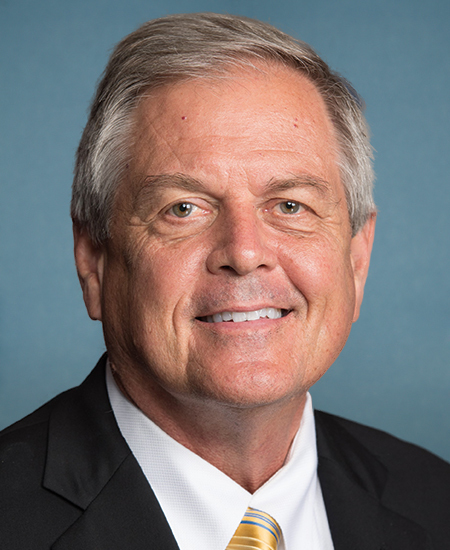
Rep. Ralph Norman
Sponsored bills
This resolution expresses support for police officers and other law enforcement personnel. The resolution further recognizes law enforcement officers across the United States in the pursuit of preserving safe and secure communities; the need to ensure that such officers have the equipment, training, and resources necessary to protect their health and safety while they are protecting the public; and the law enforcement community for acts of sacrifice and heroism. The resolution expresses condolences and appreciation to the loved ones of each law enforcement officer who has made the ultimate sacrifice in the line of duty.
Maddy summaryThe CRUSADE Act amends immigration law to require applicants for special immigrant visas to explicitly disavow Sharia law. Under this provision, individuals seeking these specific visas must take an additional oath affirming their commitment to uphold the U.S. Constitution. The bill directly affects foreign nationals applying for special immigrant status by adding a new eligibility requirement related to their legal and religious beliefs. This change does not alter the general immigration process but imposes a specific condition on one category of visa applicants.
Maddy summaryThis resolution expresses support for designating the week of May 3 through May 9, 2026, as "National Small Business Week." It aims to honor the contributions of small businesses and entrepreneurs across the United States, acknowledging their role in supporting millions of jobs. The bill does not create new laws or regulations but serves as a formal statement of appreciation from the House of Representatives.
Maddy summaryThis bill proposes a constitutional amendment to clarify how citizenship is determined at birth, directly affecting individuals born in the United States and their parents. It would restrict automatic citizenship to children born to parents who are U.S. citizens, lawful permanent residents, or active-duty military members, while also granting Congress the authority to pass laws enforcing these rules. By modifying the interpretation of the 14th Amendment, the measure aims to establish specific criteria for birthright citizenship that align with current immigration laws.
Maddy summaryLogan's Law directs the Attorney General to create a free, public database listing individuals with qualifying violent convictions, requiring states that receive federal crime grants to submit their records. The database will allow searches by various personal details and conviction specifics, such as the judge and prosecutor involved, and must be updated at least every three months. Additionally, the bill requires the Attorney General to report on current barriers to sharing criminal records between states and the federal government and to propose solutions for improving this data exchange. States that fail to submit the required data could face penalties, including the withholding of federal Byrne JAG grant funds or the direct distribution of those funds to local governments within the state.
Maddy summaryThis bill, titled the Territorial Protection and Sovereignty Act, ends the Temporary Protected Status program for individuals currently holding that status in the United States. It requires that any existing status grants terminate immediately upon the law's enactment. Affected individuals must depart the country within 60 days of the bill becoming effective to avoid being classified as unlawfully present. The legislation removes the specific legal protections previously established under Section 244 of the Immigration and Nationality Act.
Equal Representation Act This bill requires that the statement sent by the President to Congress after the decennial census indicating the number of persons in each state exclude noncitizens. (This statement is the basis for reapportionment of U.S. Representatives.) The bill also requires any questionnaire used in the decennial census to include a checkbox or other similar option for respondents to indicate whether the respondent and each household member is (1) a U.S. citizen, (2) a U.S. national but not a citizen, (3) a non-U.S. national ( alien under federal law) lawfully residing in the United States, or (4) a non-U.S. national unlawfully residing in the United States. The Department of Commerce must make public the number of persons in each state, disaggregated by each of these four categories.
Maddy summaryThis bill restricts immigration and naturalization by adding new grounds for inadmissibility and deportation based on membership in or advocacy for specific political ideologies, including socialism, communism, Chinese communism, Marxism, and Islamic fundamentalism. It directly affects foreign nationals and permanent residents by making them ineligible for entry or citizenship if they have affiliated with or promoted these ideologies, with exceptions only for advocacy that occurred before age 14. The law defines these ideologies in detail and designates specific organizations as examples of each category, while also prohibiting court review of determinations made under these provisions. Additionally, the bill expands the grounds for revoking naturalized citizenship and requires the Attorney General to issue regulations implementing these changes.
Maddy summaryThe Equal Treatment for Farmers Act removes references to 'socially disadvantaged farmers and ranchers' from multiple federal agricultural laws and programs. This bill amends various statutes including the Federal Crop Insurance Act, Consolidated Farm and Rural Development Act, and other agricultural legislation to eliminate special preferences or categories based on social disadvantage status. The legislation also prohibits the USDA from providing any preference, priority consideration, or enhanced benefits based on race or gender in its programs. These changes affect how federal agricultural assistance, loans, and benefits are categorized and distributed to farmers and ranchers.