Maddy summaryThis bill creates a new system for recognizing and regulating individuals who help veterans file benefit claims. It requires the VA to provide veterans with information about free assistance options and maintain a public list of accredited representatives. The bill sets a maximum fee limit of $12,500 or 5 times the monthly benefit increase for representatives, and establishes penalties for unaccredited representatives who charge improper fees. The law aims to protect veterans from unscrupulous representatives while ensuring they have access to quality assistance with their benefit claims.
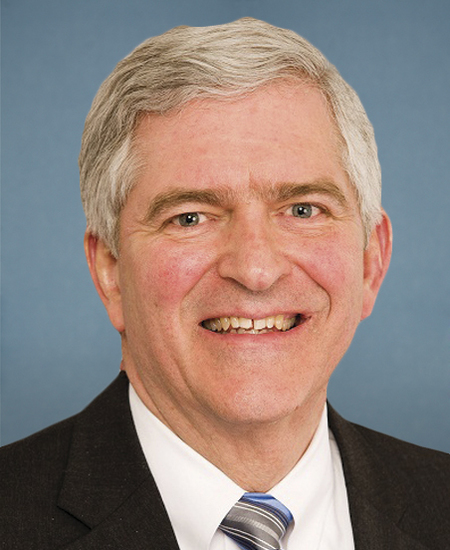
Rep. Daniel Webster
Sponsored bills
Maddy summaryThe ACES Act (HR 530) mandates a study by the National Academies to examine cancer rates and deaths among veterans who served as aircrew members (e.g., pilots, navigators) in fixed-wing military aircraft. The study will identify potential exposure risks (like chemicals) linked to 12 specific cancers (including brain, lung, prostate, and melanoma) and use VA, DoD, and CDC data to analyze prevalence and mortality. It does not change benefits or laws but requires a final report to the VA and congressional committees. The study directly affects veterans with the defined aircrew service history.
Maddy summaryHRES 373 is a symbolic resolution expressing support for designating May as "Fallen Heroes Memorial Month" to honor U.S. military service members who died in service. It urges the President to issue an annual proclamation designating May as this commemorative month, recognizing over 1.3 million fallen service members and calling on Americans to reflect on their sacrifice. The resolution does not create new laws or requirements but formally requests a presidential proclamation to honor these veterans and their families. It directly affects the President (who would issue the proclamation) and the public (who are encouraged to participate in remembrance). This is a non-binding ceremonial gesture, consistent with existing Memorial Day observances.
Maddy summaryThis bill designates the POW/MIA Memorial and Museum under construction in Jacksonville, Florida, as the official "National POW/MIA Memorial and Museum." It requires the museum to submit a detailed report to Congress within 90 days, including a five-year budget, organizational structure, bylaws, and accreditation details. The designation may be withdrawn if the museum is not operational within five years of the bill's enactment or if the required report is late. The museum honors prisoners of war and those missing in action since World War II through educational exhibits and reflective spaces for the public.
Maddy summaryHR 2326, the Dietary Guidelines Reform Act of 2025, requires the U.S. Department of Agriculture (USDA) and Health and Human Services (HHS) to update the Dietary Guidelines for Americans at least every 10 years, instead of the previous 5-year cycle. The bill mandates guidelines be based on "significant scientific agreement" through evidence-based reviews, include input from an Independent Advisory Board (with specific member requirements and conflict-of-interest disclosures), and exclude topics like taxation or social policies. It also requires the Secretaries to notify Congress 90 days before updates and assign evidence strength ratings to each guideline. These changes directly affect the federal agencies responsible for creating the guidelines and the public who rely on them for health guidance.
Maddy summaryThis bill requires FEMA to reimburse local governments and electric cooperatives for interest paid on disaster recovery loans. It covers interest calculated as the lesser of actual payments or what would have been paid at the current prime rate, for loans where at least 90% of funds were used for disaster-related projects. The reimbursement includes interest from the past nine years and mandates FEMA to process payments within one year of the bill's enactment.
Safeguard American Voter Eligibility Act or the SAVE Act This bill requires individuals to provide documentary proof of U.S. citizenship when registering to vote in federal elections. Specifically, the bill prohibits states from accepting and processing an application to register to vote in a federal election unless the applicant presents documentary proof of U.S. citizenship. The bill specifies what documents are considered acceptable proof of U.S. citizenship, such as identification that complies with the REAL ID Act of 2005 that indicates U.S. citizenship. Further, the bill (1) prohibits states from registering an individual to vote in a federal election unless, at the time the individual applies to register to vote, the individual provides documentary proof of U.S. citizenship; and (2) requires states to establish an alternative process under which an applicant may submit other evidence to demonstrate U.S. citizenship. Each state must take affirmative steps on an ongoing basis to ensure that only U.S. citizens are registered to vote, which shall include establishing a program to identify individuals who are not U.S. citizens using information supplied by certain sources. Additionally, states must remove noncitizens from their official lists of eligible voters. The bill allows for a private right of action against an election official who registers an applicant to vote in a federal election who fails to present documentary proof of U.S. citizenship. The bill establishes criminal penalties for certain offenses, including registering an applicant to vote in a federal election who fails to present documentary proof of U.S. citizenship.
Maddy summaryThis bill expands Medicare coverage to include audiology services provided by qualified audiologists without requiring a physician referral or supervision. Starting January 1, 2027, Medicare will pay 80% of the standard rate for these services, which include hearing and balance assessments and treatment. It specifically allows audiologists to legally provide these services under state law, as long as they are covered if provided by a physician. The bill does not expand the types of services covered beyond those already payable under Medicare as of December 31, 2026.
Maddy summaryHR 2806 prohibits the Secretary of Energy from selling petroleum products from the Strategic Petroleum Reserve to entities under Chinese Communist Party control or if the products could be exported to China. It directly affects U.S. energy sales to Chinese-linked companies and the Department of Energy’s management of the reserve. Key provisions require the Secretary to block such sales and mandate that any sale not result in exports to China. This policy change restricts access to U.S. strategic oil reserves for China-related entities.
Maddy summaryHR 1039, the Clear Communication for Veterans Claims Act, requires the Department of Veterans Affairs (VA) to commission an independent assessment of notices sent to veterans filing claims. Within 30 days of enactment, the VA must partner with a federally funded research center to evaluate these notices, focusing on making them clearer, more concise, and better organized while reducing paper use and government costs. The assessment, developed with input from veterans' groups and experts, must be submitted to Congress within 90 days, and the VA must implement feasible recommendations within one year. This bill directly affects veterans navigating claims processes and aims to improve their experience through clearer communication. The bill also includes a minor technical change to housing loan fee deadlines.