

Maddy summaryThe Protect American Values Act prohibits the use of federal funds to implement, administer, or enforce a specific Department of Homeland Security rule regarding the "Public Charge" ground of inadmissibility. This legislation directly affects immigrants and mixed-status families by preventing the government from using public benefits as a factor in determining eligibility for lawful permanent resident status. The bill includes a statement of congressional intent arguing that the targeted rule would restrict access to essential services like food, medical care, and housing, while also negatively impacting state and local economies. By cutting off funding for this specific policy, the act aims to maintain current immigration standards and prevent what Congress describes as an unauthorized reversal of long-standing law.
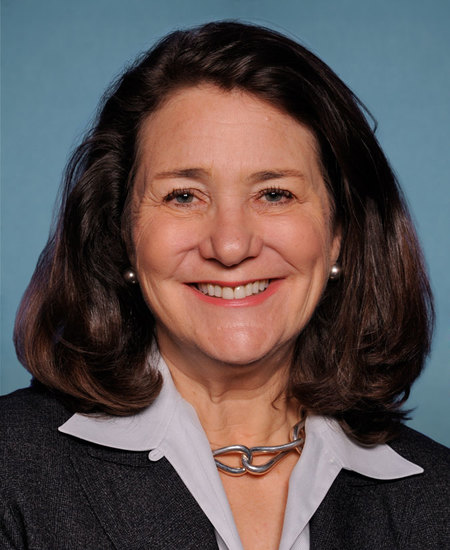
Rep. Diana DeGette
Sponsored bills
Maddy summaryThe Temporary Protected Status Review Act restores the ability of courts to review decisions by the Department of Homeland Security to end Temporary Protected Status (TPS) designations for foreign nationals. Under this bill, the government must publish detailed written findings explaining why a country no longer qualifies for TPS protection, and these decisions would be subject to a legal challenge in federal court. If a TPS designation is terminated, the affected individuals would remain in the United States with their current status and work authorization intact while the legal challenge is pending. Additionally, the legislation requires the government to follow specific administrative procedures, such as considering all available evidence and avoiding bias, before making any termination decisions.
Maddy summaryThis bill establishes federal protections and funding to expand access to in vitro fertilization and intrauterine insemination for individuals, military service members, and veterans. It requires most private health plans, Medicaid programs, and Medicare to cover these fertility treatments without imposing higher cost-sharing than other medical services. Additionally, the legislation mandates that the Department of Defense and the Department of Veterans Affairs provide specific fertility preservation and treatment benefits to uniformed service members and eligible veterans. The bill also includes preemption clauses that override state laws restricting these procedures and prohibits discrimination based on marital status, sex, or sexual orientation in the provision of care.
Maddy summaryThis resolution honors the memory of four wildland firefighters - Emily Barker, Nick Hutcherson, Sydney Watson, and Nicholas Dale - who died while battling wildfires in 2026. It expresses sympathy to their families and acknowledges the bravery of injured colleagues and all personnel who risk their lives to protect communities and natural resources. The measure formally recognizes the critical role of firefighters, aviation crews, and support staff in suppressing dangerous fires across the United States.
Maddy summaryThis bill establishes the INCLUDE Project at the National Institutes of Health (NIH) to advance research on Down syndrome and related health conditions. It requires NIH to fund high-risk studies on trisomy 21, support inclusive clinical trials for people with Down syndrome across all ages, and investigate co-occurring conditions like Alzheimer’s disease and autoimmunity. The law mandates NIH coordination across its institutes, consultation with patient advocates, and biennial reports to Congress detailing funded research and its real-world applications. The project directly affects individuals with Down syndrome, their families, and medical researchers, aiming to improve diagnosis, treatment, and quality of life through targeted scientific efforts.
Maddy summaryThis resolution asks the President and the Secretary of Health and Human Services to provide the House of Representatives with specific documents regarding a freeze on federal payments to five states. The requested materials include communications about how the payment freeze was decided, records of the tweet that announced it, and details on funding drawdowns, disciplinary actions, and data sharing plans related to those states. The bill specifically targets documents concerning Temporary Assistance for Needy Families, Child Care, and Social Services Block Grant programs in California, Colorado, Illinois, Minnesota, and New York. If the agencies possess the records, they must submit them to Congress within 14 days of the resolution's adoption.
Maddy summaryThe Cure Hepatitis C Act of 2026 establishes a federal program to eliminate hepatitis C by creating a subscription model that allows the government to purchase antiviral drugs directly from manufacturers and distribute them at no cost to specific patient groups. These groups include individuals in Medicaid or CHIP programs, those without health insurance, patients in correctional facilities, and those receiving care through the Indian Health Service. The bill also expands Medicare coverage by removing deductibles and copayments for hepatitis C treatments between 2028 and 2032. To support these efforts, the legislation authorizes funding for state grants to improve screening and treatment access, mandates the creation of a national strategy and performance dashboard, and requires coordination with various federal agencies and stakeholders.
Maddy summaryThis resolution expresses support for designating July 10th as Journeyman Lineworkers Recognition Day to honor the workers who maintain the nation's electrical grid. The bill specifically recognizes the dangerous conditions these employees face, such as working at heights near live power lines and responding to disasters like hurricanes and wildfires. It also commemorates Henry Miller, the first president of the International Brotherhood of Electrical Workers, who died on July 10, 1896, while performing his duties. Ultimately, the measure encourages the public to observe this day with reflection on the contributions of lineworkers.
Maddy summaryThe Oversight of Temporary ICE Holding Cells Act limits how long U.S. Immigration and Customs Enforcement can hold individuals in temporary secure areas before formal processing. Specifically, it prohibits detaining anyone in these holding rooms for longer than 12 hours. The law defines holding rooms as secure spaces used for short-term confinement before intake, court appointments, or transfer to another facility. This restriction directly affects the Department of Homeland Security's operations regarding the temporary detention of immigrants.
Maddy summaryThe OPEN Act establishes stricter rules for immigration enforcement by granting Members of Congress unrestricted access to detention facilities and requiring the Department of Homeland Security to publicly report incidents involving excessive force or misconduct. It mandates that detained individuals receive timely access to legal counsel, family members, and medical care, while also setting new standards for transporting detainees safely and ensuring they are informed of facility transfers. Additionally, the bill prohibits the use of administrative warrants to enter private homes without consent and requires judicial warrants for arrests, while also imposing penalties on facilities that fail to meet safety standards.