

This bill extends the authorities of Title VII of the Foreign Intelligence Surveillance Act (FISA) until July 2, 2026. Title VII of FISA generally addresses electronic surveillance and other methods of acquiring foreign intelligence information that are directed at targets outside the United States. Title VII includes surveillance under Section 702, which concerns acquiring communications of non-U.S. persons believed to be outside the United States to obtain foreign intelligence information. Information about U.S. persons may incidentally be acquired by this type of surveillance and subsequently queried (searched) under certain circumstances. For additional information, see CRS In Focus, IF11451 Foreign Intelligence Surveillance Act (FISA) ; and CRS Report, R48592 FISA Section 702 and the 2024 Reforming Intelligence and Securing America Act .
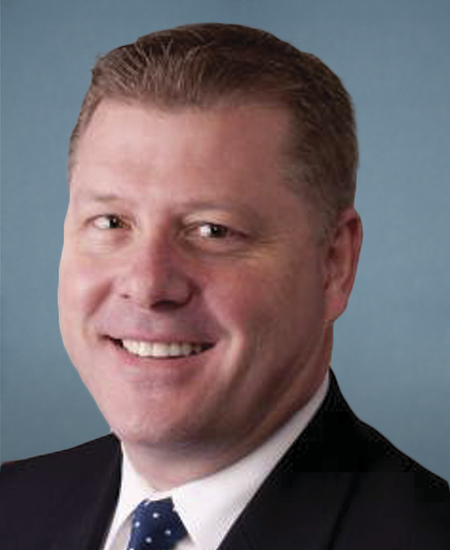
Rep. Eric A. "Rick" Crawford
Sponsored bills
Maddy summaryThe TSP Modernization Act allows individuals to electronically transfer money from their Thrift Savings Fund accounts to qualified retirement plans at brokerage firms, a change that takes effect one year after the law is passed. To initiate this transfer, account holders must provide the necessary information to the Federal Retirement Thrith Investment Board. Additionally, the bill requires the board to submit a report to Congress one year after enactment detailing how the electronic transfer process was implemented.
Maddy summaryThe Intelligence Community Inspector General Parity Act of 2026 grants the Office of the Inspector General of the Intelligence Community the same law enforcement authority as other federal inspector generals. This change allows the office to conduct criminal investigations and make arrests, a power it did not previously possess. The bill achieves this by adding specific legal language to the National Security Act of 1947 and updating related sections in the U.S. Code. Ultimately, the legislation aims to align the investigative capabilities of the intelligence community's oversight body with those of other federal agencies.
Maddy summaryThe Smithsonian American Women’s History Museum Act authorizes the creation of a new Smithsonian museum dedicated to women’s history, to be located within the National Mall Reserve in Washington, D.C. If the site is managed by another federal agency, the bill requires that agency to transfer the land after notifying Congress and relevant committees. The museum must ensure exhibits and programs accurately represent diverse women’s experiences by consulting a broad range of experts and community voices. The Smithsonian will submit biennial reports to Congress detailing how the museum meets these representation standards.
Maddy summaryThis resolution designates May 29, 2026, as "Mental Health Awareness in Agriculture Day" to highlight mental health issues within the farming and agricultural workforce. It aims to reduce the stigma surrounding mental illness by acknowledging the unique stressors faced by producers and workers, such as unpredictable weather, labor shortages, and market fluctuations. The bill also draws attention to available support resources, specifically the Farm and Ranch Stress Assistance Network, and encourages the public to observe the day as a way to promote well-being in the industry.
Maddy summaryThis bill would amend federal law to strengthen penalties for organized retail crime by expanding definitions of theft to include digital goods, gift cards, and setting a $5,000 aggregate value threshold for charges over a 12-month period. It would establish a new "Organized Retail and Supply Chain Crime Coordination Center" under Homeland Security to coordinate Federal, State, local, and Tribal law enforcement efforts against cross-jurisdictional theft groups. The Center would share information with retailers, transportation companies, and law enforcement agencies, track crime trends, and produce annual reports on organized retail crime. This legislation directly affects retailers, supply chain businesses, and law enforcement agencies, while targeting organized crime groups responsible for a 93% increase in larceny incidents and rising safety concerns for retail employees. The bill aims to address significant financial losses and supply chain disruptions noted in the National Retail Federation's 2023 data.
Maddy summaryThis concurrent resolution expresses Congress's support for law enforcement officers and honors those who have died or been injured while performing their duties. The document highlights the dangers officers face, noting high rates of assaults and suicide, as well as current staffing shortages compared to pre-2020 levels. It calls for increased measures to improve officer safety, including more personnel, better training and equipment, stricter penalties for assaulting officers, and expanded mental health resources. This non-binding measure does not create new laws or allocate funding but serves to formally recognize the contributions of police professionals and urge government bodies to provide necessary support.
Maddy summaryThis bill, known as the STOP Resolution, mandates that all Members, officers, and employees of the House of Representatives who access classified information complete specific counterintelligence and security training each Congress. The House Administration Committee will establish rules requiring this training within 90 days of the resolution's adoption, with exemptions for individuals who already completed similar training during their initial orientation. As a direct consequence of non-compliance, Members will be denied access to classified materials until they finish the course, while officers and employees will face an additional 180-day waiting period before receiving such access.
New Source Review Permitting Improvement Act This bill modifies terminology for purposes of the New Source Review (NSR) permitting program of the Environmental Protection Agency (EPA). In order for a change to a stationary source to be a modification (a change to a stationary source that increases the air pollutant emissions or results in new pollutants) for purposes of the NSR permitting program, the maximum hourly emission rate achievable by such source must be higher than the maximum hourly rate achievable by such source during any hour in the 10-year period preceding the change. A change at a stationary source is not considered to be a modification under the bill if it is designed to (1) reduce the amount of any air pollutant emitted; or (2) restore, maintain, or improve the reliability of operations at, or safety of, the source. However, such changes are not excepted if the EPA determines the increase in the maximum achievable hourly emission rate from such change would cause an adverse effect on human health or the environment. Construction , in connection with a major emitting facility (a type of stationary source), does not include a change at such a facility that does not result in a significant emissions increase or a significant net emissions increase. In relation to major emitting facilities in nonattainment areas, the terms modifications and modified do not include changes at such facilities that do not result in a significant emissions increase or a significant net emissions increase.
Maddy summaryThis bill establishes a framework to protect American-owned closed-source AI models from unauthorized extraction by foreign entities, particularly those from China and Russia. It requires the Secretary of State to conduct assessments identifying which foreign entities are conducting model extraction attacks or facilitating them through fraudulent account networks, then publish a public list of these actors for up to five years. The legislation authorizes the President to impose economic sanctions on identified entities and their affiliates, while also creating mechanisms for industry coordination and sharing information about threats. Importantly, the bill distinguishes between legitimate AI research conducted under contractual terms and unauthorized extraction attempts that bypass access controls or violate usage agreements.