Maddy summaryS 2287, the Palliative Care and Hospice Education and Training Act, establishes federal funding to expand training for health professionals in palliative and hospice care. The bill creates multiple programs including grants for education programs, fellowships for faculty to gain specialized training, and career incentive awards for students pursuing palliative care specialties. It prioritizes training in rural and underserved areas, for pediatric populations, and for racial and ethnic minorities. The bill authorizes $15 million annually through 2030 to build a more skilled palliative care workforce for patients with serious or life-threatening illnesses.
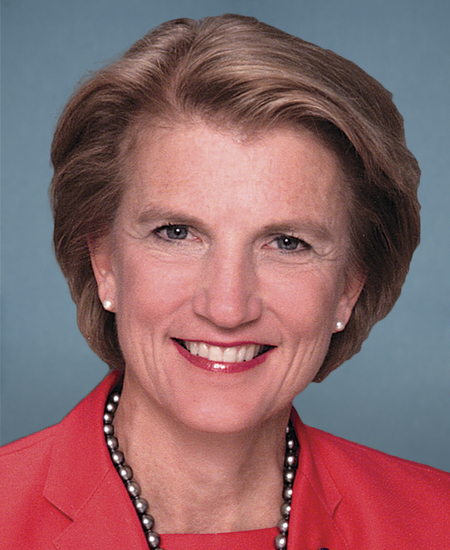
Sen. Shelley Moore Capito
Sponsored bills
Maddy summaryThis bill (S 1677, Ensuring Lasting Smiles Act) requires health insurance plans to cover medically necessary treatments for congenital anomalies or birth defects affecting the eyes, ears, teeth, mouth, or jaw. It mandates coverage for reconstructive services, dental/orthodontic care, and related treatments during the course of medical treatment, while excluding purely cosmetic procedures not medically necessary. Plans may apply cost-sharing requirements similar to those for other medical services but must provide notice about these coverage requirements to participants by January 1, 2026. The bill also directs a study on provider network adequacy and cost impacts related to these coverage requirements, to be completed by December 2027.
Maddy summaryThe HELP Copays Act requires that financial assistance from non-profit organizations or prescription drug manufacturers counts toward patients' annual out-of-pocket cost-sharing limits (like deductibles and copays) for certain prescription drugs. It directly affects individuals enrolled in group health plans or individual insurance who receive such assistance, ensuring payments from these sources reduce their total out-of-pocket spending. The bill amends key healthcare laws to include these payments in calculating cost-sharing thresholds, specifically for specialty drugs and drugs subject to utilization management (like prior authorization). It takes effect for plan years beginning in 2026 and does not change how utilization management tools are applied.
Maddy summaryThe Love Lives On Act of 2025 modifies veterans' and military survivors' benefit rules to prevent remarriage from automatically ending eligibility. It directly affects surviving spouses of veterans or military members who remarried, ensuring they retain access to key benefits. Key provisions include: (1) preventing termination of veterans' dependency compensation (under 38 U.S.C. §1311/1562) due to remarriage; (2) stopping termination of military Survivor Benefit Plan annuities solely for remarriage, with specific rules for those who remarried before age 55; and (3) expanding TRICARE coverage to include remarried widows/widowers whose subsequent marriage ended (via death, divorce, or annulment). These changes restore or maintain benefits that were previously lost upon remarriage.
Maddy summaryThe Children and Teens' Online Privacy Protection Act (S 836) extends COPPA protections to teens aged 13-17 by requiring websites, apps, and online services to obtain verifiable consent from parents for children or from teens themselves before collecting or using their personal information for purposes beyond the service. It defines "personal information" broadly to include biometric data, voice recordings, persistent identifiers, and geolocation information, and prohibits using such information for individual-specific advertising without consent. The bill mandates clear notice about data practices and gives children and teens rights to access, correct, and delete their personal information. Additionally, it requires the FTC to conduct studies on mobile app oversight and the GAO to study teen privacy in financial technology products.
Maddy summarySRES 641 is a Senate resolution recognizing the 114th anniversary of Girl Scouts of the United States of America. It celebrates the organization's mission of providing girls with inclusive spaces to explore interests, build confidence, and develop leadership skills through programs like STEM education and community service. The resolution specifically congratulates Girl Scouts who earned the Gold Award in 2025 and encourages continued support for programs that prepare girls to become future leaders. As a symbolic gesture with no legal effect, it formally acknowledges the Girl Scouts' contributions to youth development and community engagement.
Maddy summaryThis bill updates the federal program that provides grants to nonprofit organizations for helping rural residents build or repair their own water wells and wastewater systems. It directly affects low- and moderate-income households in rural areas by adjusting income eligibility thresholds and increasing the maximum subgrant amount to $20,000. The legislation also requires nonprofits to offer loans to households earning between 60 and 100 percent of the median nonmetropolitan income, and it adds funding to cover five-year performance warranties for wastewater systems. Finally, the program's expiration date is extended from 2023 to 2031, allowing continued support for these infrastructure projects.
Maddy summaryThis bill, known as the Raising Awareness for Youth Suicide Prevention Act, requires schools that receive federal education funding to include mental health and suicide prevention resources on student identification cards. The law mandates that these cards display contact information for the 988 Suicide & Crisis Lifeline, the Crisis Text Line, and any state or local suicide prevention hotlines available in the area. Schools that do not issue physical ID cards must instead post this information prominently on their websites and include it on digital platforms students regularly use. The bill also directs the federal education secretary to run outreach campaigns to help students, parents, and school staff learn about these mental health resources.
Living Donor Protection Act of 2025 This bill prohibits life insurance, disability insurance, and long-term insurance carriers from denying or otherwise restricting coverage for living organ donors. Specifically, carriers may not deny, cancel, vary premiums, or otherwise impose conditions on policies based on an individual's status as a living organ donor. The bill also expressly specifies that recovery from organ-donation surgery constitutes a serious health condition that entitles eligible employees to job-protected medical leave. In addition, the Department of Health and Human Services must update educational materials on living organ donation to include information about the benefits and risks of living organ donation and the impact of donation on insurance access, particularly with respect to the bill's changes.
Maddy summaryThis bill, known as the AADAPT Act, would expand the Project ECHO Grant Program to include public and nonprofit private entities in addition to existing eligible organizations. The legislation specifically adds dementia care to the list of health areas the program can support, alongside palliative care. By broadening eligibility and scope, the bill aims to increase the number of healthcare providers trained to address Alzheimer's disease and other forms of dementia. The changes would be implemented through amendments to the Public Health Service Act, allowing for greater knowledge sharing and capacity building in dementia care across the healthcare system.