

Maddy summaryThis bill enhances training programs at Civilian Conservation Centers operated by the Interior and Agriculture Departments, focusing on wildfire response, forestry, and conservation careers. It requires specialized training in fields like firefighting logistics, forest restoration, and equipment operation, prioritizing facilities serving underserved youth. The bill mandates hiring 300 graduates annually for wildland firefighting roles, allows direct hiring without standard civil service rules, and creates a housing pilot program using covered students to renovate federal properties for firefighters. It directly affects underserved youth completing training programs and federal agencies managing public lands. The bill also requires annual reports assessing center capacity and workforce needs.
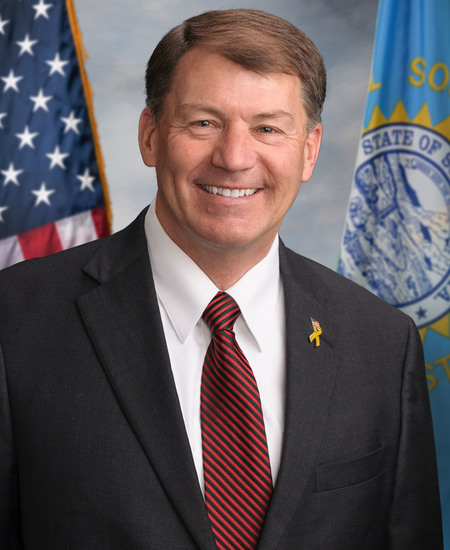
Sen. Mike Rounds
Sponsored bills
Maddy summarySRES 161 is a symbolic Senate resolution designating April 22-30, 2023, as "National Park Week." It does not create new laws or affect specific groups, but formally recognizes the National Park System's significance. The resolution highlights the parks' historical value, visitor impact (312 million visits in 2022), and economic contributions ($42.5 billion in 2021). It encourages public engagement with national parks but contains no funding, regulatory changes, or policy mechanisms. As a procedural resolution, it serves purely to honor the parks' legacy.
Maddy summaryThis bill prohibits federal agencies from banning lead ammunition or tackle for hunting and fishing on federal lands and waters managed by the Interior Department or Agriculture Department. It directly affects hunters and anglers using these public areas by preventing federal restrictions on lead products, except in limited cases. The exception allows restrictions only on specific federal sites where state wildlife data shows lead use is harming wildlife, and only if approved by the state's fish and wildlife agency. The bill requires federal agencies to explain in public notices how any exception meets these state approval and wildlife harm criteria.
Maddy summarySRES 148 is a ceremonial Senate resolution (not a law) passed in March 2023 that formally recognizes the heritage, culture, and contributions of American Indian, Alaska Native, and Native Hawaiian women. It highlights their historical and ongoing achievements in areas like military service, business ownership, healthcare, arts, and civil rights through specific examples (e.g., veterans, entrepreneurs, activists). The resolution has no policy or funding mechanisms - it solely expresses the Senate's intent to honor these contributions and acknowledge the need to address barriers they face. It was introduced by Senators Murkowski, Schatz, and others with bipartisan support.
Maddy summarySRES 120 is a ceremonial Senate resolution designating March 23, 2023, as "National Women in Agriculture Day." It recognizes the significant contributions of women in U.S. agriculture, citing that they represent over one-third of agricultural producers and generated $148 billion in sales in 2017. The resolution encourages citizens to acknowledge women in the field and supports their roles as producers, educators, mentors, and leaders. As a symbolic gesture, it does not create new laws or funding but aims to highlight their impact on the agricultural workforce and food systems.
Maddy summaryThis bill restricts federal funding for state and local governments that qualify as "sanctuary jurisdictions" under its definition. A sanctuary jurisdiction is defined as any state or local area that prohibits sharing immigration status information or refusing to comply with federal immigration detainers (with an exception for crime victims/witnesses). The bill blocks funding for Economic Development Administration grants and Community Development Block Grants if projects are located in such jurisdictions or if recipients become sanctuary jurisdictions during the grant period. Recipients must return funds if they become sanctuary jurisdictions, and the U.S. government will reallocate those funds to non-sanctuary areas.
Maddy summaryThis bill reforms wetland compliance and appeal processes under the Natural Resources Conservation Service (NRCS). It directly affects farmers and ranchers who face NRCS wetland determinations by shifting the burden of proof to the agency (requiring clear evidence to prove violations), prohibiting retroactive penalties for past wetland conversions where NRCS hadn't previously certified the area as wetland, and preventing NRCS from using new arguments after a successful appeal. Key provisions include requiring on-site visits for wetland determinations, creating formal appeal processes for rejected wetland certification requests, and mandating that successful appellants receive reimbursement for legal fees. The reforms aim to make the NRCS wetland compliance system fairer and more transparent for agricultural landowners.
Maddy summaryThis bill would require major financial regulators like the Federal Reserve, Consumer Financial Protection Bureau, FDIC, and SEC to treat congressional requests for information with higher priority than public requests and without charging fees. It would reclassify Federal Reserve Banks as agencies subject to the Freedom of Information Act, requiring them to disclose ethics-related information including financial disclosures, personnel matters, and ethics program details. The bill would prevent agencies from withholding information on common law privilege grounds like attorney-client privilege and establish security protocols for handling sensitive materials. It applies to multiple financial regulatory agencies, aiming to increase transparency in their operations and ethics practices.
Maddy summaryS 1077, the Home-Based Telemental Health Care Act of 2023, authorizes federal grants to expand mental health and substance use services for rural communities and workers in farming, fishing, and forestry (Triple-F) industries. The bill provides up to $10 million annually from 2023-2027 to fund demonstration projects where eligible providers deliver care directly to patients in their homes using telemental health technology. It requires grantees to develop metrics comparing home-based services to in-person care and mandates reports on program impact to Congress. This policy change specifically targets underserved rural populations facing barriers like geographic isolation, workforce shortages, and stigma in accessing mental health care.
Maddy summaryThe HALT Fentanyl Act (S 1141) creates a new, broader definition for "fentanyl-related substances" under the Controlled Substances Act, making many chemical variations subject to Schedule I restrictions without needing individual listing. It establishes streamlined research registration procedures for scientists studying these substances, allowing single registrations for multi-site research within institutions and creating expedited processes for new research applications. The bill also includes provisions to allow ongoing research on substances newly added to Schedule I, with specific timelines for researchers to transition to full registration. These changes aim to balance strict controls on fentanyl-related substances with the need for medical research on these compounds.