Maddy summaryThis Senate resolution (SRES 882) designates the week of September 23-27, 2024, as "National Clean Energy Week." It is a symbolic gesture with no binding policy changes, intended to recognize the clean energy sector's role in the U.S. economy and environment. The resolution highlights clean energy's growth, job creation (citing 8.35 million jobs in 2023), and potential for reducing emissions, but does not enact new laws or allocate funding. It encourages public support for clean energy solutions and acknowledges entrepreneurs' contributions to U.S. energy leadership.
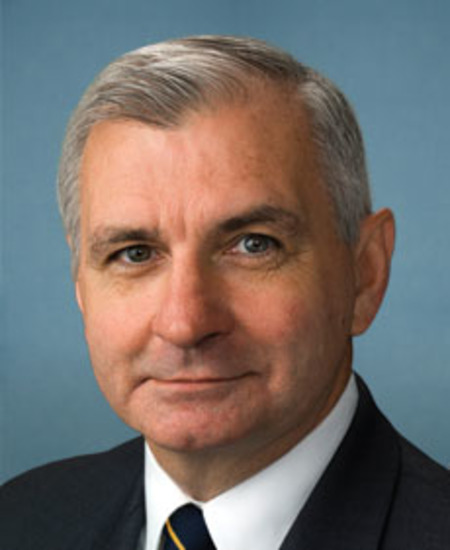
Sen. Jack Reed
Sponsored bills
This resolution acknowledges the 120th anniversary of Big Brothers Big Sisters of America and commends the organization for its work mentoring the young people of the United States and strengthening thousands of communities.
Maddy summarySRES 885 is a non-binding Senate resolution designating October 2, 2024, as "Energy Efficiency Day." It commemorates the economic and environmental benefits achieved through existing private sector innovation and federal energy efficiency policies since the 1970s, such as the Energy Policy Act of 1992 and the Energy Efficiency Improvement Act of 2015. The resolution has no direct effect on individuals, businesses, or policy implementation - it solely encourages public observance through programs and activities. It references historical achievements like $1 trillion in annual energy cost savings and a 50% reduction in energy intensity in federal facilities. The resolution reflects bipartisan recognition of energy efficiency progress but does not create new laws or requirements.
Maddy summaryThis bill adjusts the premium tax credit program under the Affordable Care Act to make health insurance more affordable for lower-income households. It establishes a new sliding scale for the percentage of income people pay toward premiums based on household income relative to the federal poverty line (ranging from 150% to 400% of the poverty line). For example, households earning 150-200% of the poverty line would pay 0-2% of income, while those earning 300-400% would pay 6-8.5%. The changes apply to tax years beginning after December 31, 2025, and directly affect individuals purchasing health insurance through marketplace plans who qualify for these tax credits.
Maddy summarySRES 846 is a symbolic Senate resolution commemorating the 30th anniversary of the Americas being certified free of wild poliovirus by the World Health Organization on September 29, 1994. It honors the Global Polio Eradication Initiative (GPEI), Rotary International, and the Pan American Health Organization for their role in eliminating polio from the region. The resolution encourages continued international funding and commitment to eradicating polio globally, noting that only Afghanistan and Pakistan currently face wild poliovirus transmission. This is a non-binding commemorative measure with no new policy or funding requirements.
Maddy summaryThis bill amends the federal Low-Income Housing Tax Credit (LIHTC) program to increase tax credits for affordable housing developers. It raises the credit rate from $1.75 to $9.79 per dollar of construction costs and adds new 25-50% credit boosts for buildings featuring prevailing wages, renewable energy, proximity to public transit, accessibility for people with disabilities, or occupancy by extremely low-income families (earning ≤30% of local median income). The bill requires at least two-thirds of each state’s annual housing credit allocation to support these targeted projects. It directly affects developers building qualifying affordable housing, making such projects more financially viable through enhanced tax incentives.
Maddy summaryThis resolution designates September 2024 as "National Childhood Cancer Awareness Month" in the U.S. Senate. It requests federal, state, local, and nonprofit organizations to observe the month with programs aimed at increasing public awareness of childhood cancer risks. The resolution also encourages ongoing medical monitoring for childhood cancer survivors and recognizes childhood cancer as a public health priority requiring prevention and cure efforts, while honoring affected children's resilience.
Maddy summarySRES 828 is a non-binding Senate resolution expressing the chamber’s position that every person has the right to emergency health care, including abortion care, during medical emergencies. It highlights that abortion restrictions in emergencies force providers to choose between treating patients or risking criminal charges, disproportionately harming Black, Indigenous, people of color, immigrants, low-income individuals, and LGBTQI+ patients. The resolution specifically notes that such bans create dangerous uncertainty for life-threatening conditions like severe hemorrhage, sepsis, or placenta previa. As a symbolic statement, it does not create new law or alter existing policies.
Maddy summaryThis resolution designates September 2024 as "National Voting Rights Month" to highlight historical and ongoing voting rights issues in the U.S. It encourages all Americans to support voting access and urges Congress to pass specific voting rights legislation, including the Freedom to Vote Act and the Democracy Restoration Act. The resolution also recommends that schools teach about voting history, voter suppression, and current voting restrictions. As a symbolic measure, it does not create new laws but aims to raise awareness about voting rights challenges.
Maddy summarySRES 823 is a symbolic Senate resolution recognizing Hispanic Heritage Month (September 15-October 15, 2024) and celebrating the cultural contributions and achievements of Latinos in the United States. It does not create new laws or affect specific groups; instead, it urges the public to observe the month through activities honoring Latino heritage. The resolution highlights Latinos' economic impact (e.g., $3.4 trillion purchasing power), demographic significance (19.5% of U.S. population), and historical military service, but these statistics serve as context, not policy changes. As a ceremonial resolution, it has no legal force and is intended to raise awareness, not alter government programs or funding.